Beef production, and the future of it, have been at the forefront of conversations lately in the cattle industry. Knowing that cattle inventories are at the lowest they have been in over 70 years, it is also known that the quantity of beef produced has declined and will continue to decline until we start rebuilding. Beef production in 2025, according to the USDA December World Agriculture Supply and Demand Estimates report, is forecasted to reach 25.9 billion pounds, 4 percent below 2024. The December projection for 2026 beef production is estimated to decline by a little less than one percent to 25.7 billion pounds. This is largely due to the expectation of higher dressed weights.
Past
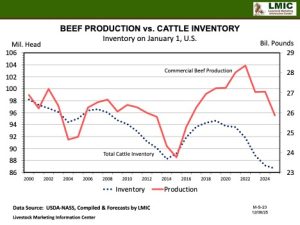
Beef production began declining in 2022 after herd liquidation started in 2019 (graph below). We see a similar “lag” during the 2014–2016 period on the other end – beef production started increasing in 2016 after cattle numbers started increasing (rather quickly) in 2015. We see that beef production trends with cattle inventory – as cattle numbers decrease, so does beef production. But we also see that they are not decreasing and increasing at the exact same time or rate.
Present
In the current cycle, we are at the bottom of the cycle with low cattle numbers and beef production falling. A significant difference this time around though is that we are producing more beef with fewer cattle. Beef production today is at an average of 928 pounds of beef produced per cow compared to 800 pounds back in 2000 and 810 pounds in 2015. This is a high testament to producer adaptability and investments made in how we produce and feed cattle.
Future
Another observation to note is that since we have not started rebuilding, beef production is not expected to increase for another two years at least. Therefore, we can anticipate seeing the same “lag” in beef production we saw in 2015, but at a slower rate due to a small number of replacement heifers available, input costs, and macroeconomic/trade influences on the market. Prices will also follow suit. As cattle numbers increase, beef production will increase, and beef prices will decrease. For now, beef prices can be expected to remain elevated and likely increase, especially if consumer demand holds strong amidst limited supply.
 0
0