The South Florida Beef Forage Program (SFBFP) is a group of livestock Extension agents that facilitate numerous programs throughout the year for cattle producers. Many of these programs focus on teaching the practical and economic importance of implementing management strategies that will positively influence a calf’s success on the ranch and in later sectors of production. So, SFBFP, in collaboration with Dr. Derrell Peel from Oklahoma State University, developed an educational initiative aimed at enhancing our understanding of how calf health and management influences profitability on cow-calf operations.
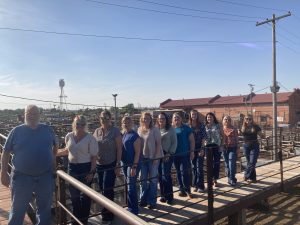
Goal of the Initiative
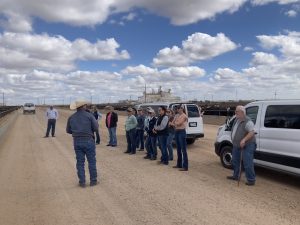
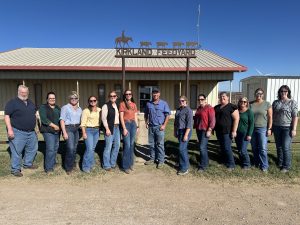
The objectives were to increase our personal knowledge, become better equipped to teach our Florida producers, and to develop and strengthen relationships with buyers of Florida cattle. We traveled to the Texas Panhandle where most Florida calves are shipped and finished. The group visited with National Livestock, Superior, three feedlots, and a JBS packing plant. Touring these facilities allowed us to have discussions with cattle buyers about what they look for in calves and how that affects market value. It was fascinating to see Florida calves thriving in a different environment and hear about the valuable role Florida cattle play in the cattle industry.
What We Learned
We went on the trip with specific questions so we could provide answers to Florida producers. Some of the main questions and key takeaways from this trip were:
- Are Florida cattle desirable?
- Are there differences between feeding FL cattle vs “local” cattle?
- Do you have to or need to fill a load?
- How important are health protocols at the cow-calf level?
- Why does management at the cow-calf level matter?
1. Question: Are Florida cattle desirable?
Florida cattle are unique and the environment they are raised in requires unique management strategies. For example, incorporating Brahman influence for heat tolerance and parasite resistance is necessary in Florida’s subtropical and tropical climates. We also wean relatively lighter weight calves simply due to geographical location. Most of the time, it makes more economical sense to ship calves out to feed than to ship in feed to calves. While there are several successful operations that background and finish calves, the state of Florida is proud to primarily be a cow-calf state because that is what we are good at. With almost year-round grazing, we can raise healthy calves at a relatively low cost and then let the western states take care of growing and finishing them. And we heard first-hand about how the western states know and value this about Florida calves.
Because Florida calves are typically lighter weight, these calves are attractive to stocker operators. We learned that Florida calves gain really well on wheat pastures in the fall before they are then sent to a feedlot. Not all calves will go to a stocker operation first, but it was insightful to learn that there are different marketing avenues for Florida producers. We also heard first-hand that Florida producers have done an excellent job of improving genetics and bull power over the years, resulting in “bigger and better” calves and stronger demand for those calves. The managers we spoke with encouraged producers to keep adapting and improving because it only increases the value of their cattle.
Answer: I will quote one of the buyers we spoke with: “Florida cattle are valuable and wanted.” What we learned is that based on the abilities of a specific Florida operation, calves can be set up and managed in a way that appeals to stocker operations and/or feedlots. Pairing the goals of an operation with the desires of cattle buyers is an invaluable strategy to the success of profitably marketing Florida cattle.
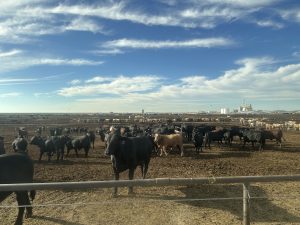
2. Question: Are there differences between feeding Florida Calves versus “local” calves? Does that affect demand for them?
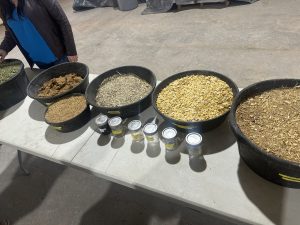
All cattle upon arrival in the feedlot are put on a starter ration (forage based) that is then gradually altered to become a finishing ration (grain based). This is, at its core, no different for Florida calves. Florida calves may have to be provided with hay for the first few days and maybe a little more space in a pen to get well acclimated. They may even be on the starter ration for a little while longer than calves from the Southern Plains. However, this does not influence the demand of Florida calves. Feedlots have figured out how to feed Florida cattle well to give them the best chance possible of finishing and grading well.
Answer: Florida cattle may have to be “babied” a little upon arrival from a diet standpoint, but this does not affect the demand for them. Quoted from a manager: “If you can get them to me, I’ll gladly feed them.”
3. Question: Do you have to or need to fill a load?
Not necessarily. Some feedlots prefer to buy loads only or mostly because that is how their pens are set up in order to keep customer cattle separated. Other yards will take as few as twenty head (usually if you are retaining ownership/custom feeding) and make it work really well. It all depends on the structure of the feedlot and the decisions made with the producer to maximize the performance of the calves. Many feedlots also offer financing options as well. Feedlots want to feed your cattle and building that relationship helps to meet the goals of both producer and feedlot manager.
Answer: I will give everyone’s favorite answer…it depends on the feedlot. If you can fill a load, absolutely do it. If you cannot, it is not the end of the world. However, it is still important to adopt management and marketing strategies that still give your calves “full load” qualities that will make it easier to fill a load with similar calves. Examples could include ensuring uniformity in weight and size, hide color, and health protocols or partnering with a fellow producer to put a load together. Feedlots will typically take mixed loads of heifers and steers but not mixed loads of weights and sizes.
4. Question: How important are health protocols (vaccinations, castrating, implants, etc.) at the cow-calf level?
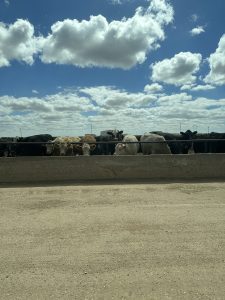
The question is broken up by providing the answers we heard directly from these feedlots. Health protocols play a major role in how well calves perform in the feed yard, and that protocol should not start when they get off the truck.
Common question:
“I know they vaccinate, castrate, and implant them when they get there, so why should I do it at the cow-calf level?”
Answers we heard from feedlots [paraphrased]:
Vaccinations – The shot(s) calves get when they get to the feedlot will not be as effective if that is the first time that they are receiving it. They are stressed from traveling on top of being weaned, so their immune response will not be as strong. If they have already been vaccinated, the vaccine at the feedlot will function as a booster. So, it is not a waste to vaccinate at the cow-calf level. Most feedlots recommend at least two rounds of shots before being sent to a feedlot. Modified live vaccines (MLV) are preferred, but killed vaccines are better than none at all. Other key components to calf health and making sure vaccines lead to a stronger immune system is having a good mineral program, low-stress handling, and proper administration. Quoted from a feedlot manager, “Vaccination is different than immunization.” While there may not always be a premium for vaccinated calves, there are always discounts for calves that have a reputation of getting sick in the feedlot.
Castration – Castrating an 800-pound feeder bull is never ideal because of the stress he will go through, which affects his weight gain. There are numerous research studies to show that castrating as early as possible is the best avenue and does not negatively affect weaning weights. Again, there are always discounts for bull calves compared to steer calves. In Florida, prices have historically been 5-6 percent lower for bull calves.
Implants – Implants are effective at every stage. So just like vaccinations, it is not a waste if steers are implanted at the cow-calf level even though they will be implanted again at the feedlot. More often there is money being left on the table if you do not implant because of the weight gain received for a very low per head input cost.
Answer: Feedlots specialize in feeding cattle. They want to focus on feeding cattle efficiently, not setting them up to be fed efficiently. Sick cattle hinder feedlots from achieving that goal, leading them to make note of where those cattle came from, affecting the value of those calves. Even practices such as having water troughs in pastures rather than just a pond are beneficial so that the calves know where to find water at the feedlot. Bunk training is also an added bonus, although this can be difficult to do in Florida. Implementing health protocols and certain levels of pre-conditioning at the cow-calf level is important to give calves the best chance of maximizing their value once they are finished, especially if retaining ownership.
5. Question: Why does management at the cow-calf level matter?
How a calf performs in the feedlot starts with how he was managed on the ranch. High-quality management, at all stages, produces a high-quality calf that produces high-quality beef. That is the goal. Additionally, adopting certain management strategies is primarily about the end product, but it is also about profitability of Florida ranches. High-quality management also produces high-valued calves. Of course, market conditions and prices will influence the feasibility of practices adopted in certain years. However, investing in a calf’s future performance, when possible, will hardly ever be wasted.
Answer: There were two words we heard at all of the stops on this trip: reputation & relationship. Management at the cow-calf level matters because the reputation of an operation has influence on the value of that operation’s calves. Building relationships between producers and feedlots is a necessary partnership for the cattle industry as both work towards the same goal of producing high-quality beef products for consumers.
Outcomes
The knowledge and experience the SFBF group of agents gained from this initiative enhanced our ability to share information with Florida cattle producers. Topics where knowledge was enhanced included marketing opportunities for smaller producers, how health management influences performance, how feedlots operate day-to-day, and price differences for high-risk calves. Future outcomes as a result of this trip include organizing a similar opportunity for producers to attend next year, a webinar relaying what we learned to producers, and literature, such as this blog, to share with producers.
We would like to say thank you again to Dr. Peel for his help in organizing this trip. It would not have happened without him! We would also like to thank OKC West Livestock Auction, West Texas A&M, National Livestock, Superior, Cactus Feeders, Perry Kirkland Feedyard, Five Rivers – Hartley, JBS, and the Oklahoma Cattlemen’s Association for hosting us and taking the time to teach us more about the life of a Florida calf after it leaves the ranch.
Upcoming Program – Tuesday, October 14th 11:00-11:45 am EST
To view the recording of the webinar, visit Webinars at RCREC under ‘2025’ and it will be listed for the month of October.
 3
3