By Joao Lazarin, Lab Manager
The Forage Extension Laboratory is located at the UF/IFAS Range Cattle Research and Education Center (RCREC) in Ona, Florida. It serves as a statewide resource supporting research, extension, and producer needs related to forage and livestock production.
The laboratory provides nutrient analyses of pastures, silages, hay, and other feedstuffs to determine crude protein, fiber fractions, and digestibility. These results are widely used by:
- Producers, to make informed feeding decisions.
- Extension agents, to support local producers’ recommendations.

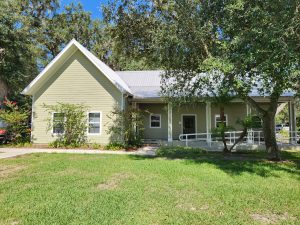
The Forage Extension Lab.
By ensuring that samples are both representative and sufficient in quantity, the laboratory can deliver results that are accurate and useful for improving forage management, animal nutrition, and overall farm productivity.
Importance of Providing a Representative Sample
A representative sample is the foundation of accurate laboratory analysis. Because only a small portion of the original material is tested, the sample submitted must reflect the average quality of the entire lot, field, or silo. If samples are collected only from the “best” or “worst” areas, the nutrient values reported may not represent the forage offered to animals.
Research and field experience have shown that sample collection is often the single greatest source of error in forage testing. Even with highly precise laboratory instruments, results cannot correct for poor sampling techniques. Thus, the reliability of crude protein, total digestible nutrients (TDN), and other nutrient values depends directly on the representativeness of the submitted sample.
In addition to representativeness, a sufficient sample quantity is required for laboratory testing. Analyses such as crude protein and TDN require a minimum of material to be performed. Typically, at least two handfuls (approximately 0.5 lb of pasture, silage, or hay sample) should be collected and submitted. If less material is submitted, the laboratory may not be able to conduct every analysis.
Best Practices for Collecting Representative Samples
- Collect forage from multiple locations within a field, lot, or bale.
- Avoid selecting only the best-looking or worst-looking plants.
- Combine subsamples into a single composite sample to reduce bias.
- Submit at least two large handfuls (about 0.5 lb pasture, silage, or hay sample).
- Ensure samples are clean (free of soil, manure, or debris).
- Use clean bags and label samples clearly with identification and date.
Sample Packaging and Handling
- Silage samples: Place in sealed plastic (e.g., quart size ziplock) bags to prevent spoilage. If samples cannot be shipped immediately, freeze silage samples until mailing.
- Pasture and hay samples: Paper bags are acceptable.
Examples of Bad Samples
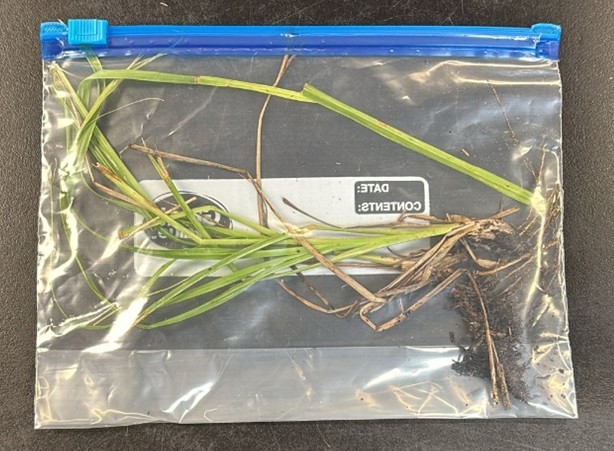
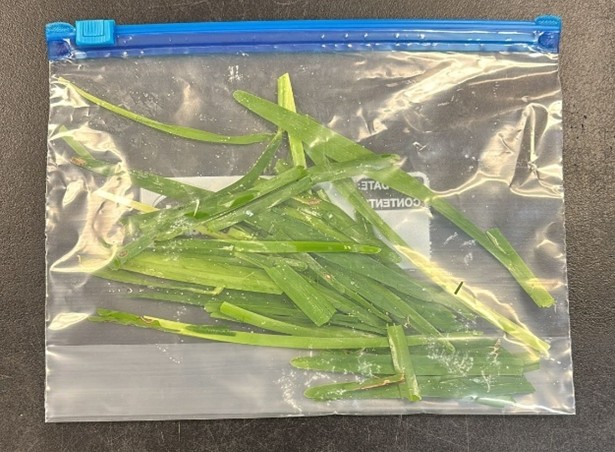
The below images show examples of incorrect sample submissions in quart size Ziplock bags. In addition to the points mentioned in the captions, both samples are missing an identifying label.
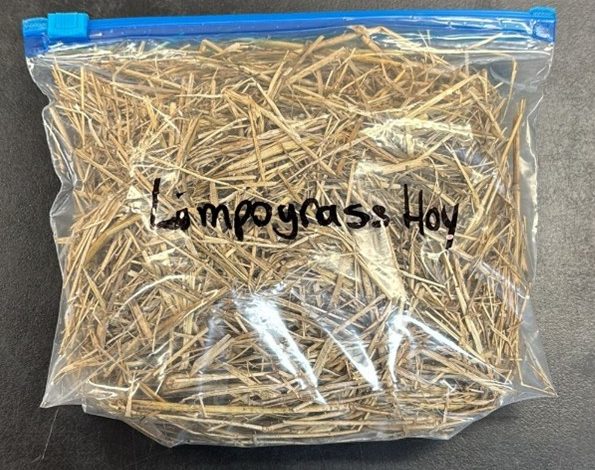
Examples of Good Samples
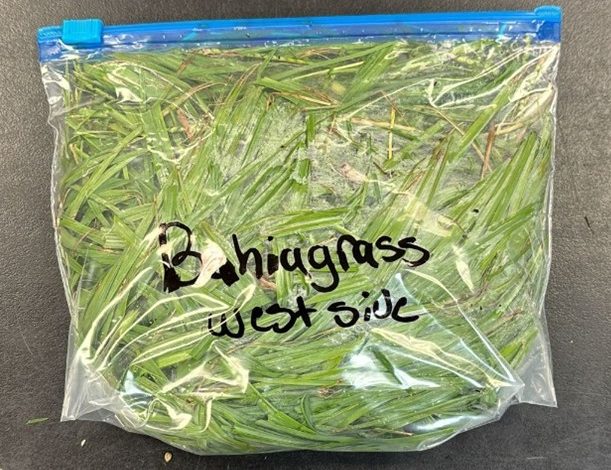
The below images show examples of correct sample submissions. Both include an adequate amount of forage, they do not contain any roots or soil, and they are identified with good labels. These examples are filling quart size Ziploc bags, which is the minimum sample submission size recommend.
Remember, your results are only as good as your sample!
For More Information
To learn more about the Forage Extension Lab at the UF/IFAS Range Cattle Research and Education Center in Ona, Florida and the Services it Provides see the EDIS publication, Forage Testing, by Dr. Joao Vendramini, Dr. Maria Silveira, Dr. John Arthington, and Dr. Ann Blount. Click here: SS-AGR-63/AA192: Forage Testing
Interested in Submitting a Sample for Testing?
Click here to visit the lab webpage to access the submission form and the address for shipping. The cost is $7 per sample and the turnaround time for results, from the time the sample is received by the lab, is 8-12 business days.
Questions?
Contact Joao Lazarin at (863) 374-7071 or j.lazarinsilva@ufl.edu.
 0
0