Winter weather in Putnam County can be unpredictable, but the freeze we experienced from January 31 to February 2 was anything but typical. Temperatures dropped into the low twenties, and the wind chill made conditions even more extreme. If your plants were not protected, you may already be seeing early signs of stress in your landscape, which makes understanding Florida freeze plant care especially important after an event like this.
So what should you do now that the freeze has passed? Below are practical, science-based steps to help your landscape recover and to guide you through the proper Florida freeze plant care process.
1. Watering Is the First Step After a Freeze
You may not yet know the full extent of freeze damage or whether certain plants will survive, but the most important first step is to water them. After a hard freeze, water may not be readily available to plants because the roots can be too cold to function properly. High winds and low humidity during cold weather also pull moisture from leaves and soil, which increases stress. Watering helps thaw the soil, rehydrate stressed plants, and improve their ability to recover. This is especially important for potted plants because the water inside containers can freeze, leaving roots unable to absorb moisture. These early watering steps are a key part of Florida freeze plant care and support recovery. For more detailed information on how cold weather affects plants and why watering is such an important step, you can read the UF IFAS publication Cold Protection of Landscape Plants.
2. Identify Freeze Damage for Better Florida Plant Care
Depending on the plant, freeze damage can take a wide range of shapes from mild leaf scorch to severe dieback. It may take several days or even weeks for the full extent of injury to appear, especially after an abnormal freeze. Below are common landscape plants in North Central Florida and the symptoms you may see as damage becomes visible.
Topical and fleshy plants
These plants have very low survivability once temperatures drop below 28 F for more than five hours. Prolonged exposure to low twenties often results in complete collapse or death. Soft, mushy growth, translucent leaves, and water soaked tissue are common signs of severe freeze injury.
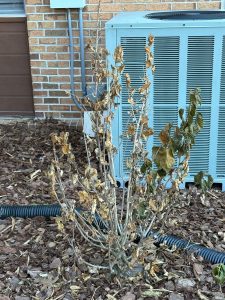
Sensitive shrubs
Shrubs such as hibiscus and firebush often show burned, blackened, or curled leaves after a freeze. Stems may slowly discolor, turning brown or dry as damage progresses. These shrubs commonly experience dieback, but early symptoms are usually leaf scorch and softening of tender growth.
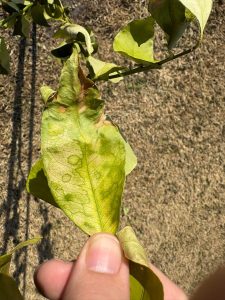
Citrus trees
Freeze damage in citrus often begins with yellow speckling along the leaf edges that later turns brown. Tender new shoots usually die back first. Bark may split on small branches or the trunk during stronger freezes. Any remaining fruit may soften or lose juice quality because internal ice crystals puncture the juice vesicles. For additional support in understanding citrus injury and recovery after a hard freeze, UF IFAS provides both the Recovering From Freeze Damage publication and the 2026 Cold Weather FAQ, which outline common symptoms, weather impacts, and considerations following this year’s cold event.
Palms
Cold hardy palms such as sabal palm, needle palm, and windmill palm may show only minor yellowing or patchy frond discoloration after a freeze. More sensitive palms like queen palm, bismarck palm, and pindo palm often display tan or brown frond burn and drooping foliage. Chinese fan palm and European fan palm may develop bronzing or water soaked patches on fronds exposed to wind chill. The spear leaf may discolor or wilt, though the full extent of damage can take weeks to appear. If you want to learn more about how cold temperatures affect palms, UF IFAS offers a helpful resource called Cold Damage on Palms that explains common symptoms and palm tolerance levels.
Tender fruit plants
Many tropical and subtropical fruit plants show significant freeze damage. Bananas often collapse completely, with leaves turning black and pseudostems becoming soft or water soaked. Papaya shows rapid leaf wilt and darkening along the trunk as tissue thaws. Passionfruit vines may drop leaves quickly or develop blackened streaks along stems. Guava, including tropical and strawberry guava, often displays leaf burn and brittle new shoots. Dragon fruit cactus may form translucent, mushy patches where internal moisture froze, leading to pad collapse.
Vines and warm season perennials
Plants such as bougainvillea, mandevilla, plumbago, pentas, porterweed, and blue daze often show leaf burn, curling, or complete leaf drop after a freeze. Stems may develop bronze or blackened areas as damaged tissue thaws. Top growth injury is common in exposed areas.
Bulbs
Bulbs such as amaryllis and crinum generally tolerate cold temperatures below the soil surface, but their foliage may wilt, yellow, or become mushy after a freeze. Even when leaves die back, the bulbs usually remain alive and capable of producing new growth once warmer weather returns.
Succulents
Cold sensitive succulents including agave and aloe often develop translucent or water soaked patches that later turn brown. Thick leaves may soften or collapse where internal water froze. Damage typically appears first on young or exposed leaves.
3. Wait on pruning and removing Dead Material
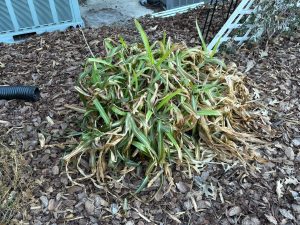
It is tempting to clean up damaged plants right away, but it is very important to wait until the risk of future frosts or freezes has passed before pruning or removing dead material. Freeze damaged leaves and stems often act as a natural protective layer for the tender buds and living tissue beneath them. Removing this outer layer too early can expose vulnerable growth to additional cold injury.
Pruning too soon can also trigger plants to send out new growth during the next warm spell. This fresh growth is extremely sensitive and will be easily damaged if another cold front arrives. By waiting until consistent spring warmth returns, plants will begin to push new leaves and shoots, making it much easier to see which parts are alive and which portions have truly been lost. This delayed approach prevents accidental removal of healthy wood and gives plants the best chance to recover fully. UF IFAS also emphasizes the importance of waiting to prune after a freeze, and the publication Cold Protection of Landscape Plants explains why delaying pruning protects tender tissues during recovery.
4. Do not fertilize
As part of good Florida freeze plant care, now is not the time to fertilize. While you may want to encourage new growth, there is still a risk of another frost or freeze this time of year. As mentioned earlier, new growth is the most susceptible to cold injury and can be easily damaged or killed during another cold event. Adding fertilizer now can push plants to break dormancy too early, leaving tender shoots exposed and vulnerable.
Fertilizing in cold weather also places unnecessary stress on plants whose root systems may still be recovering from freeze damage. Roots absorb nutrients more effectively once soil temperatures warm and plants begin active growth. Waiting until spring, when new growth naturally resumes, ensures that plants can use the nutrients efficiently and safely. The same guidance applies to potted plants; hold off on adding fertilizer until consistent warm weather returns.
Freeze events like the one we experienced can be stressful for both gardeners and plants, but with a little patience and the right approach, most landscapes recover well. Watering after a freeze, watching for signs of damage, holding off on pruning, and waiting to fertilize are all simple steps that protect plants while they regain strength. As temperatures rise in spring, many plants will surprise you with new growth and renewed vigor.
Additional UF IFAS Cold Weather Resources
If you would like to learn more about protecting and caring for Florida plants during cold weather, here are some helpful UF IFAS resources:
- How to Protect Your Landscape Plants from Cold Weather
- How to Protect Your Plants from an Upcoming Hard Freeze
- Additional Cold Weather Information From UF IFAS
- [Take Care of Freeze Injured Citrus Trees]
 14
14