Did you know you can grow sweet potatoes (Ipomoea batatas) in your summer garden? Sweet potatoes originated from South America and are accustomed to the hot and humid conditions of Florida’s summer season.
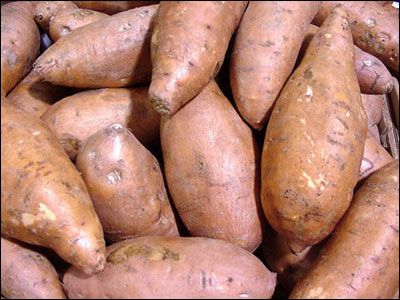
Sweet potato is a root vegetable, unlike Irish potatoes, that comes in several varieties and colors, including orange, white, cream, red, yellow, and purple. The tuber and the leaves are edible.
- Fun fact: Sweet potatoes are not “yams” – they’re in different plant families!
Growing Conditions
Although sweet potato is a vegetable, it has ornamental value as well. Sweet potato can be characterized as:
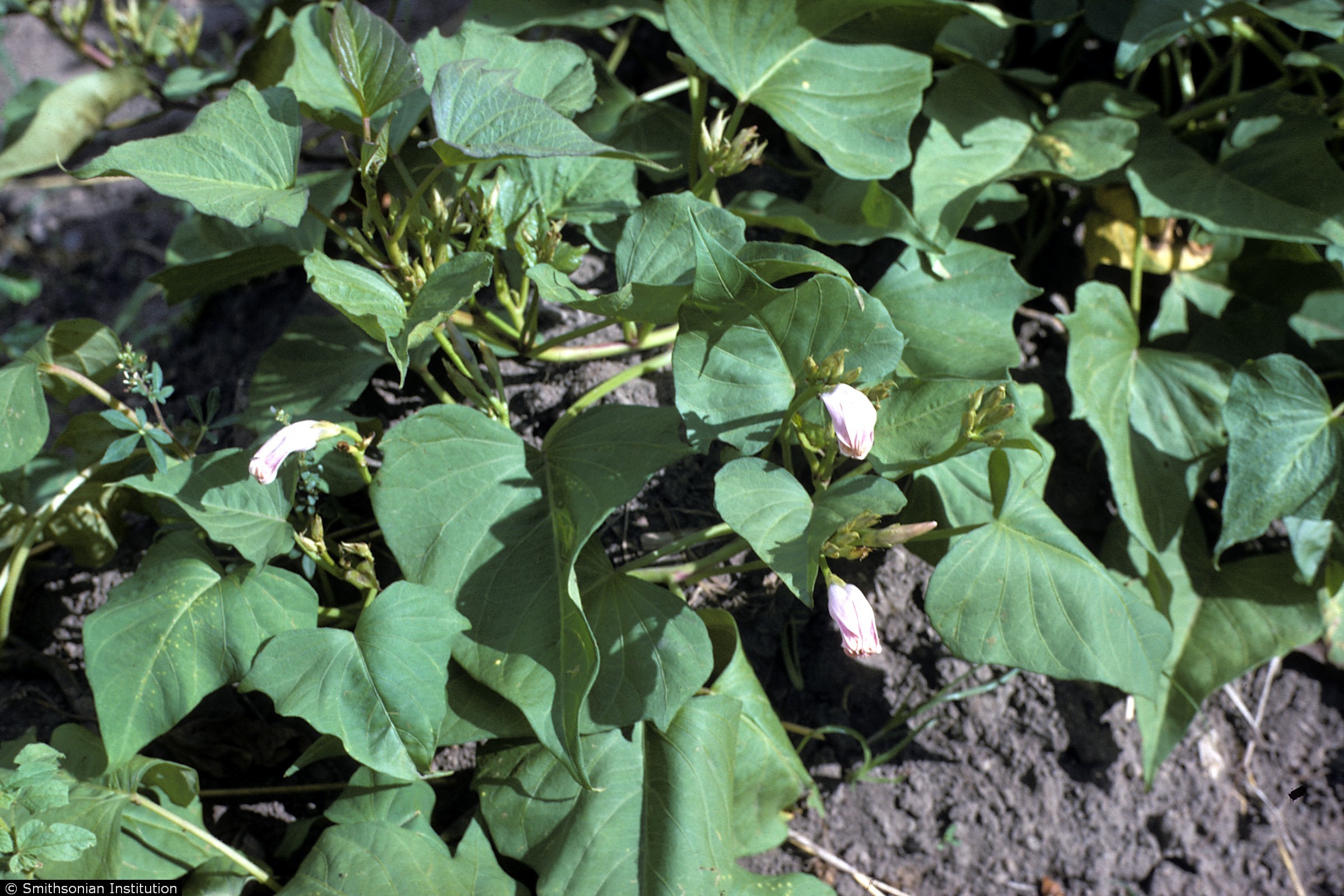
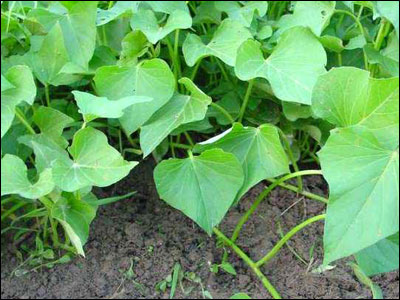
- Having large, glossy, heart-shaped leaves
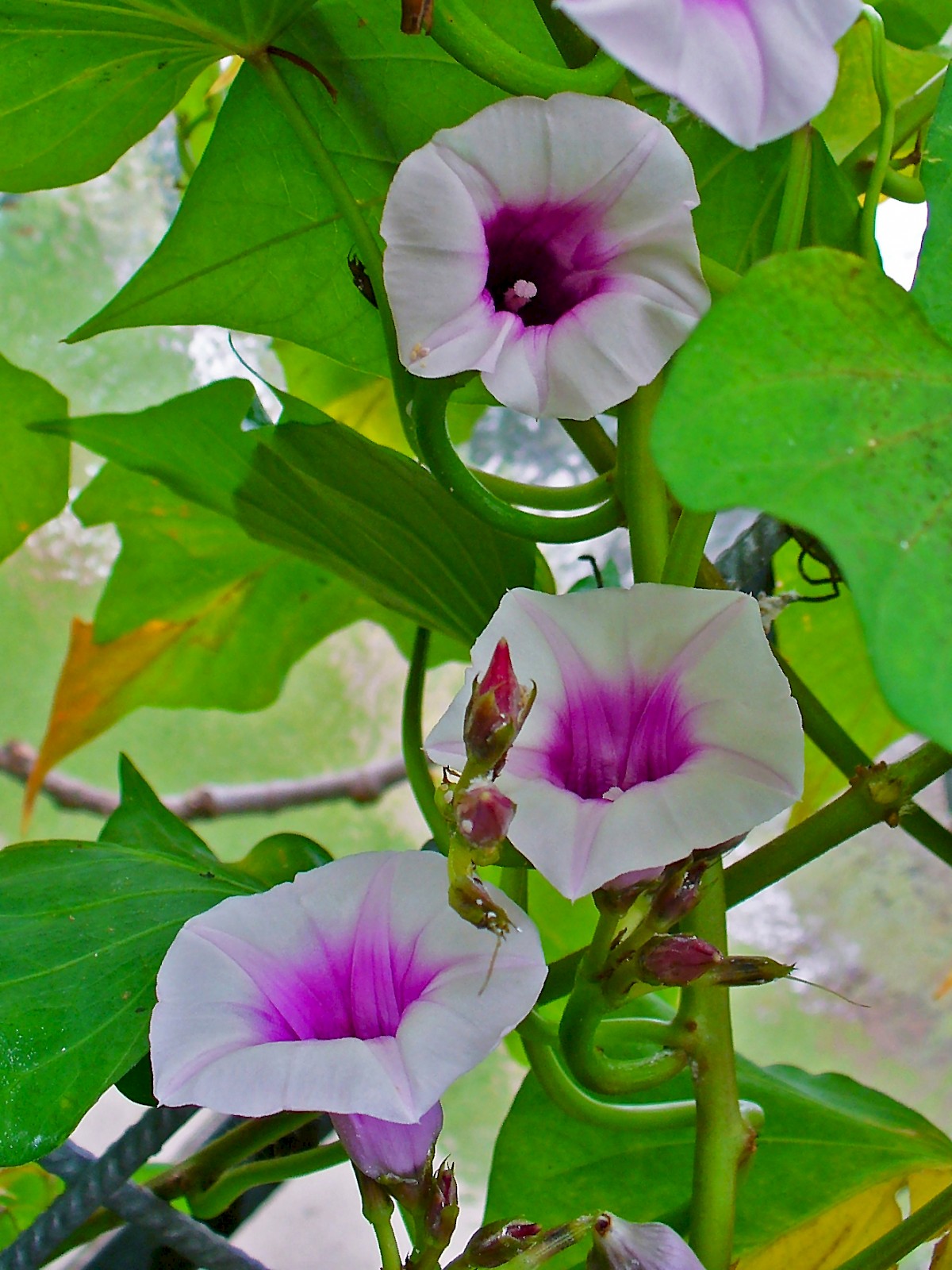
- Producing bright, colorful, trumpet-shaped blooms that attract pollinators
- Leaves varying in color from green to purple and grey with reddish tones
- Exhibiting variegated leaf patterns

“Ipomoea batatas 002” by H. Zell – Own work. Licensed under Creative Commons Attribution-Share Alike 3.0 via Wikimedia Commons – http://commons.wikimedia.org/wiki/File:Ipomoea_batatas_002.JPG#mediaviewer/File:Ipomoea_batatas_002.JPG - Featuring vining growth suitable for ground cover, accents, garden beds, pots, landscaping, and climbing trellises
- Producing edible tubers in about 120-150 days
- Growing over 15 feet in length and 12 inches in height
- Growing best in USDA zones 9a-11b
Sweet potato is an annual and will need to be replanted after each growing season. It requires:
- Full sun (6+ hours of sun a day)
- Well-draining, evenly moist soil
- Sandy or loamy soil texture
The best time to plant is in spring after the last frost. The plant likes to be well-watered in well-draining soil, so waiting to plant during the rainy season will support healthy growth. After planting, expect a harvest in about 120-150 days.
Pick the best varieties for Florida, including:
- Beauregard
- Centennial
- Covington
- Georgia Jet
- Vardaman (good for small gardens)
Read this UF/IFAS Resource for more information: Sweet Potatoes – Gardening Solutions.
- Read more about another type of sweet potato, known as boniato.
Pests and Diseases
Sweet potato struggles with a few pests. Some common pests include:
- Sweet potato weevils
- wireworms
- nematodes
- banded cucumber beetles
- pale-striped flea beetles
- sweet potato flea beetles
Luckily, there are methods for Insect Management for Sweet Potatoes. Click the link to read more about insect ID and UF/IFAS recommended treatment options. When dealing with garden pests, UF/IFAS recommends integrated pest management (IPM).
Nutritional Value
Shari Bresin, who serves as our Family and Consumer Sciences Agent for UF/IFAS Extension Pasco County, adds her insight on the nutritional and health impacts of sweet potatoes.
“Sweet potatoes are high in Vitamin A, Vitamin C, fiber, potassium, and antioxidants. Meaning, this nutrient-rich vegetable plays a role in eye health, heart health, gut health, immunity, weight management, and cancer prevention (Cleveland Clinic, 2025). They are also lower in the glycemic index scale compared to regular white potatoes, though certain cooking methods can raise it. Boiled or steamed are best for those with diabetes, as these have a lower glycemic index (freedomfromdiabetes.org, N.D.). The lower the glycemic index, the slower blood sugar levels rise.
Leave the skin on to get the maximum health benefits.
Instead of butter, brown sugar, marshmallows, or syrup, flavor with cinnamon, clove, or nutmeg to reduce calories, fat, and added sugar.”
Shari’s program areas focus on health and wellness, including healthy eating, chronic disease prevention, and exercise; money management (budget counseling and group lessons); food safety; and food entrepreneurship.
Contact Shari with any questions or inquiries:
- Email: Sbresin@ufl.edu
- Phone: 352-518-0156
Disclaimer: The mention of edibility and consumption is for educational purposes only and does not imply an endorsement of safety or consumption for all individuals. Please consult a licensed health professional before using sweet potato for food or medicinal purposes.
Are you Florida Friendly?
Remember, always match the growing conditions of the environment you have available to a plant’s specific needs. Plant needs are unique to each species. Consider whether the soil type, season, light, water, and temperature at your planting location are right for your desired plant.
Follow the 9 Principles of Florida-Friendly Landscaping™ and implement IPM to help create a sustainable, low-maintenance garden that will need less water, fertilizer, and pesticides to thrive.
Stay tuned to learn more about growing vegetables in Florida.
Resources:
- Sweet Potato/Boniato – Solutions for Your Life – University of Florida, Institute of Food and Agricultural Sciences – UF/IFAS
- Potato, Sweet – Florida Master Gardener Volunteer Program
- Visit the Florida-Friendly Landscaping™ Plant Guide to see which plants are right for your garden or read Florida-Friendly Landscaping™ Publications to learn more
- Read the FloridaVegetableGardeningGuide.pdf for more information.
- Vegetable Gardening by Season
- “Sweet Potatoes: An Excellent Choice for Florida’s Subtropical Climate” – YouTube
- Vegetable IPM
- Weed Management in Sweet Potato
Shari Bresin, FCS Extension Agent for Pasco County, contributed to this blog.
Supervising Agent: Whitney Elmore
 1
1