Silage Corn in North Florida
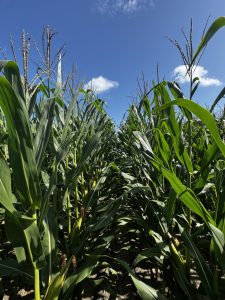
In North Florida, silage corn is an essential crop for supporting the region’s dairy and livestock farms. It provides a high-energy, nutrient-dense feed that’s especially important for maintaining healthy, productive herds. Unlike corn grown for grain, silage corn is harvested whole, using the stalks, leaves, and ears. The harvested and chopped silage is then fermented to create a digestible and palatable feed that ruminants, such as dairy cattle love. The region’s warm climate and extended growing season allow for productive silage corn cultivation, often as part of a double-cropping system with cool-season forages or cover crops. Each year, farmers across North Florida plant approximately 50,000 acres of corn, with a significant portion dedicated to silage. The region’s sandy soils and variable rainfall make nutrient and water management critical, prompting producers to adopt innovative practices and technologies that enhance efficiency while protecting local water resources, especially in sensitive areas like the Suwannee Valley. As a result, silage corn production in this region is closely tied to the implementation of Best Management Practices (BMPs) that promote both agricultural productivity and environmental stewardship.
Local Dairy’s Efforts to Reduce Nitrogen Inputs on Silage Corn
With a strong focus on sustainability, Shenandoah Dairy, located in Live Oak, Florida, is a 2,750-acre operation home to approximately 3,500 milking cows and 3,400 calves and heifers. Across the farm, a variety of Best Management Practices (BMPs) have been implemented to reduce environmental impact while supporting herd health and crop productivity. The dairy grows approximately 2,000 acres of crops, including silage corn and a range of cover crops.
Current BMPs in use include soil moisture sensors, AgXplore nitrogen management products, tissue sampling and analysis, cover cropping, strategic corn variety selection, and most recently a Y-drop side-dressing rig to improve nitrogen efficiency.
In addition, Shenandoah Dairy has developed a sustainable farming system that recycles nutrients and water from its loafing barns and milk parlor to produce fertilizer for the crops that feed their cows. This approach reduces waste, conserves water, supports soil health, and helps ensure a steady, homegrown feed supply, demonstrating their strong commitment to environmental stewardship and long-term sustainability.
Modern Agricultural Technologies
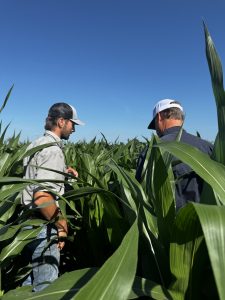
On a farm visit, Shenandoah’s agronomist and forage crops manager, Cody Darling, spoke of the many BMPs and newer technologies being utilized on the farm and how each has helped to fine-tune their cropping systems. Soil moisture sensors are a key player for their silage corn operation to manage irrigation. Due to the nature of North Florida’s sandy soil, irrigation management is crucial in minimizing water and nutrient losses due to leaching. Soil moisture sensors help growers avoid this issue by showing the grower where both the soil moisture levels are, as well as the depth of the fertilizer contents. When irrigating, Cody focuses on the depth of the root zone and replenishing that zone as the plants uptake the water; this allows for maximum uptake efficiency.
Another new BMP that is being implemented is a nitrogen management tool by AgXplore called ContaiN Advanced(ContaiN Advanced™ – Nitrogen Management) as well as a biological product by NanoYield called NanoN+ (Nano-Yield™: The nanotechnology company | Nanotechnology for Agriculture & Turf). Both of these products have a similar purpose of reducing nitrogen losses and helping the plant utilize its nitrogen more efficiently.
The new “holy grail” of the dairy’s corn operation is the purchase of a Case Highboy sprayer that uses y-drops to side dress the fertilizer. This is a new practice of the dairy but quickly became a major piece of the puzzle to reduce inputs. In the past, the majority of fertilizer was injected through the pivot in doses ranging from 5-15 gallons per acre each time, reaching an estimated 275-300lbs nitrogen/acre. However, since implementing the y-drop rig this season, only two fertilizer applications have been made adding up to only 136lbs nitrogen/acre! This shift represents a significant improvement in efficiency, cutting nitrogen use by half. Cody noted; he believes roughly 80% of the farm’s total nitrogen reduction can be credited to the adoption of the Y-drop system, making it one of the most impactful BMPs implemented to date.
Results
This year’s silage corn crop at Shenandoah Dairy showcased the benefits of precision management and BMP implementation in action. By combining nitrogen management and biological products, soil moisture monitoring, and Y-drop side-dressing fertilizer application, the farm achieved higher recorded yields while using less than half the nitrogen applied in previous seasons.
On average, this season’s silage corn yielded 23 tons per acre, compared to historical yields of 20 tons per acre or less. At the same time, total nitrogen use dropped from roughly 300 pounds of nitrogen per acre to just 136 pounds of nitrogen per acre, resulting in a 55% reduction in nitrogen inputs! Across the dairy’s 1,275 acres of silage corn, this improvement represented a savings of approximately 209,000 pounds of nitrogen. Not only did the farm maintain strong yields under lower nitrogen rates, but the results also demonstrate how integrating advanced technologies with good management can enhance nutrient use efficiency, protect local water resources, and sustain productivity for years to come.
Authors: Sydney Williams, Bob Hochmuth, Joel Love, and Raymond Balaguer
University of Florida, Institute of Food and Agricultural Sciences; North Florida Research and Education Center – Suwannee Valley
 1
1