The Monroe County Extension Office is looking for commercial trappers and recreational stone crabbers to be on the lookout for a possible new invasive underwater species. It is a soft coral called Pulse Coral, which is common in the aquarium trade where it is known as Pulsing Xenia or Pom-Pom Xenia. Just like the invasive lionfish, it is native to the Red Sea and the Indo-Pacific Ocean. Pulse Corals can smother coral reefs and seagrasses because they grow rapidly and have no known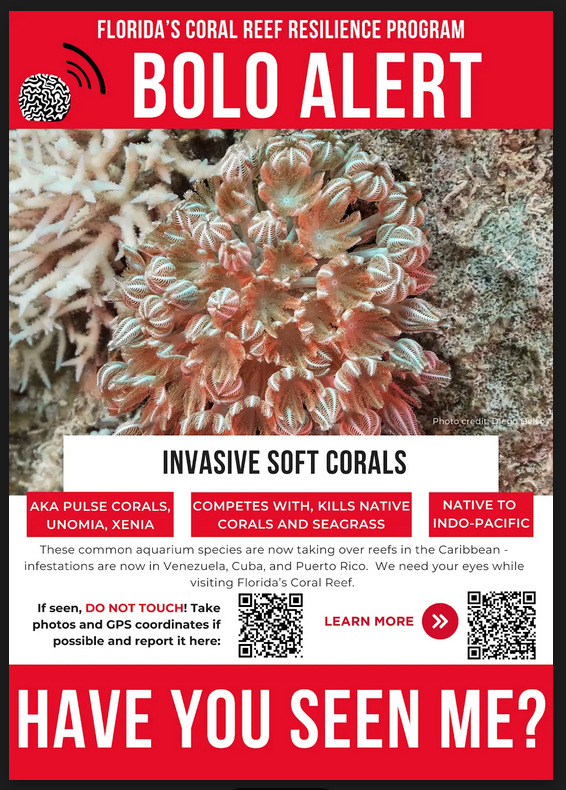 native predators. Since the temperatures in the Florida Keys are similar to their native range, there is good reason to believe if they arrive they could be very successful at spreading rapidly if not controlled immediately. Pulse Corals were introduced illegally in Venezuela 20 years ago and the invasion there has devastated thousands of acres of coral reef and seagrass meadows. A likely aquarium release in Pearl Harbor has spread to 90 acres, covering and smothering the seafloor. Since 2022 another species of Pulse Coral was found in northern Cuba and Puerto Rico. It is of concern because it has been present in northern Cuba just south of the Dry Tortugas and two years ago it was found in Puerto Rico. As of spring 2025, there are three invasive Pulse Corals in Puerto Rico and the Caribbean. Like all underwater invaders, eradication is very difficult once it arrives. These Pulse Corals spread very easily and attach to manmade and natural substrates.
Unfortunately, it is very possible these noxious invaders could arrive in the Florida Keys. Early identification and eradication is the only way to prevent a full-scale invasion. Common native soft corals in the U.S. are sea fans, sea whips, and sea pens. Corky sea finger is the closest looking soft coral in the Florida Keys. The Pulse Corals can be identified apart from our native soft corals because the polyps are much larger and the polyps are constantly opening and closing to feed in a pulsing rhythm. The local stony corals like brain corals, star corals, elkhorn, and stag corals are distinguished by having 6 tentacles and secrete a hard calcium carbonate skeleton that creates the 3-dimensional structure of a coral reef.
What to look for
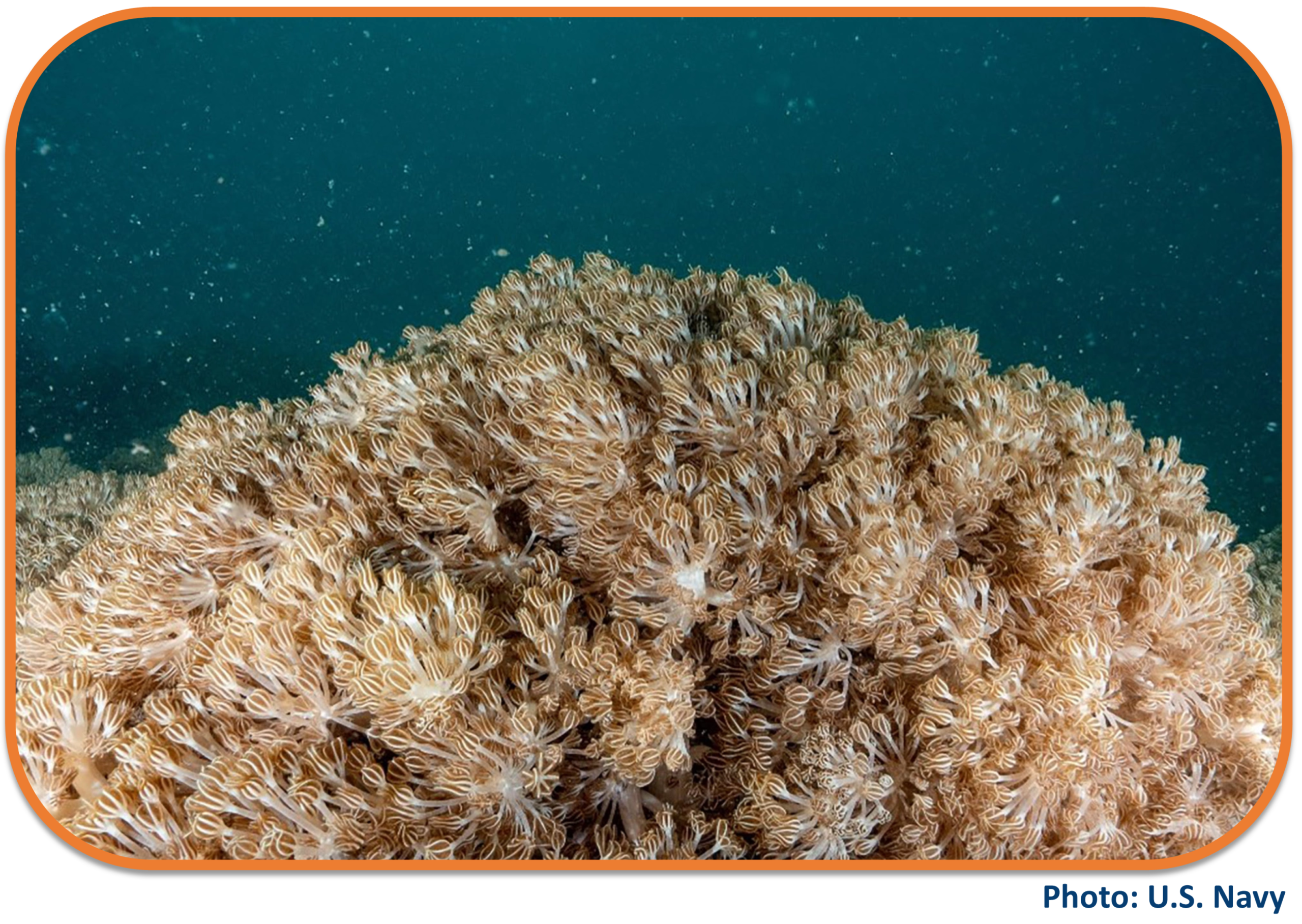
- White to pink long stalks with polyps at the end that have eight feathery tentacles
- Form ‘mats’ that cover the bottom on rocks, corals, seagrasses, and manmade substrates like traps and boat bott

Pulse Corals. Credit US Navy oms
- Known for its dance-like or ‘pulse’ movements in ocean currents as it is unable to retract but constantly opens and closes, hence the name Pulse Corals
In Puerto Rico, these invasive Pulse Corals were first found in 200 feet of water. This is the reason we think that commercial trap fishers may find them first. If you see it – please do not touch it or pressure wash the traps, since small fragments easily break off and float away to regrow in new areas. Please pull the trap into the boat and bring the trap back to shore. Take photos. The Theodolite app for smartphones is a terrific resource to have on your phone – it takes photos with the GPS coordinates automatically embedded. The Monroe County Extension Service is working with state and federal partners on an action plan should these Pulse Corals arrive in South Florida.
The FWC has a great webpage at MyFWC “Invasive Pulse Corals.”
In the meantime, early reports are vital. Please send all reports to Atlantic and Gulf Rapid Reef Assessment (AGRRA) Invasive Xeniid Learning Exchange portal. SCUBA divers and snorkelers should also be on the lookout. Florida Department of Environmental Protection SEAFAN.net is another resource to report invasive species, coral bleaching, and marine life in distress. All of these sites have maps to drop a pin with latitude and longitude information and a place to upload photos. Wherever you report your findings, all of these people that monitor these reporting tools are involved in the response. The Monroe County Extension is working closely with all partners, and you can always call our office at 305-292-4501 or email monroe@ifas.ufl.edu with reports.
 0
0