Oak galls are one of my favorite examples of how complex plant–insect interactions can be. If you’ve ever walked past an oak tree and noticed odd growths (round, leafy, fuzzy, spiky, or shaped like little apples) you’ve seen the work of gall-forming insects. Oaks host an enormous diversity of galls, and it’s especially noticeable here in Florida.
Gall wasps (family Cynipidae) are the most famous gall-makers on oaks. An estimated 87% of gall wasp species form galls on Quercus spp. (Hodges et al. 2006). Their galls can look like almost anything—pom-poms, grapes, peas, tiny flowers, spiky spheres. Sometimes you even find freeloaders like ants, mites, or other insects living inside along with (or instead of) the original larva.
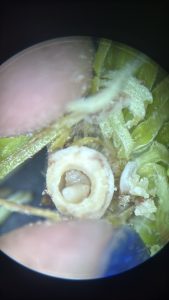
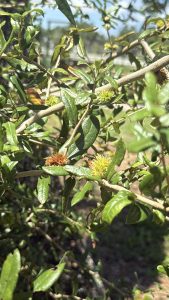
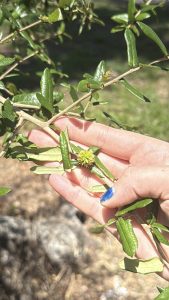
The gall I’m showcasing today is the leafy oak gall, caused by the wasp Andricus quercusfoliatus. Like many gall wasps, it specializes on oaks and uses the tree’s own growth processes to create a custom structure for its offspring.
How it works:
When a female wasp lays an egg on fresh, actively growing oak tissue, compounds from the wasp interact with the plant’s growth hormones. Instead of forming a normal leaf or bud, the plant redirects its development and creates a gall, essentially a tiny nursery that feeds and protects the larva. Inside, the larva has everything it needs: nutrition, shelter, and a stable micro-environment.
Life cycle basics:
Many oak gall wasps alternate between a sexual and an asexual generation, a process called heterogony, and each generation may produce a different-looking gall. The larva develops within the gall, pupates, and eventually emerges as a very small adult wasp ready to repeat the cycle.
Most oak galls cause no long-term harm to healthy trees. They may look dramatic, but they’re simply part of the natural community of insects that interact with oaks.
Video:
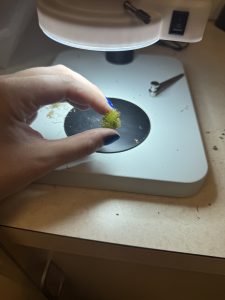
In the video below, you can see me cut open a leafy oak gall to reveal the developing larva tucked inside—just one small glimpse into how tiny insects can reshape plant growth in remarkably specific ways.
References:
For more information on gall-forming insects in Florida, Insect Galls of Florida (SP 343) by Amanda Hodges, Eileen Buss, and Russell Mizell is an excellent UF/IFAS resource. https://ifasbooks.ifas.ufl.edu/p-250-insect-galls-of-florida.aspx
To explore this specific gall further, here’s a great link: https://gallformers.org/gall/812
Author disclaimer: This identification is my best interpretation based on the resources available. Gall ID can be tricky, and this has not been formally verified by a specialist. As always, information may change as new research becomes available.
 1
1