A huge thank-you to everyone who joined us for the 34th Annual Farm City Week Agricultural Tour. We had a full bus, a full schedule, and a full day of learning, connecting, and experiencing agriculture firsthand. Thank you to every operation that opened their doors to us, to the tour guides who shared their time and expertise, and to everyone behind the scenes who helped make the day possible.
Farm City Week is a long-standing national tradition that began in the 1950s to strengthen understanding between farmers and consumers. Here in Florida, Farm City Week continues to highlight the connection between agriculture and the broader community by encouraging conversations, cooperation, and shared appreciation for the people who grow, harvest, transport, and make our food system possible.
(Florida Farm Bureau Federation, 2025).
Here in Manatee County, this tour associated with Farm City Week has been running for over three decades, and as many long-time residents know, our county has changed a lot in that time. It’s a common misconception that agriculture is “gone.” That couldn’t be further from the truth. Agriculture is still here (thriving, evolving, and adapting) even if it looks different than it did 34 years ago when these tours began.
Each year, we’re thrilled to bring the public a little closer to the agricultural community that continues to nourish, employ, and inspire Manatee County.
Tour Overview
Our 2025 Agricultural Tour took us through West Manatee County to visit:
- West Coast Tomato
- Orban’s Nursery
- Lunch at Palma Sola Botanical Park
- Manatee Farms
- A.P. Bell Fish Co., Inc.
Each stop offered something completely different — from high-tech packing lines to historic nurseries, thriving foliage farms, and one of the last true working waterfronts in Florida.
Stop 1: West Coast Tomato
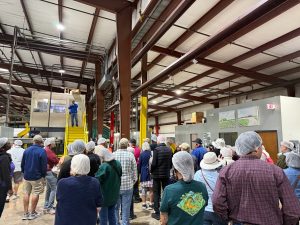
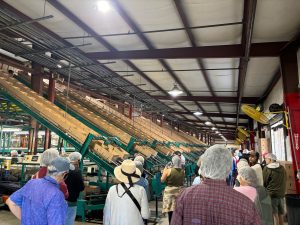
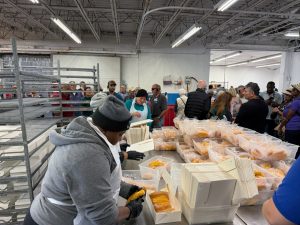
Our first stop of the day showed just how eye-opening agriculture can be when you finally get to see behind the scenes. Many Manatee County residents drive past the West Coast Tomato packinghouse without ever knowing what goes on inside.
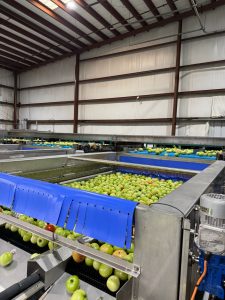
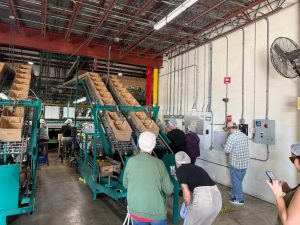
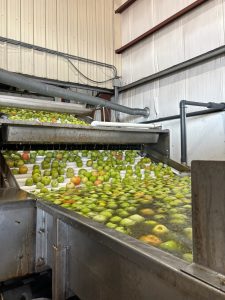
Getting to step behind the scenes was a rare and memorable experience. The level of mechanization surprised many on the tour. Like many agricultural operations, West Coast Tomato has adopted more automation over time due to labor shortages. Their camera-driven packing line was especially impressive — a state-of-the-art system monitoring color, size, and quality in real time.
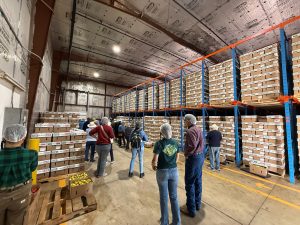
We also learned just how precise the science of ripening and cooling tomatoes really is. Temperature management and timing are monitored constantly to ensure tomatoes leave the facility at the perfect stage and can withstand long-distance transport.
This stop gave us all a greater appreciation for something as simple as the tomatoes we grab at the grocery store. And yes — the Roma tomatoes they shared with us were very much appreciated.
Stop 2: Orban’s Nursery
One word: stunning.
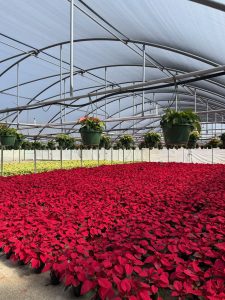
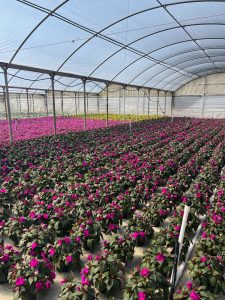
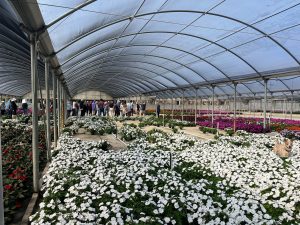
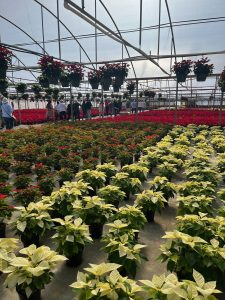
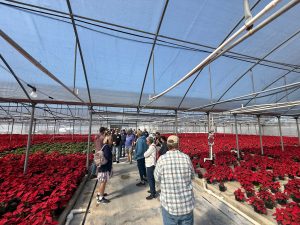
This is another operation that reflects the resilience and dedication it takes to thrive in this industry. Orban’s is a beloved part of the community, and visiting during poinsettia season feels like stepping into a holiday postcard. Their greenhouses were filled with vibrant poinsettias and beautiful flowering annuals, and every corner offered a new splash of color.
But beyond the beauty, the real story at Orban’s this year is their ongoing search for reliable, high-quality water. Being so close to the coast means their well water has struggled with saltwater intrusion. County and reclaimed water can work, but they come at a cost — and some plants, especially poinsettias (the divas of the plant world!), are extremely sensitive to salts and water quality.
Because of this, Orban’s is exploring the installation of a reverse osmosis (RO) system. It’s a major move, but one that could help secure the clean water their most sensitive crops rely on. It will be interesting to watch how this develops and how the community can support them along the way.
As the ornamental agent for Manatee County, Orban’s has always welcomed me in (whether I’m learning on the job or brainstorming ways to collaborate) and I truly appreciate that openness.
Lunch Stop: Palma Sola Botanical Park
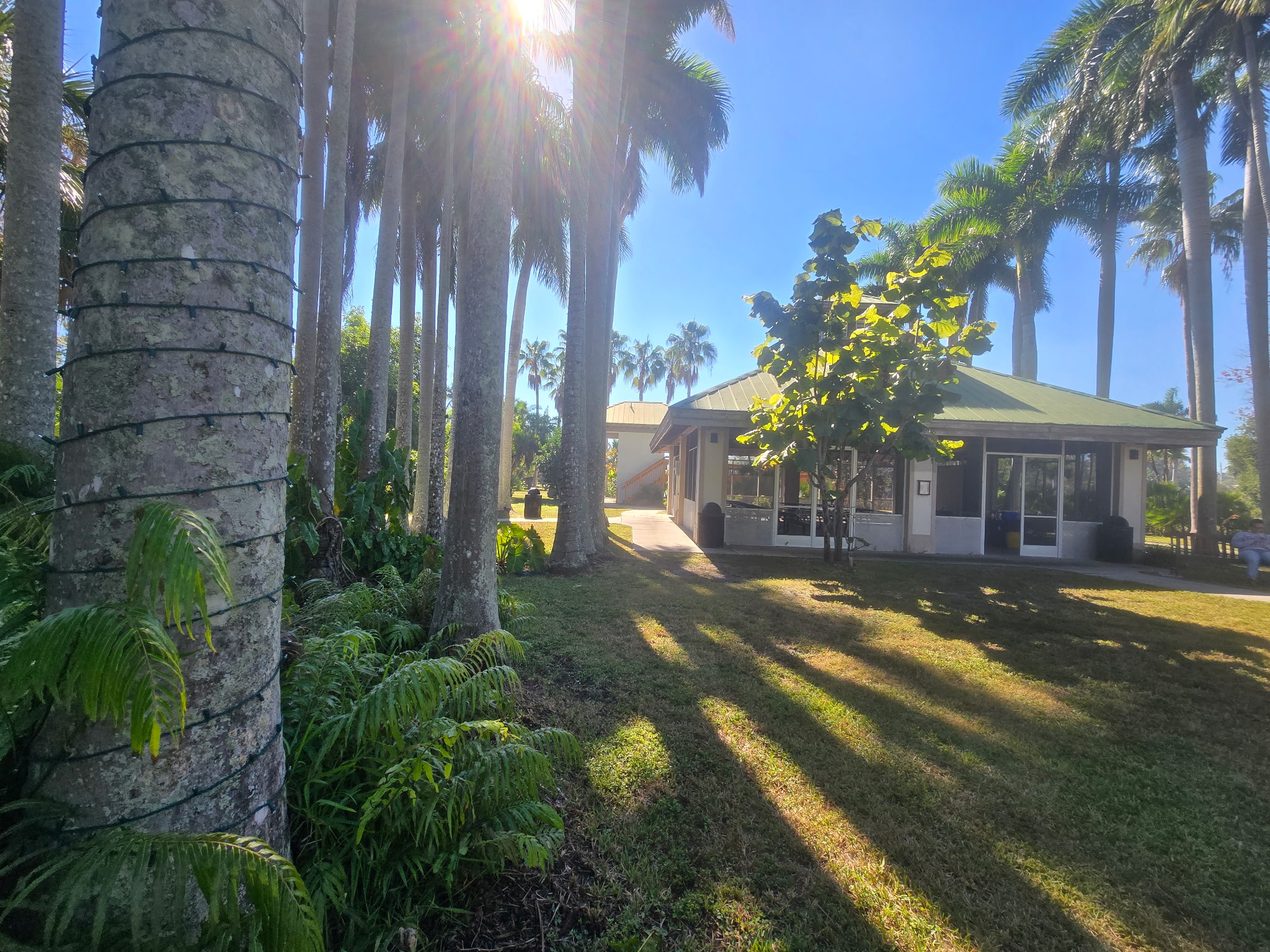
We were very fortunate to have Palma Sola Botanical Park nearby and willing to host us for lunch. It was the perfect moment to rest our legs, fill our stomachs, and enjoy the scenery of a beautiful botanical garden.
Many participants told me they had never visited Palma Sola before — even though it is free, open 365 days a year, and right in our backyard. The park is a treasure, offering:
- Art in the Park, featuring rotating exhibits of local artists
- A Rare Fruit Trail with starfruit, jackfruit, lychee, papaya, mulberry, and many more
- A Hidden Garden Nursery run by volunteers (Tuesdays & Saturdays, October–May)
- Group tours, lush gardens, subtropical collections, and quiet spaces for families
Thank you, Palma Sola Botanical Park — I have a feeling many of us will be back very soon.
Stop 3: Manatee Farms
If you read my last blog before the tour, you already know that Manatee Farms is an absolute powerhouse in Manatee County agriculture. They’ve weathered multiple industry-shaping challenges (citrus canker, gladiolus rust, devastating hurricanes) yet the family and operation continue to stand strong.
This year, Whiting Preston was honored as the 2025 Agriculturalist of the Year, celebrated at the Kiwanis luncheon during Farm City Week. It was a well-deserved recognition for a family that has shaped agriculture in this county for generations.
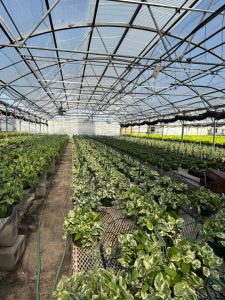
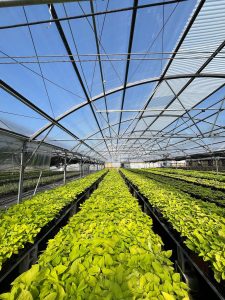
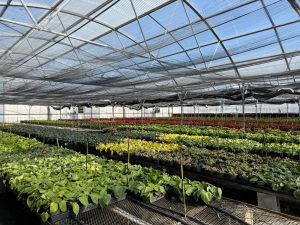
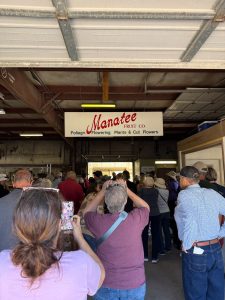
The tour stop itself was stunning. Rows of vibrant foliage, classic indoor plants, and ornamental varieties filled the greenhouses; many people on the tour mentioned feeling inspired to decorate their homes with new plants afterward. Beyond the beauty, we also got to see how much work is still happening behind the scenes to recover from last season’s storms. One of the greenhouse roofs was actively being rebuilt while we were there, a reminder that recovery in agriculture takes time, planning, and persistence.
As with Orban’s, Manatee Farms has also shown me kindness during my transition into this role, and I feel very fortunate to get to work with them.


Stop 4: A.P. Bell Fish Co., Inc.
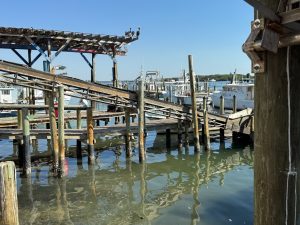
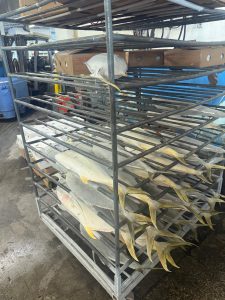
We ended the tour in the historic fishing village of Cortez, one of the last true working waterfronts in Florida. A.P. Bell has sea water in its blood — the people here have been part of Manatee County’s fishing heritage for generations.
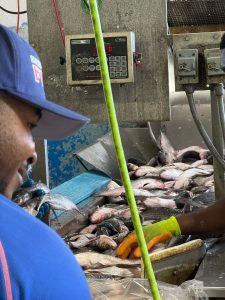
This stop offered a completely different side of agriculture: commercial fishing, sustainability, and tradition. Participants heard about the local species brought in each day, how seafood is handled and moved through the supply chain, and the deep sense of stewardship that defines the Cortez community. One topic that sparked a lot of interest was roe, the eggs of certain fish species that play an important role in both harvesting decisions and market value.
It was also interesting to reflect on the overall flow of our day. We started the tour at a packinghouse for tomatoes and ended it at a packinghouse for seafood. These were two operations with completely different products, yet similar levels of precision, timing, and care. Seeing the similarities and the vast differences side-by-side gave everyone a better appreciation for just how much work and coordination goes into getting food from local producers to the public.


Closing Thoughts
I always find it inspiring to spend time with the legacy farms and operations here in the county I grew up in. I didn’t grow up in agriculture, but by exploring different opportunities and following what interested me, I ended up finding my way into this industry.
I encourage everyone to explore the different corners of their community and see what speaks to them. That’s what I did, and that’s how I found an industry that I’m learning to love and growing into more each day. Now as a first generation agriculturalist I get to work alongside the people and places that have shaped agriculture in Manatee County for generations.
Thank you again to everyone who joined us on the tour, to the operations who opened their doors, and to everyone who helped make the day possible. I’m grateful to be a small part of this community, and I’m already looking forward to next year.
References:
Florida Farm Bureau Federation. (2025). Farm City Week: 2025 volunteer toolkit. https://floridafarmbureau.org/wp-content/uploads/2025/11/Farm-City-Week-2025-Volunteer-Toolkit.pdf
 1
1