My Story
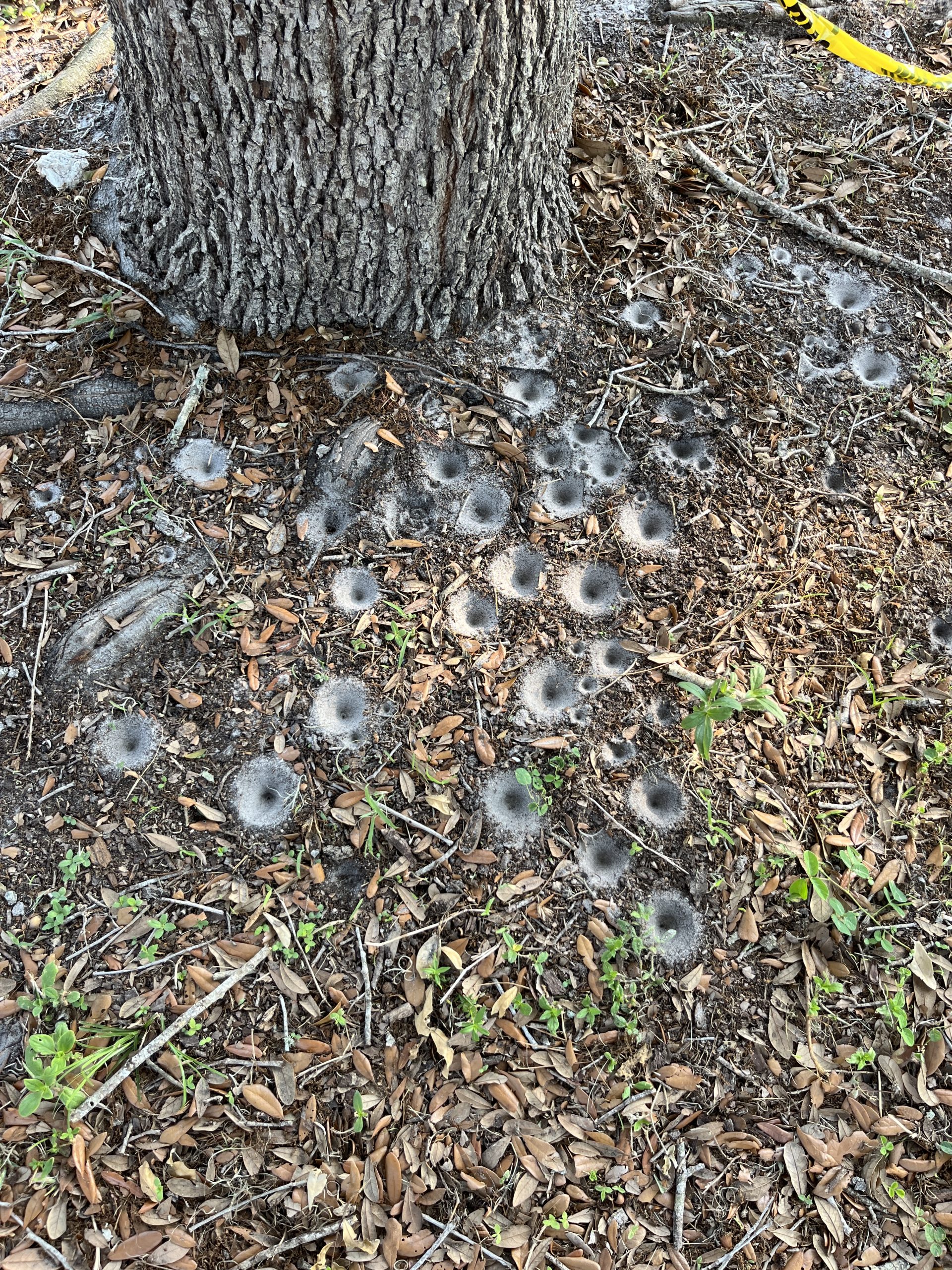
One day on a walk, I noticed a cluster of tiny funnel-shaped pits in the sand. I knew right away who made them … an antlion larva, also called a “doodlebug.” These little predators are masters at building some of the most effective insect traps in nature.
I’d never seen an adult antlion in the wild (truly tragic). They’re short-lived, mostly nocturnal, and easy to miss. So, I decided to raise one myself. Antlions in the classroom aren’t a new idea, but I was excited to put my own spin on it.
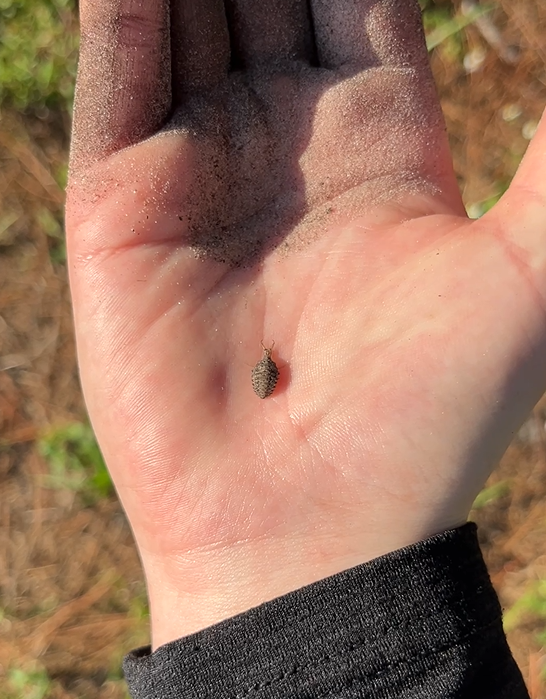
That’s how I ended up with my new officemate, Antony (of course he needed a name). I scooped him up, set him up in a deluxe box of sand, and watched as he hunted, grew, and eventually pupated into an adult antlion. What started as curiosity quickly turned into a mix of science experiment and pet project—and I learned a lot along the way.
But First, What Even Are Antlions?
Antlions are insects in the order Neuroptera. The name comes from the Greek roots neuron (nerve) and pteron (wing), meaning “nerve-winged” — a nod to the intricate vein patterns in their wings.
They belong to the family Myrmeleontidae, which comes from the Greek myrmex (ant) and leon (lion), literally meaning “ant-lion.”
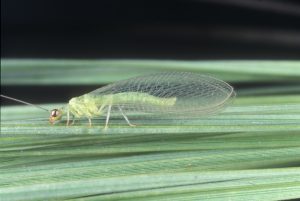
This order isn’t widely known, but its most famous members are lacewings — the predatory insects you can buy for your garden, they are voracious aphid eaters among other garden pests. Fun fact: lacewing larvae sometimes carry the carcasses of their prey on their backs for camouflage, earning them the nickname “trash bugs.” Other relatives include owlflies.
Life Stages of an Antlion
Egg
Females lay eggs in dry, sandy soil — the perfect spot for the larva to dig pits as soon as it hatches.
Larva
This is the stage most people recognize. The larva digs cone-shaped pits in loose sand. When an ant or other insect slips in, the sand collapses, and the hidden larva snags it with sickle-shaped jaws. Then the insect injects enzymes to liquefy the preys insides so it can be slurped out. Larvae can live 1–3 years depending on food and conditions.
Weirdest fact? Antlion larvae don’t have an anus. They store waste their whole larval life and only expel it once they become adults. Efficient.
Pupa
When ready to pupate, the larva seals its pit and spins a sand-covered silk cocoon. Inside, it transforms from a chunky hunter into a winged insect. This stage lasts 3–4 weeks.
Adult
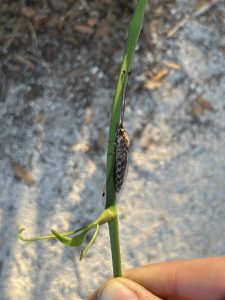
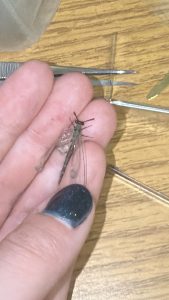
Adult antlions look a bit like damselflies but are weaker fliers, mostly nocturnal, and have clubbed antennae. Depending on the species, they feed on nectar, pollen, or not at all. Their adult lives are short — usually just a few weeks.
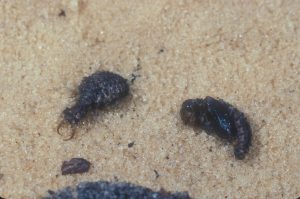
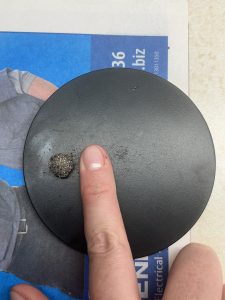
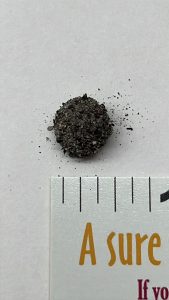
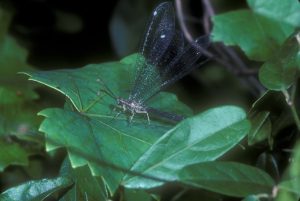

The Life and Legacy of Antony the Antlion
Raising an antlion was surprisingly easy and incredibly rewarding. I got to watch an animal that most people never see in action, and I learned a lot in the process. Unfortunately, when Antony emerged, he had curled and distorted wings. I believe this is due to the fact that he was in a low-humidity environment (my office), and I didn’t give him a stick or anything to climb on. Normally, in the wild, they’ll crawl onto trees or grass blades and expand their wings that way. Unfortunately Antony had to do this on top of the sand.
However, those are only my theories as to why his wings didn’t expand properly, but there could be a number of other reasons. I almost feel like this could be a small science experiment to work on. Hmm.
Regardless, even though Antony’s adult stage didn’t go perfectly, seeing his life cycle from start-ish to finish was worth it. I’ll definitely try raising another one — and maybe even experiment with other unconventional arthropod pets. And if you ever spot those little sand funnels on a walk, take a closer look. There might be a patient predator hiding at the bottom, waiting for its next meal.
Want to See Antony in Action?
If you’d rather watch than read, I made a video about Antony’s journey. The quality isn’t Hollywood-level (I’m an entomologist not a professional video editor or narrator!), but it captures the highlights of raising an antlion. This video show real life science, sometimes that means immobilizing or preserving insects, always done with curiosity and respect. Watch it here: https://www.youtube.com/watch?v=K1MaoyffTYE
Sources:
McCann, S., Ellis, J. D., & O’Malley, M. K. (2011, March). Antlions in the classroom: ENY-1002/IN 760. EDIS, University of Florida IFAS Extension. https://edis.ifas.ufl.edu/publication/IN760
North Carolina State University, Department of Entomology & Plant Pathology. (n.d.). Order Neuroptera — Lacewings, antlions, mantidflies, owlflies. NC State Extension. Retrieved from https://genent.cals.ncsu.edu/insect-identification/order-neuroptera/
*All photo credit by author unless otherwise stated.*
Disclaimer: The author did not attempt to determine whether Antony was male or female. Instead, Antony was simply asked his preference. His only reply was, “Stop asking questions and bring me another fly.”
 3
3