
The rapid urban growth in many areas of the United States coupled with increased interest in the environment and home gardening have prompted ever-increasing numbers of homeowner questions to County Extension Service agents. Many of these questions are seasonal in nature and are relatively easily answered assuming that one has horticultural training.
In 1972, an innovative Extension Agent, Dr David Gibby, in the State of Washington reasoned that well-trained volunteers could respond to many of the everyday homeowner questions freeing him and his colleagues for more technical and difficult problems. Volunteers, such as Extension Homemakers and 4-H Leaders had always been part of the Extension Services, but never in the area of homeowner horticulture. The Extension agent selected, trained, and certified volunteers as Master Gardeners. They soon succeeded in meeting his desired objectives – in fact they exceeded his expectations. This led to the genesis of the Master Gardener volunteer system.
Since that time, the Master Gardener program has grown and is now active in 45 states. Florida began in 1979.The program has been a tremendous success and is now active in over half of Florida’s counties. The Florida Master Gardener Program is sponsored by the University of Florida’s Institute of Food and Agricultural Sciences (IFAS) of which the Cooperative Extension Service is a part.
Just what is the Cooperative Extension Service?
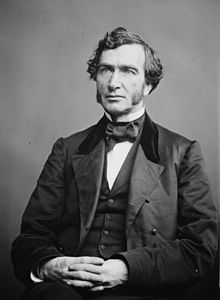
For a more complete understanding of this unique organization, we must go back to 1862 when the U.S. Congress passed the Morrill Act, which established colleges in each state to be financed through grants of land from the Federal government. They became known as “land grant colleges”, a name which persists today. These colleges would emphasize teaching practical subjects, such as agriculture and home economics.The 1887 Hatch Act provided for experimental stations at Land Grant Colleges to conduct research for those colleges’ agricultural problems.
Then in 1914, the Smith-Lever Act created the Extension Service as part of these colleges as a means of disseminating the practical knowledge gained through agricultural research. The University of Florida in Gainesville is Florida’s land grant college; the Institute of Food and Agricultural Sciences (IFAS) is that part of the university which was responsible for the Cooperative Extension Service.
The term “cooperative” refers to the method by which the extension services are funded. In Florida, three cooperating tax sources provide funds: the U.S. Department of Agriculture, the State through legislative appropriations, and the counties through appropriations by county governments. The word “cooperative” also implies a sharing of information generated through sound research programs at the federal and state levels. The term “extension” defines this organization’s purpose — to extend the information generated at the state and federal level to people at the county level in the form of a “service”. The Cooperative Extension Service is an informal education organization, which provides information in three main areas: agriculture, human and natural resources, and the life sciences.
The motto and goal of the Cooperative Extension Service is “Helping People Help Themselves”
Thus, you can see how well the volunteer Master Gardener concept fits into the ultimate objectives and goals of the Extension Service.
In 1979, a group of Florida Extension agents chose to maximize resources by using a new volunteer training model developed in Washington in 1973, called the Master Gardener program. The horticulture “Master” volunteer concept is so effective that it has since spread throughout the United States and several provinces of Canada. Read more about the development of the original program (Washington State University website; PDF).
Additional Resources