This week I was brought an interesting sample by a Master Gardener Volunteer trying to identify what was causing some interesting damage to her bay leaf tree. The damage favored an insect “gall” but almost seemed to be apart of the leaf. My first thought was potentially aphid damage, but it turned out to be a bay leaf sucker or what is also known as a laurel psyllid or Trioza alacris.
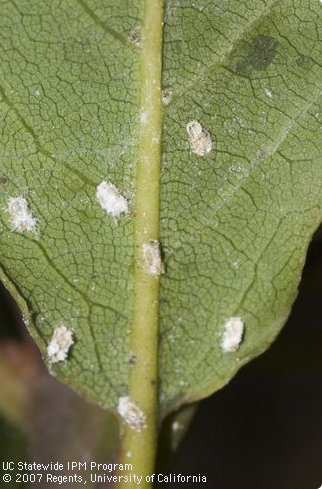
For gardeners not up to speed on their entomology terms, a psyllid is an insect very similar to an aphid with piercing-sucking mouthparts. The psyllid is apart of the insect Order Hemiptera. There are various types of psyllids, including the most well known in Florida currently as the Asian citrus psyllid which is the culprit of the citrus greening virus Huaonglongbing (HLB). The type of damage a psyllid causes includes sucking out the leaf sap and leaving a honeydew excrement behind. It is most common to see insect damage from psyllids in the warmer spring months because they love to feed on fresh, spring growth on various kinds of plants. According to UMC Extension, most psyllid species only need a few warm weeks to go from complete their life cycle from egg to adult.

The damage the laurel psyllid causes creates an abnormal twisted growth on the leaf terminal, causing the leaf to curl in on itself and turn to a lighter green color. The damaged spot will eventually turn brown and dry up to fall off. Inside the leaf curl you can find psyllid eggs or honeydew. While more native to California, they are not commonly found in the state of Florida, but this does not mean they can’t be seen.

According to UMC Extension, the best way to control the bay leaf sucker is through ultimately pruning out infested branches or leaves or utilizing insecticidal soaps to keep them at bay. To monitor psyllid activity, it is recommended to use yellow-sticky card traps by hanging them on the suspected host tree/plant.
For more information, please visit: UC IPM- Home and Landscape Psyllid Management
 3
3