Congratulations Florida, you finally participated in winter. After 8 years of mild weather, we got to experience extreme cold. This weather shift affected our lawns, shrubs, and our crops. Today, we will explore how extreme cold can impact the forage-base livestock producers rely on to sustain their animals.
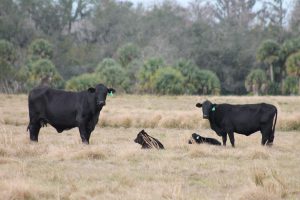
Are your forages good enough for your nutrient demand?
By now all your cows should have a calf on the ground. Peak lactation is in full swing as these calves require more volume to deal with high growth demand as well as to offset the effects of the cold mornings.
Tropical forages such as Bahiagrass and Limpograss are not a great source of nutrition after a freeze. These plants are perennial but have slowed or stopped growing since last fall. New shoots will emerge in a few weeks. If you are not feeding hay at this point, you take a chance of affecting the body condition of both momma cows and babies.
Consequences from the freeze
When temperatures drop below freezing for extended periods, several physiological events occur inside every blade of grass you see standing on your field:
- Cell rupture: Ice crystals form within plant tissues, breaking cell walls and causing irreversible damage.
- Leaf desiccation: Leaves lose moisture and die, giving pastures the brown, burned appearance seen after a freeze.
- Loss of photosynthetic capacity: With leaf tissue destroyed, the plant can no longer produce energy.
- Carbohydrate depletion: We are losing our sugars. Plants rely on stored root and stem reserves to survive and regrow after injury. Severe cold forces the plant to use these reserves for survival rather than growth.
- Delayed regrowth: Recovery in spring depends on how much stored energy remains in the root system.
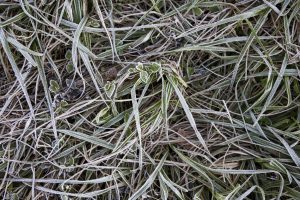
Should I just rely on the dead forage for grazing?
There is a marked difference between stored (preserved) hay and frozen forage. What happens to plants during a freezing event has a big impact on its quality.
After a freeze:
- Cold and plant proteins – Crude protein declines rapidly as plant cells die and nitrogen is lost from leaf tissue. Nitrogen goes back to the atmosphere in gas form.
- Digestibility – Plant material will be less digestible due to increased fiber concentration and lignification (mature plant tissue becomes woody and undigestible) of dead material.
- Running out of fuel – Energy value drops as soluble carbohydrates are used up or lost.
- Palatability decreases – Plant texture and flavor changes, leading to lower voluntary intake by cattle.
Even though you may still see plenty of standing forage, it is now similar to low-quality roughage rather than productive pasture. Cattle may appear to be grazing normally but are not receiving adequate nutrients to maintain body condition, growth, or reproductive performance.
This is when many producers see unexplained weight loss, reduced milk production in cows, and poorer conception rates if the issue is not addressed.
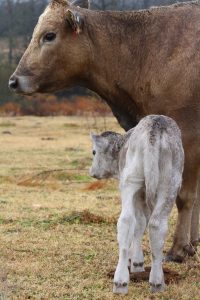
What cattlemen can do to offset the change in forage quality and nutrition
So, by now hopefully you have been convinced that you may have a problem and are wondering what actions I can take to remediate this situation. Here are some possible strategies you can implement today:
- Evaluate quality, not just quantity – Assess pasture by nutritive value. Many freeze-injured forages will have low digestibility and crude protein content. Simply “enough forage” doesn’t guarantee adequate nutrition.
- Supplement Wisely – Provide protein supplements (cubes, meals, or liquids) to support rumen function when grazing low-quality forage. Make sure that you introduce energy sources gradually to avoid digestive upsets.
- Monitor Animal Condition – Keep a close eye on body condition scores, especially for cows in late gestation or early lactation when nutrient demands are high.
- Avoid Heavy Grazing – I always advise my people to think of the forage as your base. You are a grass farmer, and you use your animals to harvest this commodity. With that mindset, prioritize the pasture. Return pastures to light stocking to allow regrowth once temperatures warm up. Overgrazing injured stands can delay recovery and reduce vigor.
- Later in the year – you can invest more time monitoring your soil fertility, sourcing hay in advance, and developing a supplementation strategy for next winter.
Informed decisions make a difference
What we’ve covered here is science-based and built on practical experience: tropical grasses like Bahiagrass, and Limpograss are vulnerable to freeze injury; freezing alters plant cell integrity and reduces forage nutritive value; and cattle producers must respond proactively with supplementation and thoughtful grazing management. Preparing ahead — through soil and pasture management, maintaining reserves, and having nutritional plans ready — helps turn weather setbacks into manageable challenges rather than crises. If you need further assistance on this topic, don’t hesitate to reach out to us at 863-773-2164, or drop by UF/IFAS Extension Hardee County located at 507 Civic Center Drive, Wauchula, FL 33873.
Kee learning
Evaluating and Managing Alfalfa Stands for Winter Injury – Team Forage
Impact of Sub Freezing Temperatures on Warm-Season Perennial Grasses – Forage Fax
How Freezing Temperatures Affect Forages | CropWatch | Nebraska
Harvesting and Grazing Forages Following a Frost | Forages
SS-AGR-332/AG342: Bahiagrass (Paspalum notatum Flüggé): Overview and Pasture Management
SS-AGR-320/AG330: Limpograss (Hemarthria altissima): Overview and Management
SS-AGR-84/AA266: 2025 Cool-Season Forage Variety Recommendations for Florida
Body Condition Scoring of Beef Cattle | MU Extension
 1
1