Fresh, frozen, fermented, or stomped — there are so many ways to enjoy muscadine grapes, one of the sweetest treasures of the Southeast. Personally, I like mine right off the vine, barefoot, after a late afternoon summer shower. They remind me that the dog days are ending, and cooler weather is just around the corner.
This season, UF/IFAS Extension partnered with Ever After Farms to host Muscadine Field Day, an educational event designed to teach local high school students all about the native muscadine grape — from cultivation and nutrition to processing and marketing.
The Native Grape of the Southeast
Muscadine grapes (Vitis rotundifolia) are native to the southeastern United States and were the first native grape species cultivated in North America. Wild muscadine vines still climb pine forests and roadside fences, providing both beauty and a food source for wildlife.
As resilient as the region they come from, muscadines are well-suited to the humid southern climate and require minimal maintenance, making them an excellent crop for those exploring Florida agritourism or sustainable agriculture opportunities. They can be found in backyard gardens and small farms stretching from Texas to Florida and up into the Carolinas.
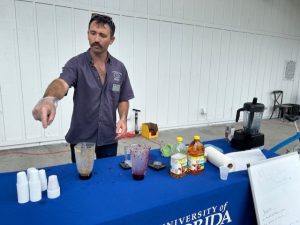
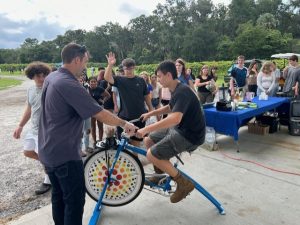
Since they have a short shelf life, muscadines are best enjoyed fresh or turned into all sorts of homemade goodness — jams, jellies, juice, wine, pies, and pastries. Their thick, nutrient-rich skins are packed with anthocyanins and polyphenols, giving them a powerful antioxidant punch. I love adding them to smoothies for a naturally sweet, crisp flavor — which made our famous “blender bike” a hit at the event.
Hands-On Learning at Muscadine Field Day
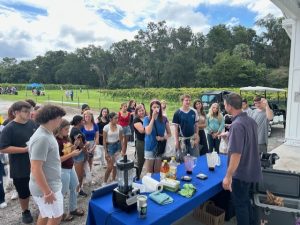
Throughout the day, students rotated through interactive learning stations covering topics like muscadine cultivation, irrigation, harvesting, juice making, and even a friendly seed-spitting contest. With nearly 200 high school students in attendance, we had plenty of enthusiastic helpers to pedal the blender bike and mix up some fresh muscadine smoothies — even a few teachers joined in.
We blended both dark-skinned and light-skinned (scuppernong) varieties and asked everyone to describe the flavor differences:
“The dark variety is sweeter!”
“Tastes a little sour…”
“This one is crisp.”
“Tastes like grass!”
Some came back for seconds and talked about making their own muscadine smoothies at home. Others were just there for the fun of the blender bike — and if it hadn’t been stationary, we might’ve had a racetrack around the farm by the end of the day.
Food, Fun, and Friendship
The event wrapped up with a classic BBQ lunch, a presentation on commercial muscadine production in Florida, and — the grand finale — a Muscadine Friendship Photo Booth that quickly became the highlight of the day.
Events like Muscadine Field Day highlight the importance of connecting Florida youth with local agriculture, helping them learn how Florida-grown crops like muscadine grapes support sustainable farming, agritourism, and healthy local communities.
 1
1