4-H Marine Science Camp
This past week, Flagler County Extension hosted our annual 4H Marine Science Camp.
With a classroom full of excited kids (and instructors), we kicked things off with a fun alliteration game to break the ice. Everyone introduced themselves with an animal that shared the same first letter as their name. I went with “Hi, I’m George, and my animal is a gopher tortoise.” “Is that even a real animal?!” one kid demanded to know… I assured them it was – and let them know we’d be seeing a few later that day.
With the energy high, we set the tone for the day as we embarked to Betty Steflik Preserve to learn about estuaries and their many inhabitants. Our adventure began with a scavenger hunt, where campers searched for mangroves, birds, crabs, invasive species and native plants.
At the end of the boardwalk, we conducted a plankton tow by dropping a net into the water. Then we made our way to the beach along the Intracoastal Waterway (ICW) to learn how to throw a cast net, which requires some humility the first time around. We observed baby flounder, baitfish and crabs before heading to the pavilion for lunch.
Back at the classroom for the afternoon, we viewed our collected plankton under the microscope and discussed their place in the food web. This led into conversation about freshwater, saltwater, and brackish environments and what types of fish live in each. We wrapped up the day with a lively game of “Backyard Bass”, an introduction to the freshwater species that we would encounter at the Welaka Fish Hatchery.
Day Two: Welaka National Fish Hatchery
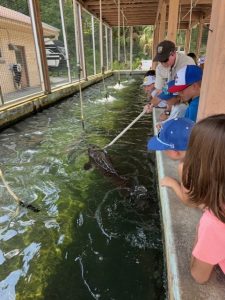
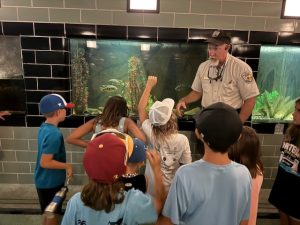
Wednesday morning, we traveled to the Welaka National Fish Hatchery, where our tour guide Tony welcomed us. Tony walked us through the aquarium and taught us all about the freshwater fish that are raised at the fish hatchery and their roles in the ecosystem.
We explored the hatchery ponds where the fish are raised and even met one of the native Eastern Indigo snakes that are also raised at the hatchery. These snakes are a beneficial species that consume other harmful, venomous snakes. The hatchery has had many different programs since opening in 1926, but its primary focuses these days is on striped bass. Just last year the hatchery raised nearly one million fingerlings to be released into the wild.
The hatchery is part of the U.S. Fish and Wildlife Service whose mission is working with others to conserve, protect and enhance fish, wildlife, and plant habitats for the continuing benefit of future generations.
Day Three: Sea Turtles & Intertidal Zones
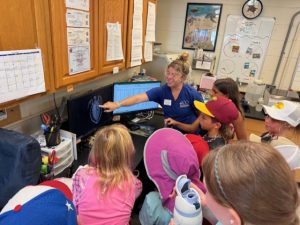
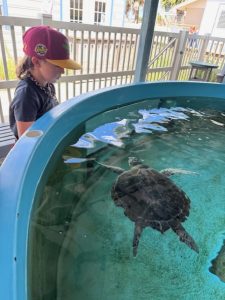
The third and final day of our camp brought us to the UF Whitney Lab for Marine BioScience, where we toured the Sea Turtle Hospital. Campers had a unique opportunity to learn how injured sea turtles are rehabilitated and eventually released back into the wild. We even got to meet—and feed—some of the hospital’s current patients.
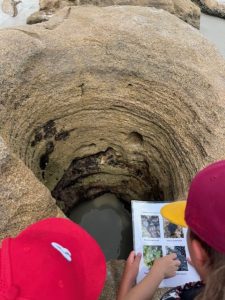
Just down the road, we explored the intertidal zone of the River to Sea Preserve. The large coquina rocks in this area house a diverse range of marine life, making it the perfect spot for another scavenger hunt and a sand flea search party.
That’s a wrap!
We concluded our week with a group discussion reflecting on everything we’d learned—from estuaries to sea turtles to freshwater fish. We also talked about ways to protect these precious environments and explored possible careers in science, research, and environmental conservation.
Our 4H Marine Science Camp was not only a hands-on learning adventure but also a great reminder of the importance of connecting youth with nature.
 0
0