Sweet heat with a whole lotta lore… The culture precisely reflects the flavor, mysterious with wholesome heat. Peachy, pungent and “ooh that’s got a bite”. The flavor profile is just as hard to pin down as the origin. Infamously unknown and locally coveted, the datil pepper is found throughout northeast Florida. My grandfather grew plenty, his homemade sauce was passed around at holidays and complimented many meals. Since his passing, my dad has explored the family recipe and expanded the repertoire to include an irresistible datil mustard and one of my favorites, mango – datil sauce. It is widely used in many Minorcan style chowders found in almost every restaurant from St. Augustine to Palatka along with the popular ketchup/tomato based datil sauce that is a perfect match for any fried platter.
Are you experienced?
At the ripe age of about seven years old, Dad snuck some of that ketchup based datil into the plain ketchup on my dinner plate, unknowingly dragging my next bite of porkchop through the datil and into my mouth, I felt my heartbeat through my tongue… I spent the next ten minutes bouncing off the walls, panting like a dog and strangely wanting more. “That’ll grow hair on your tongue!” my dad laughed… Datils have been a regular spark in my life since that evening. I’ve yet to grow hair on my tongue but I have grown a lot of datils since then and sometimes I still do that same fiery “Datil Dance”.
Heated History
While many claim the datil was brought to Florida by a group of Minorcans seeking a better way of life in the New World, some say it came from the western shores of Africa during the slave trade era. Another story claims the pepper was introduced by Cuban fishermen as a result of the Minorcan’s parish priest, Padre Pedro Campos, reaching out to the Bishop in Havana asking for supplies. This theory is likely, considering that Florida did fall under the Diocese of Cuba before being occupied by the English. I might rascally propose that the seeds were given to the Minorcan settlers from Florida’s mystic native, “Bardin Booger” … All these theories live on; however, the true origin story remains to be as fruitful as a snipe hunt.
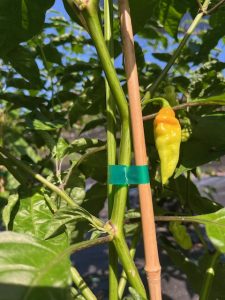
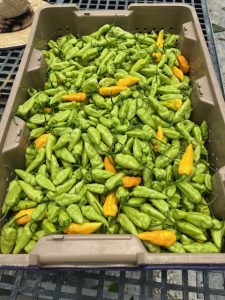
The datil pepper itself is about as hot as the commonly known habanero pepper. Both landing somewhere between 100,000 and 300,000 Scoville Heat Units (SHUs) on the Scoville scale and having a close genetic relationship. The datil pepper is a Solanaceae, meaning a member of the nightshade family, along with other peppers, tomatoes, potatoes and eggplants. It is a variety of the genus – species, Capsicum chinense, along with other varieties like habaneros and scotch-bonnets. Datil peppers are harvested anywhere between their early green stage all the way to their ripe bright orange – date color – stage. It is thought these peppers got their name because of their slight resemblance to the fruits of a date palm.
Local Flare
Today datil peppers are still grown locally in many backyard gardens and front porch pots. There is also a handful of dedicated commercial growers in the Tri-county agricultural area (TCAA) which consists of counties Flagler, Putnam and St. Johns. This area is long known for its agriculture partnership which has contributed immensely to the sustainability of the state Florida. Datil peppers continue to inspire in many forms including cuisine, sauce, salsa, dust (seasoning), craft beer, popsicles, deserts, jellies, jams, art, and even local events. One of the biggest being Palatka’s Datil Fest on the riverfront, where you can take part in a culinary datil taste experience, chefs’ competition, datil growers’ workshop, amateur datil competition and numerous datil pepper vendors. Come see what it’s all about November 8, 2025, at the annual Datil Fest.
Click here for Datil Fest details

 1
1