If you’ve ever gone scuba diving or seen underwater footage of the cold waters off the Pacific coast, you’ll likely recognize giant kelp (Macrocystis pyrifera). The strappy greenish-brown blades of this seaweed form a thick, upright, underwater jungle teeming with fish, invertebrates, seabirds, and marine mammals.
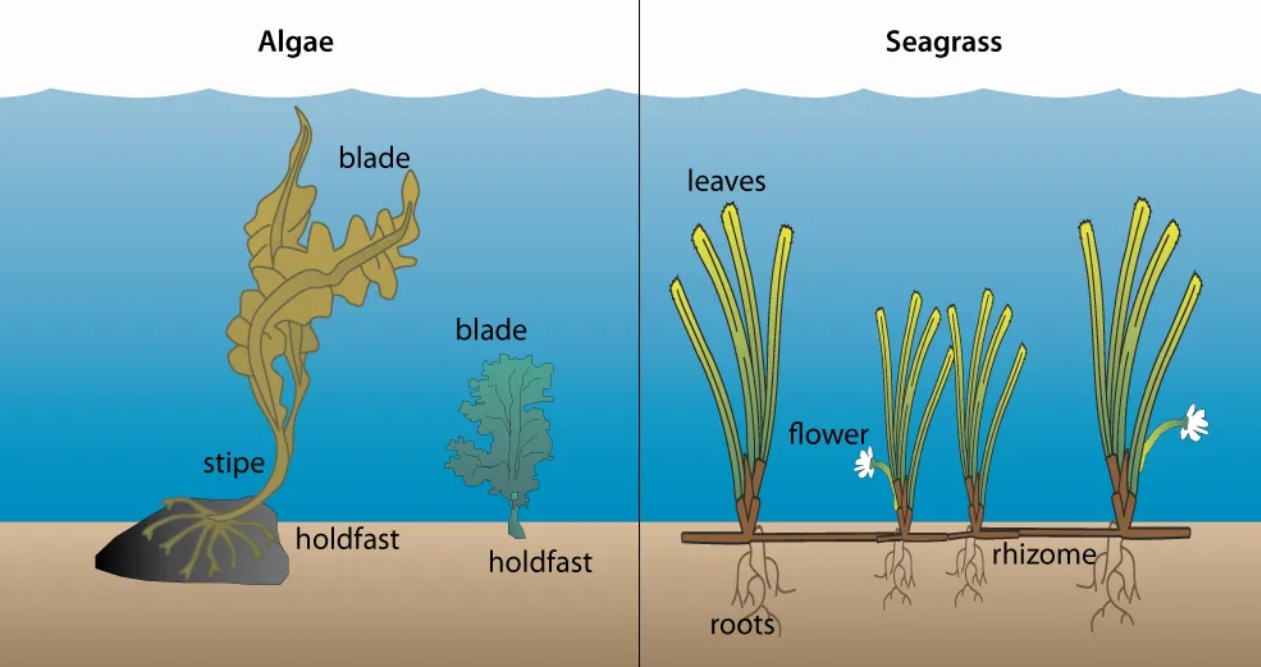
On behalf of the biologists and botanists in my audience, I will remind readers that there is an important difference between seagrass and seaweed. While the terms are often used interchangeably, seagrass is an actual plant, rooted in the sea bottom, producing leaves and flowers like any terrestrial flora. Seaweed is algae—an organism that looks and functions much like a plant (including photosynthesis) but differs in several important ways. Macroalgae may come in red, green, or brown varieties, and do not have root systems to absorb nutrients like seagrass. Kelp, a brown algae, is instead attached to the rocky seafloor by a holdfast. It has no internal vascular system to distribute nutrients, instead absorbing them from the surrounding water by diffusion.
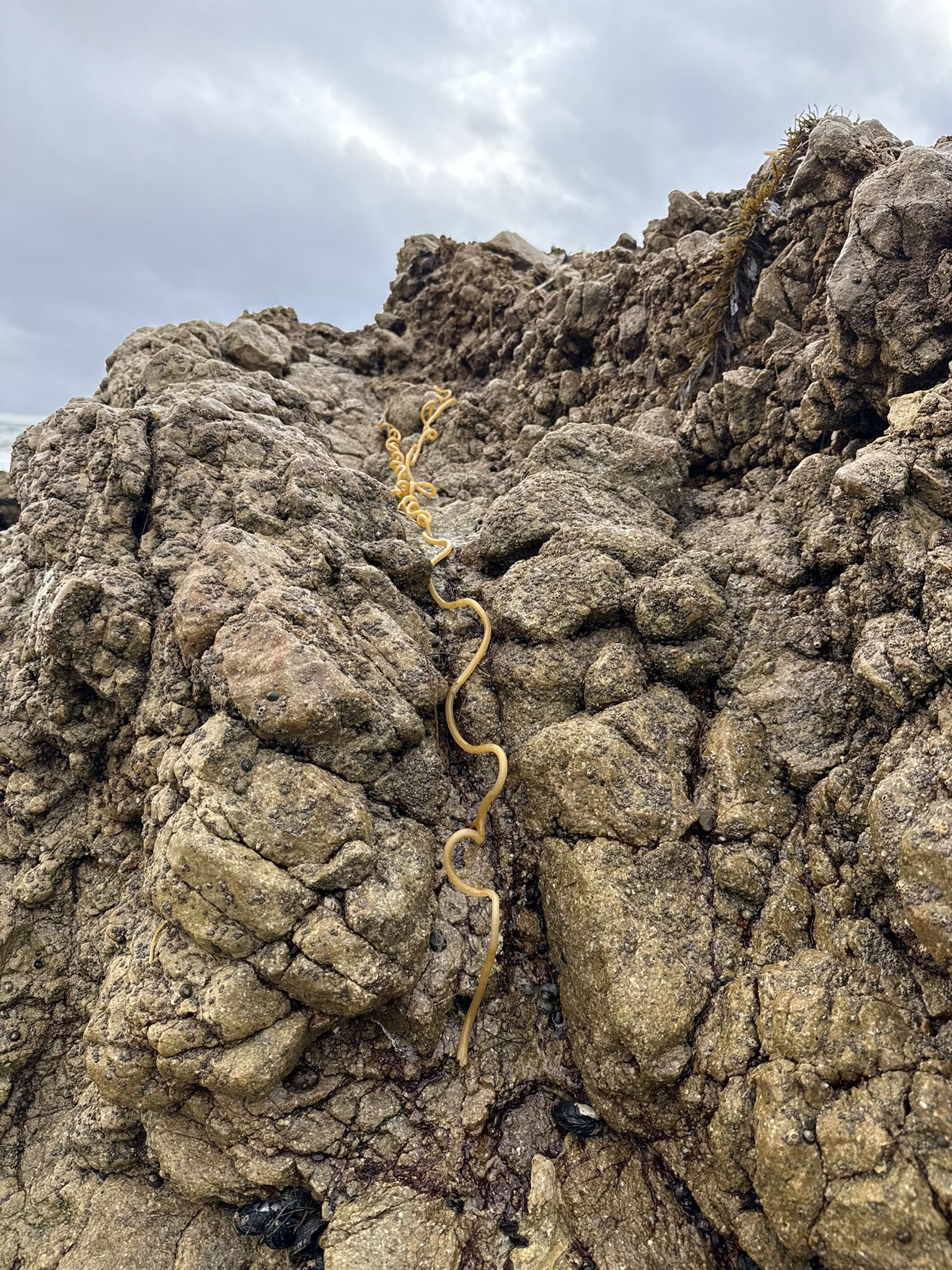
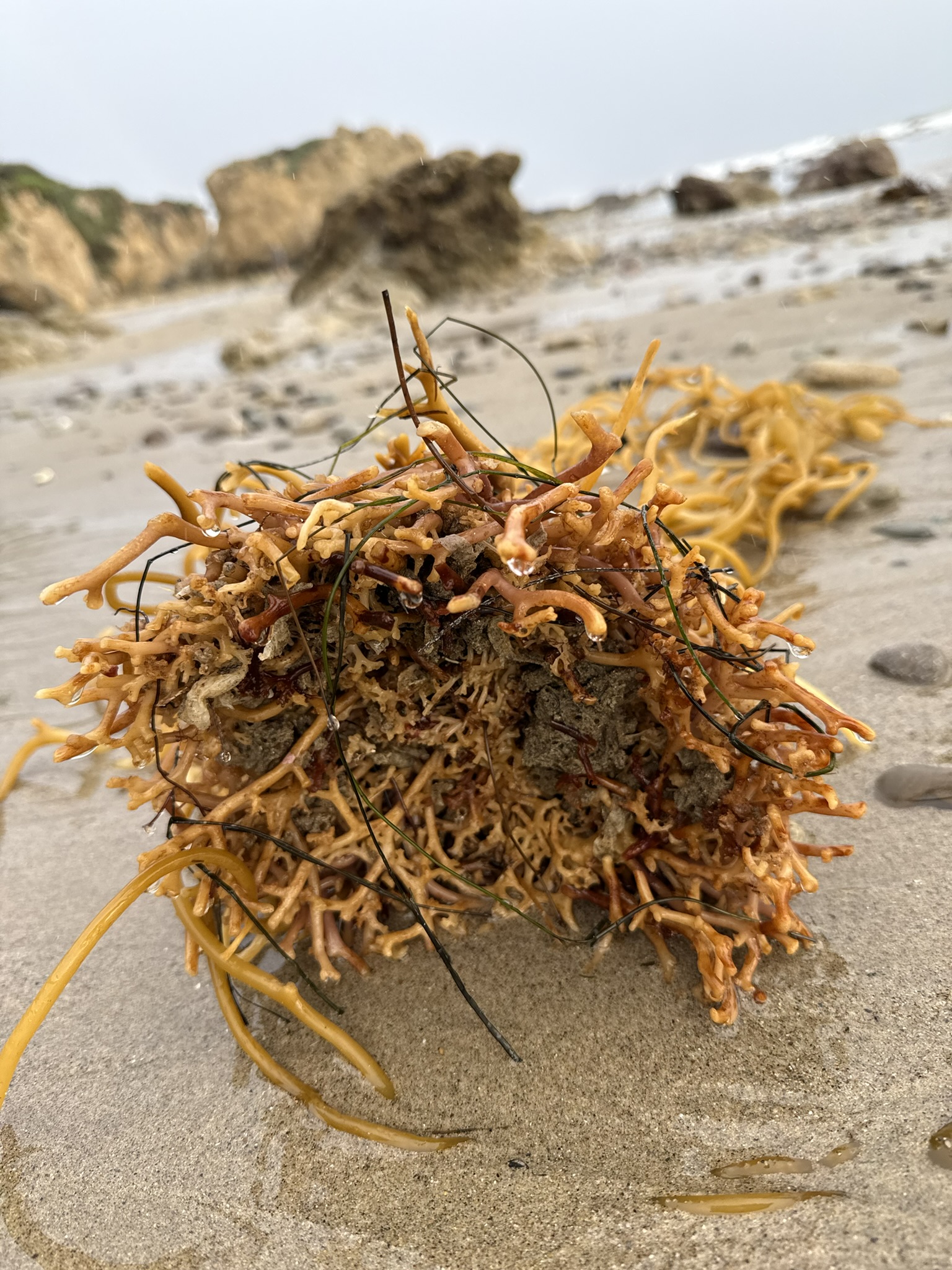
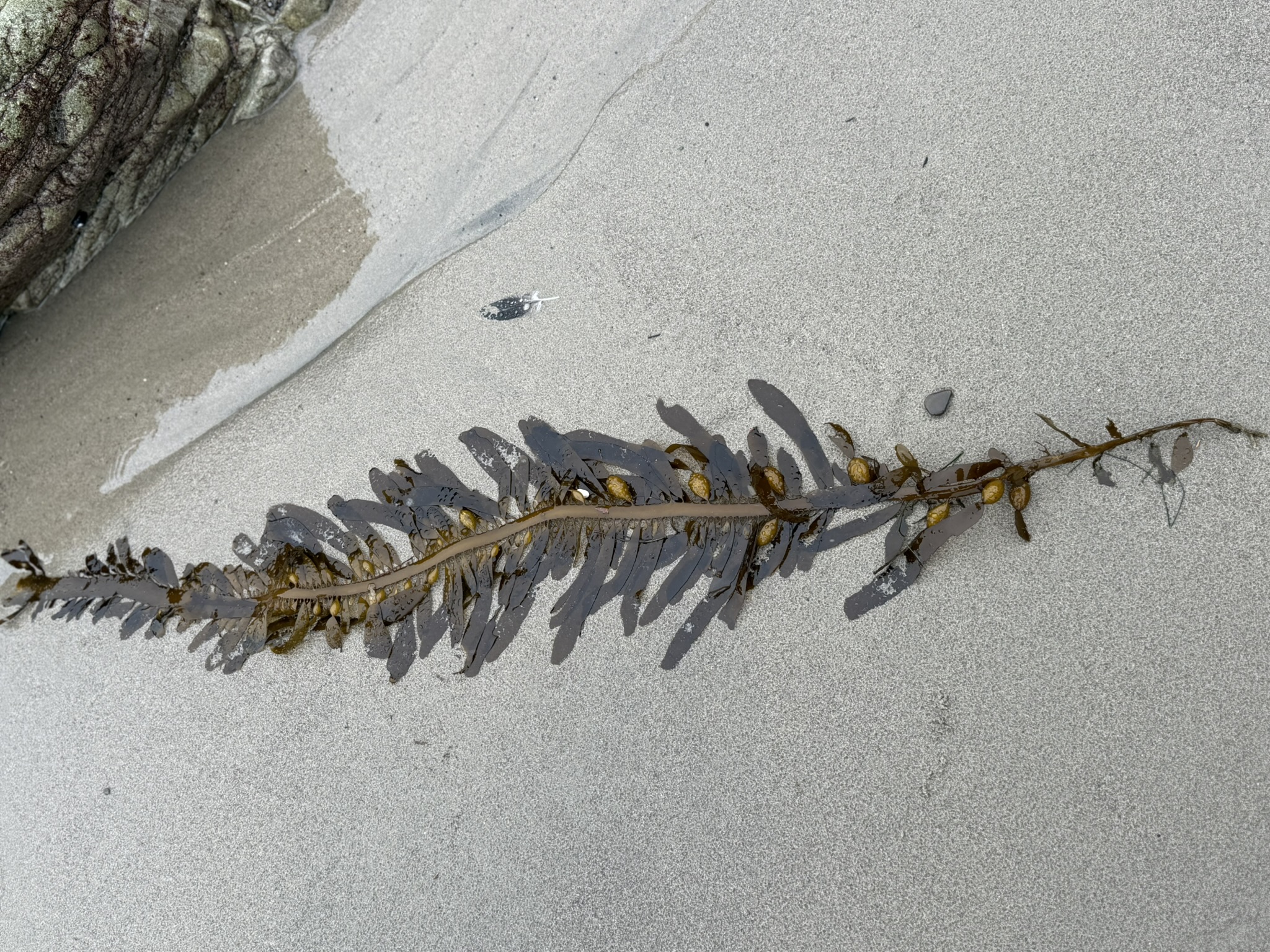
Giant kelp is a remarkably fast grower, recorded in ideal conditions at lengthening 18” per day. Its anatomy is quite interesting. The whole organism is called a thallus, which is composed of a holdfast, blades or fronds, air bladders, and stipes (flexible stems). While on the beach in California, we came across all of these interesting pieces and shapes. The blades lined in pneumatocysts (air bladders) reminded me of seeing pieces of sargassum on our local beaches. We also found holdfast chunks broken up in the surf and pushed to the beach. Among the rocks were the vinelike strands of stipes, which resembled tentacles more than plant matter.
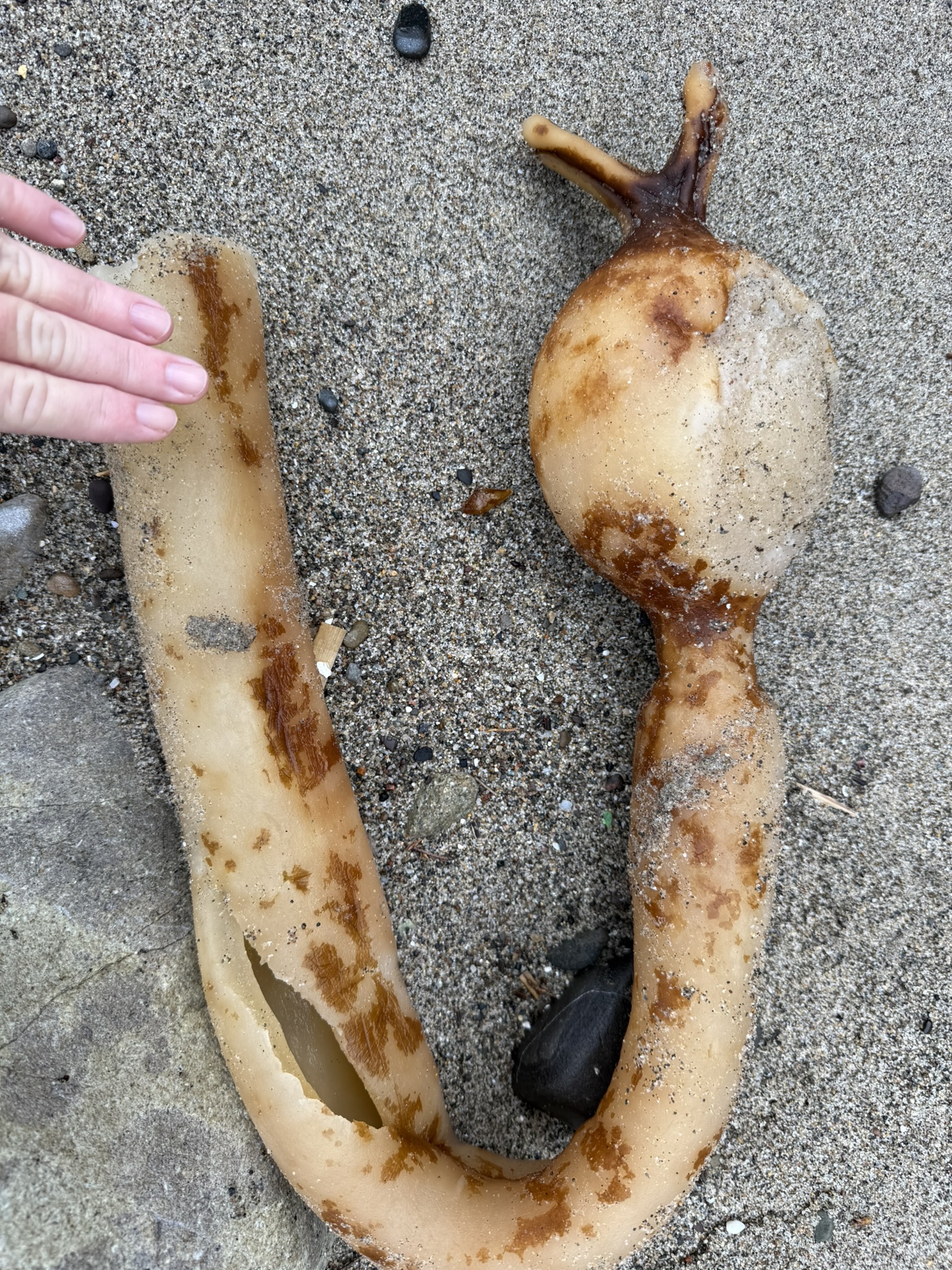
We also came across larger, 3” diameter pieces of fleshy bull whip kelp (Nereocystis luetkeana) strewn along the beach. It looked and felt exactly like thick rubber tubing.
Besides its role in the ecosystem as crucial habitat and food source, kelp has numerous commercial uses. Large aquaculture operations harvest kelp for use in food products like chips, pasta, sauces, and pickles. Dried kelp makes a great biodegradable packing material. Algin, a carbohydrate produced by the algae, has a wide variety of medical and product development applications. Algin is used as a thickener in shampoo, toothpaste, ice cream, and cosmetics. Its nontoxic and flexible properties have made it effective in dyes, wound dressings, and reflux medication, and serious research is being done for its use in bone reconstruction.
 8
8