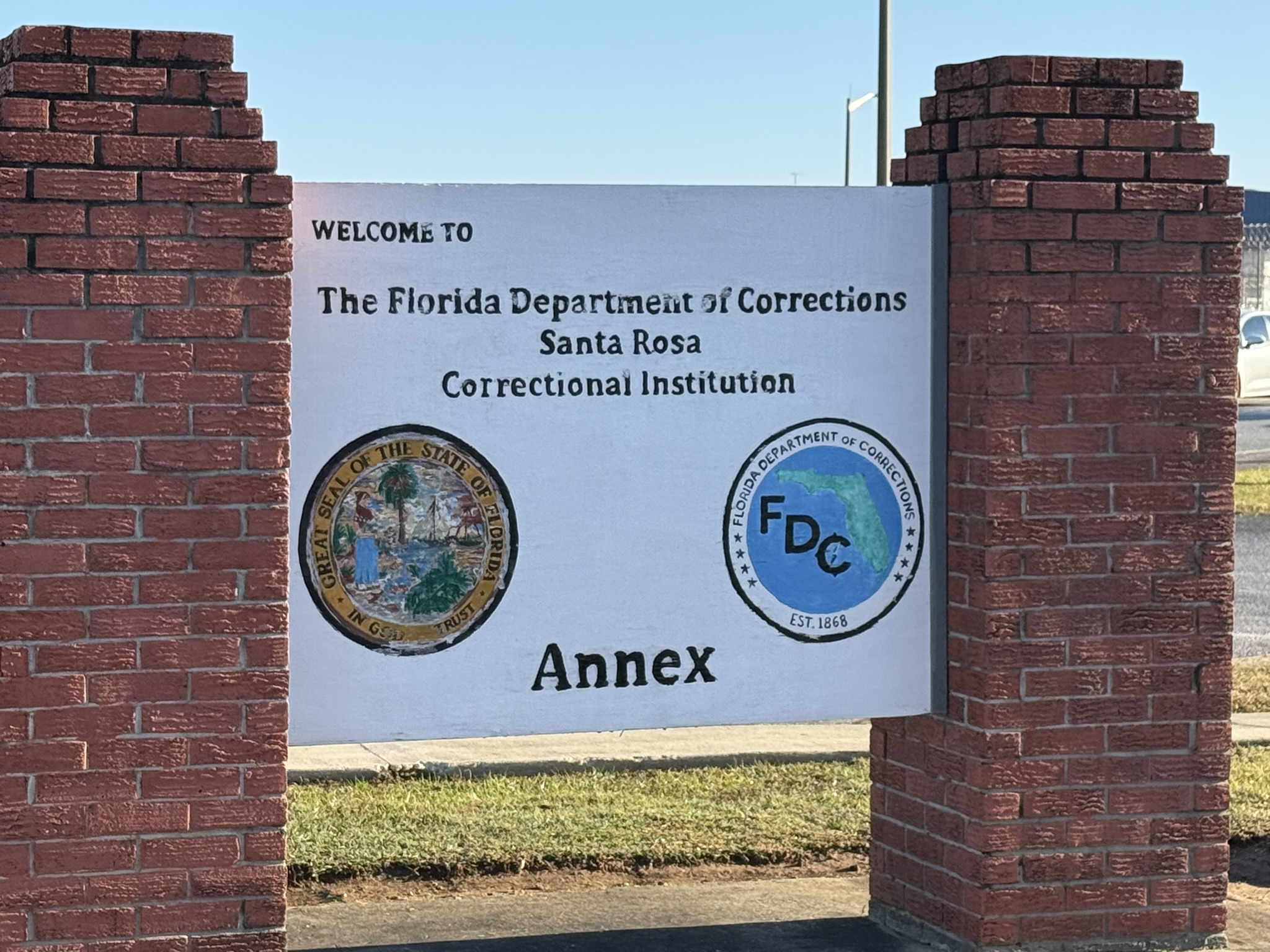
I spent three days in prison this year. Razor wire lined the exterior fences and along the drab concrete building rooftops. A 3-story guard tower was visible from every point in the compound, and we were at the mercy of a guard to notice and buzz us in and out of a series of locked doors. It is a bizarre situation to be in when you are used to coming and going as you please.
Before rumors start flying of my criminal past, my prison time was spent teaching landscape maintenance classes to inmates at the Santa Rosa Correctional Institute. A retired Extension colleague and I were asked to teach two Green Industries Best Management Practice (GI-BMP) classes. Better known as the “fertilizer license” class, successful completion of the course enables the student to receive a certification from the Florida Department of Environmental Protection (FDEP) and later a license from the Florida Department of Agriculture and Consumer Services (FDACS).
Prior to starting, we had to undergo orientation with new guards and medical staff. After a couple of days of worst-case scenario training on inmate restraints, handmade weapons, and prison gangs, I admit I was pretty apprehensive about spending a few days in the prison teaching classes with no guard in the room.
Our experience teaching those classes bore almost no resemblance to the war stories the officers told during training. The guys selected for the class filed in quietly and orderly, paid close attention to our presentations, and asked thoughtful questions. Without the distraction of cell phones and clients calling like in our typical training classes, we had their full attention. Several of them work within the correctional institute doing yard work (mowing, weeding, etc.) and a handful had worked landscaping in prior jobs. One inmate even had a botany degree. Ideally, they will be able to use the licenses they earned upon their release and come out with a marketable skill and work prospects. They were grateful for the opportunity and extremely respectful to us as instructors. I never felt unsafe.
During the training, participants take a pre- and post-test to determine how much they’ve learned. Earning the certificate is contingent on scoring at least 75% on a 50-question test. I was thrilled to see that both classes of inmate courses had a 100% pass rate. The average score among professional lawn care workers I teach on the “outside” is 89%, while the inmates averaged 87%. Even without the day-to-day experience of professionals, they took the training seriously, studied the materials back in their cells, and came prepared.
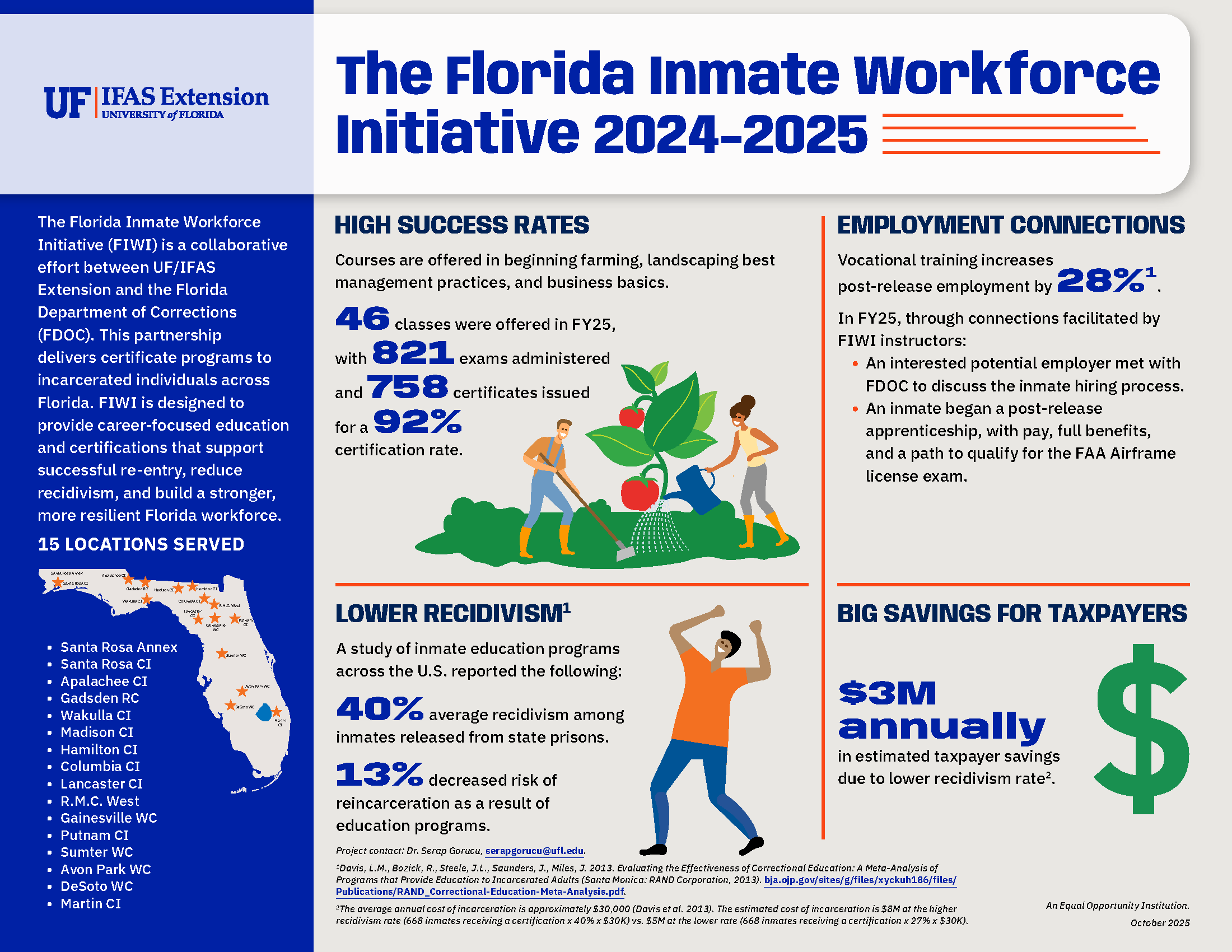
Our local courses are part of a statewide effort called the Florida Inmate Workforce Initiative (FIWI). The FIWI partnership between IFAS Extension and the Florida Department of Corrections has 15 locations statewide. Besides the landscaping classes, agents teach business management and basic farming courses. Within the prison system, they also have math and commercial trucking classes. The workforce initiative, overall, has been quite successful. Just this year, agents taught 46 classes statewide, with 821 exams given with a 92% pass rate. The training contributes to a reduced recidivism rate and has led to several new relationships and partnerships that have assisted class members in finding jobs after their release. More data on the program is available in the infographic below.
 13
13