When maintaining a garden, knowing the difference between your enemies and the “good guys” is half the battle. Once, I was teaching a group of landscape maintenance folks about beneficial insects, and quizzed them on their bug identification skills. I flashed up an image of a larval ladybug and asked if they knew what it was. No one in the class could identify it. I followed up with, “If you saw this in a client’s landscape, would you use a pesticide?” All but one responded that they would.
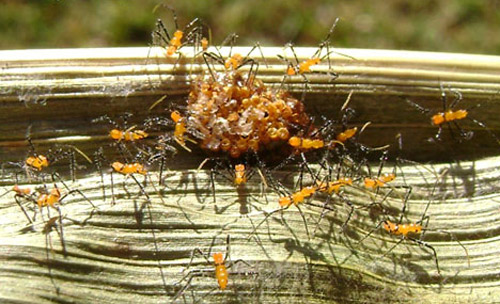
Thankfully, I was able to teach them something useful that day and avoid the unnecessary slaughter of baby ladybugs. But the larger issue to address was this “shoot first, ask questions later,” attitude. In reality, the beneficial—often predatory—insects are larger and fewer in number. It’s analogous to the smaller numbers of any apex predator in comparison to its prey; think about the dozens of lions vs thousands of antelope in the savanna, or hundreds of sharks vs hundreds of thousands of fish in swaths of ocean. The proportions are similar in the insect world. When predator insects are indiscriminately killed off, prey insects that harm plants can multiply in rapid numbers. The reproductive cycles of beneficial insects are often slower than smaller prey insects, so it becomes nearly impossible to restore a healthy balance.
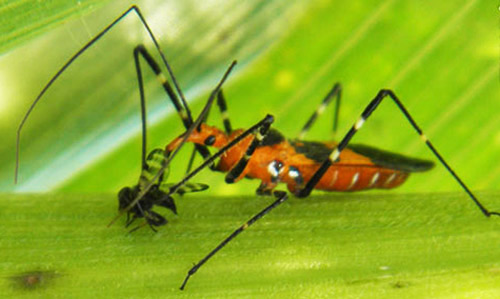
One such beneficial common to northwest Florida gardens is the milkweed assassin bug. Leggy and intimidating with black highlights and bright orange warning coloration, it is a daunting figure to prey insects and humans alike. The milkweed assassin bug, (Zelus longipes) is named for its similarity in appearance to the (unrelated) milkweed bug.
Nearly everything eats a juicy tomato, pepper, or leafy green vegetable, but the assassin bug leaves the plants alone. As suggested by its name, the assassin bug is a killer—a top predator among insects. An assassin bug does not go easy on its prey, which typically consists of beetles, flies, tomato hornworms, and even roaches and mosquitoes. Once the prey is ambushed, the bug uses its rostrum to “impale them, inject venom, and suck the body contents.”
While considered a beneficial species that protects the food we’ve worked so hard to grow, don’t assume the assassin bug is particularly friendly. It does not deliberately attack humans, but will defend itself if threatened. The bite of an assassin bug is said to be quite painful, and will result in a small itchy lump. There are no toxins present, though, and the bite will resolve itself fairly quickly.
So, if you see one of these fascinating little creatures crawling in your garden, leave it be. It is no doubt doing its job, hunting down pest insects one by one and slurping their guts out.
 7
7