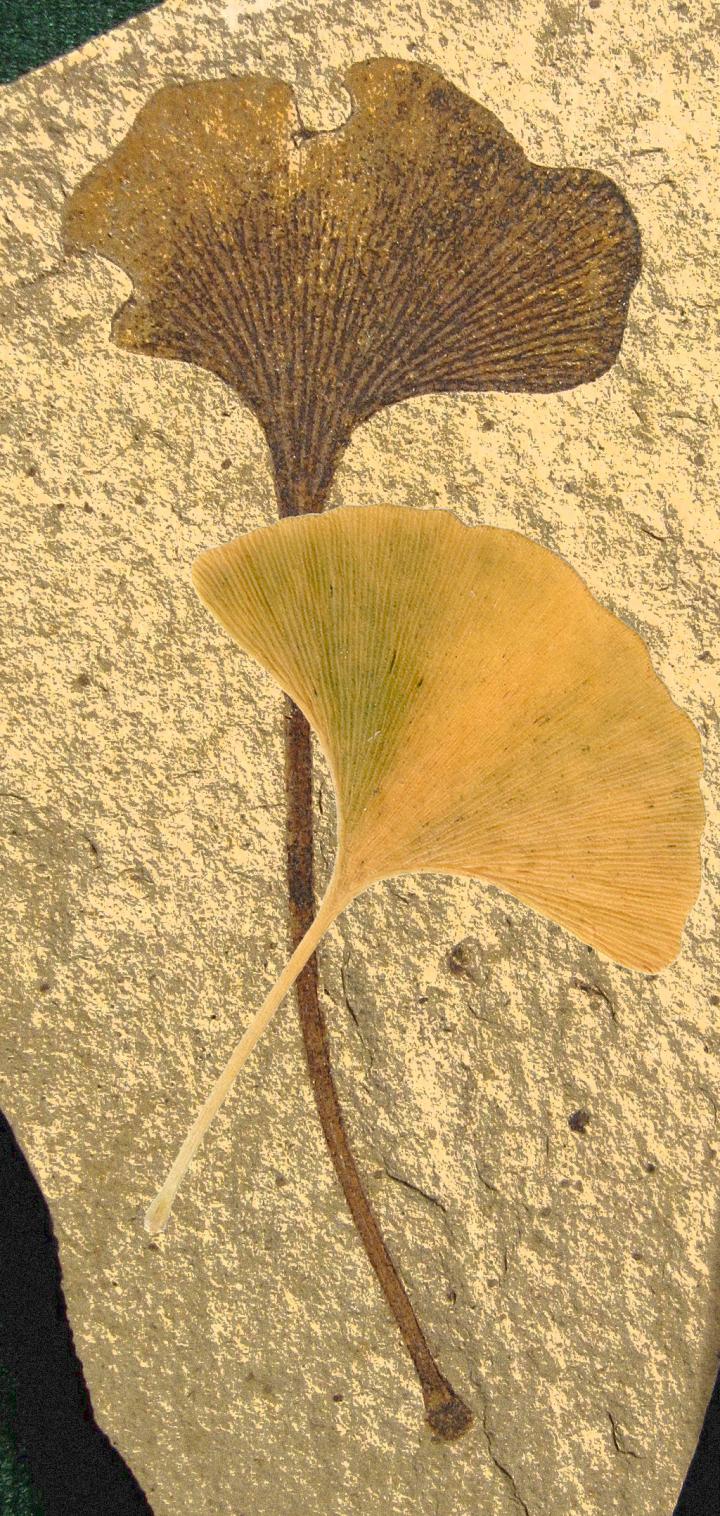
I’ve wanted to pursue a career in something outdoorsy/science-related for as long as I can remember. In my earliest days, I was one of those “dinosaur kids” who would obsess over dinosaur names and types, checking out books from the library and memorizing geologic eras for fun. This paleontological passion was fed, coincidentally, by an unexpected stash of fossils in my best friend’s driveway. She lived next door and at the end of their driveway was a scattering of loose rock and pebbles. Being curious kids and rock collectors, we routinely sifted through the rocks for interesting ones. Incredibly, we found multiple fossils. I recall one that was a perfect impression of coral, and another that turned out to be a gingko (Ginkgo biloba) leaf.
At 7 years old, I was not overly familiar with a lot of tree species. But there was one I’d seen a lot in those dinosaur books, and while it seemed a long shot, my first hunch was right. Turns out, the fan-shaped leafprint in my fossil from next door had been around since before the Jurassic Period—during the Permian Period 270 million years ago. While we never had gingko trees growing anywhere around us, it is a tree I have been familiar with for most of my life based on that early scientific observation. These trees have persisted, almost entirely unchanged, ever since they arrived on the planet. In fact, there are no other related species of gingko still in existence–just the one, that’s been here for literal ages.
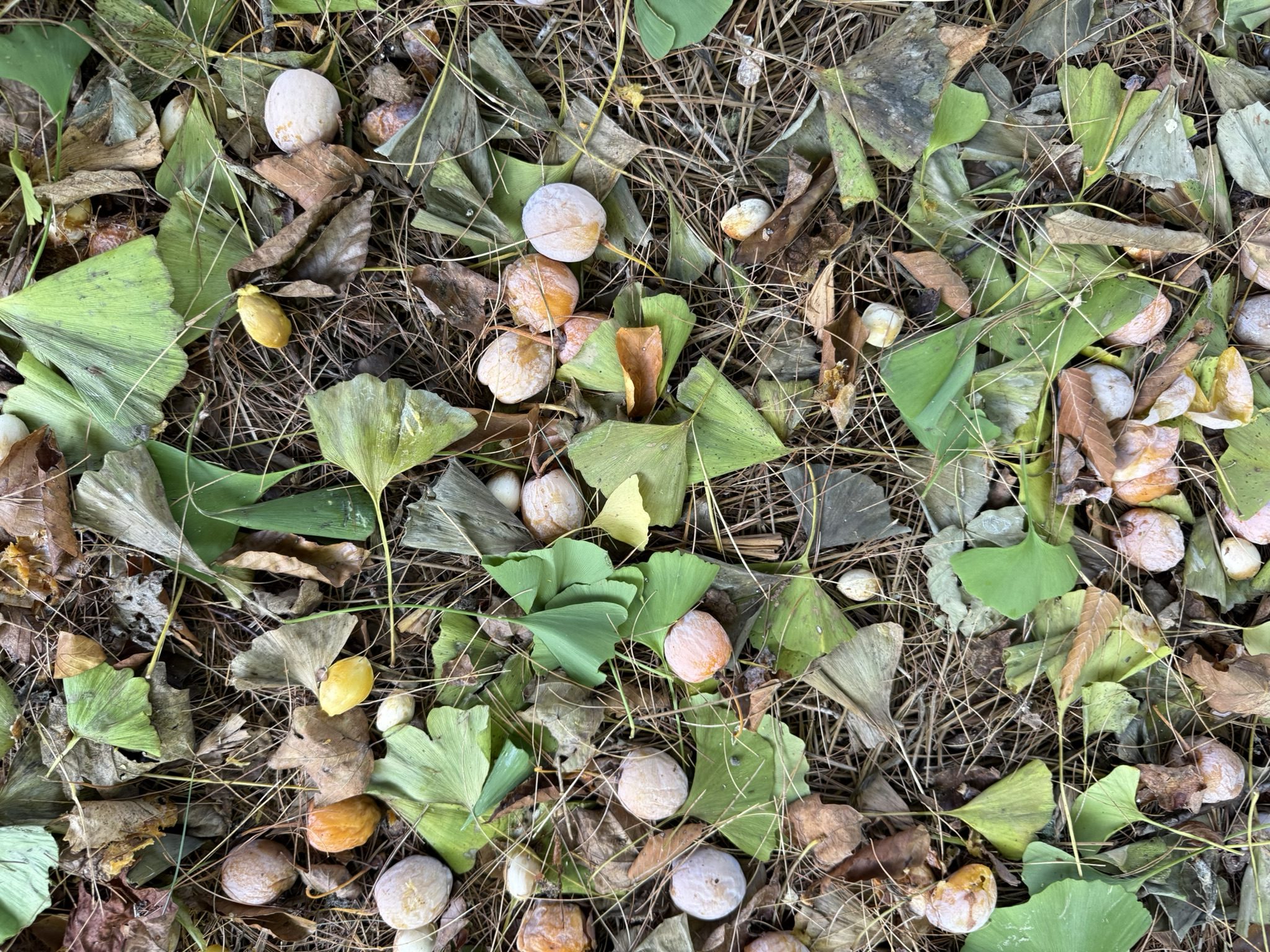
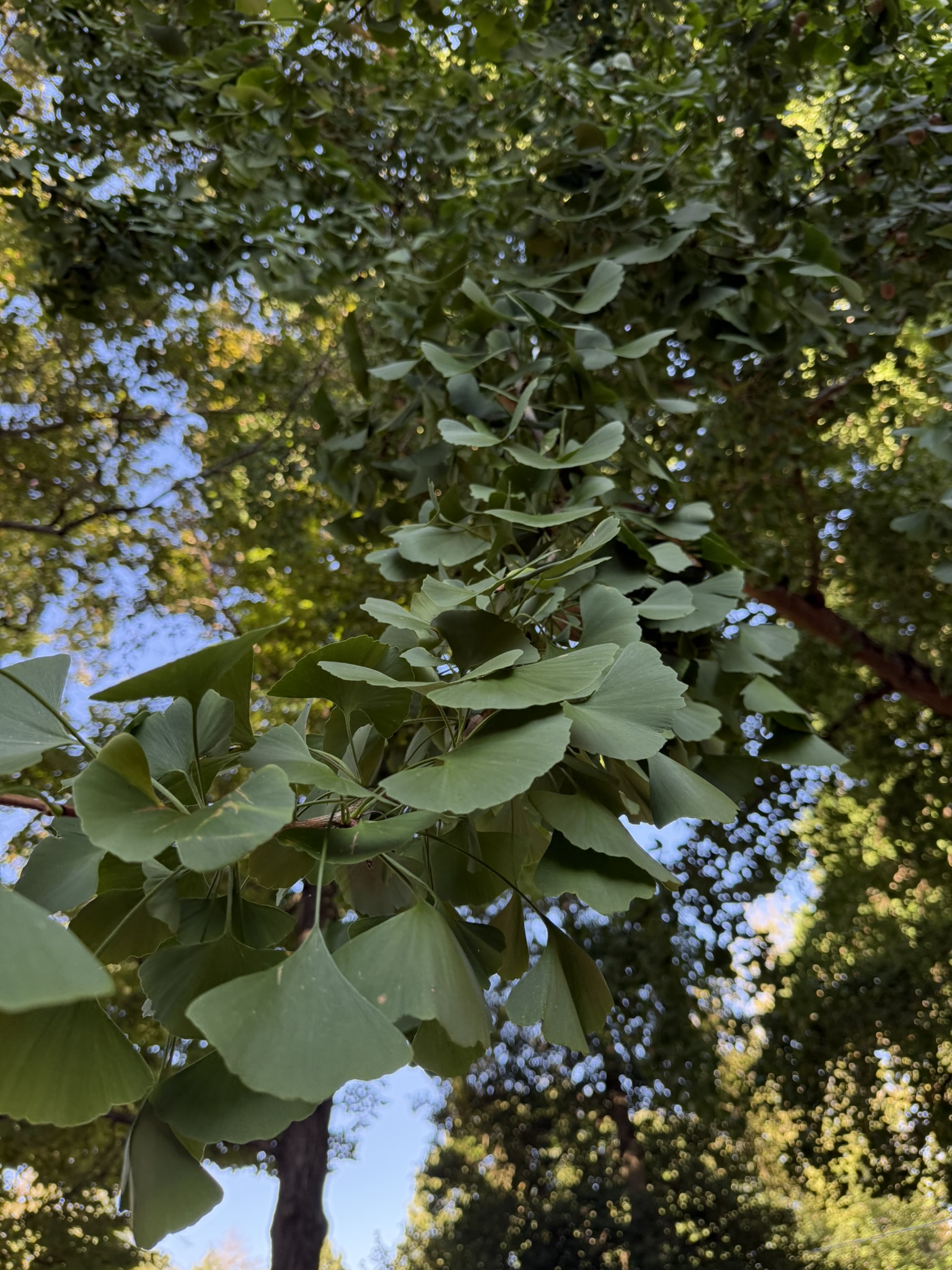
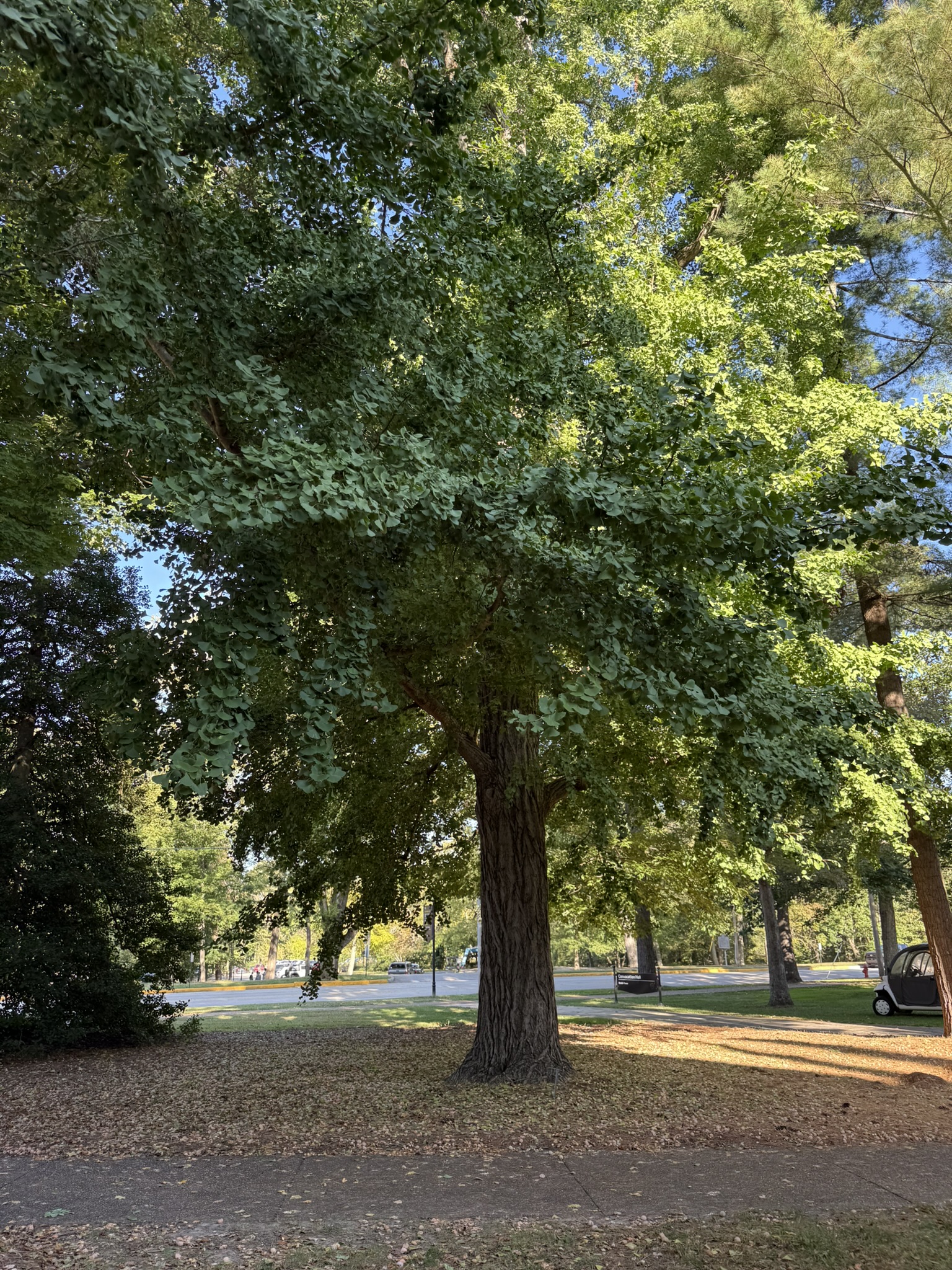
I recently came across a gingko on my children’s college campus in Tennessee. My son and I were walking around, and he insisted on taking me past this crazy tree that, “smells like puke.” Always up for something new—albeit gross sounding—he walked me up to a giant ginkgo tree. It stood 30-40 feet tall and was surrounded by fan-shaped leaves and figlike fruit on the ground. We realized quickly that the odor was from the rotting fruit—or rather the coating of a large seed.
A Yale botanist and author theorizes that the scent was an adaptation to attract animals that would later disperse it, but that likely the original mammals or dinosaurs that ate it have gone extinct.
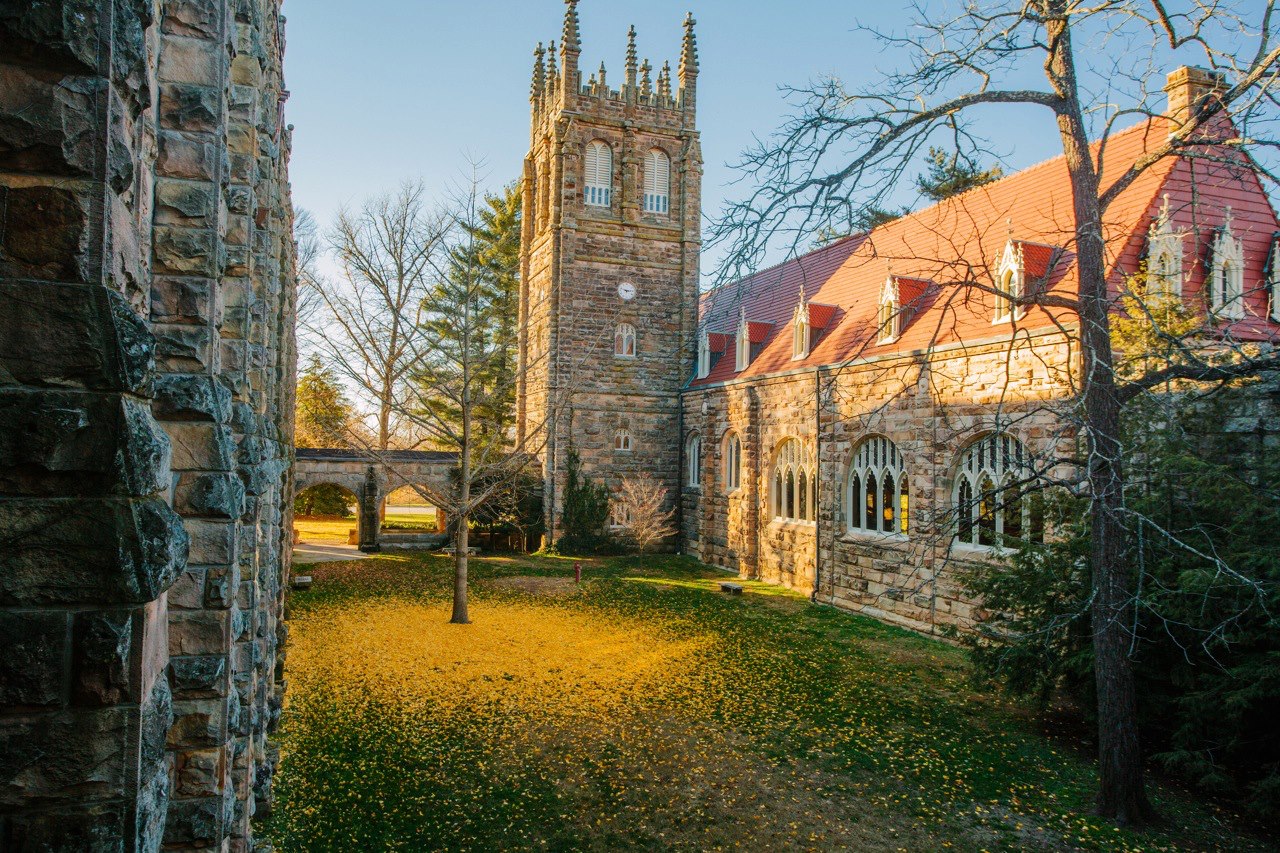
Horticulturally, the ginkgo is a tough, showy tree. Several smaller ginkgo trees are quasi-famous on this campus, as their leaves turn a deep yellow in the fall and then drop simultaneously, leaving a dramatic carpet of yellow surrounding the trunk. The leaf shape is interesting, and the tree is an excellent upper canopy shade tree with value for nesting birds and mammals. It is salt, drought, and pest resistant, and is a popular urban street tree. In New York City, where it’s used in parks and roadsides, they only plant the male trees, as only the females produce the seeds that cause that rotten smell.
Having been around for the entirety of human existence, ginkgos have played a role in human culture for a very long time. The Chinese have long used the seeds for food products and a rash cream. People in the West tend to utilize an extract of the leaves for memory improvement and blood flow. Research is ongoing related to the medical effectiveness of the plant.
 11
11