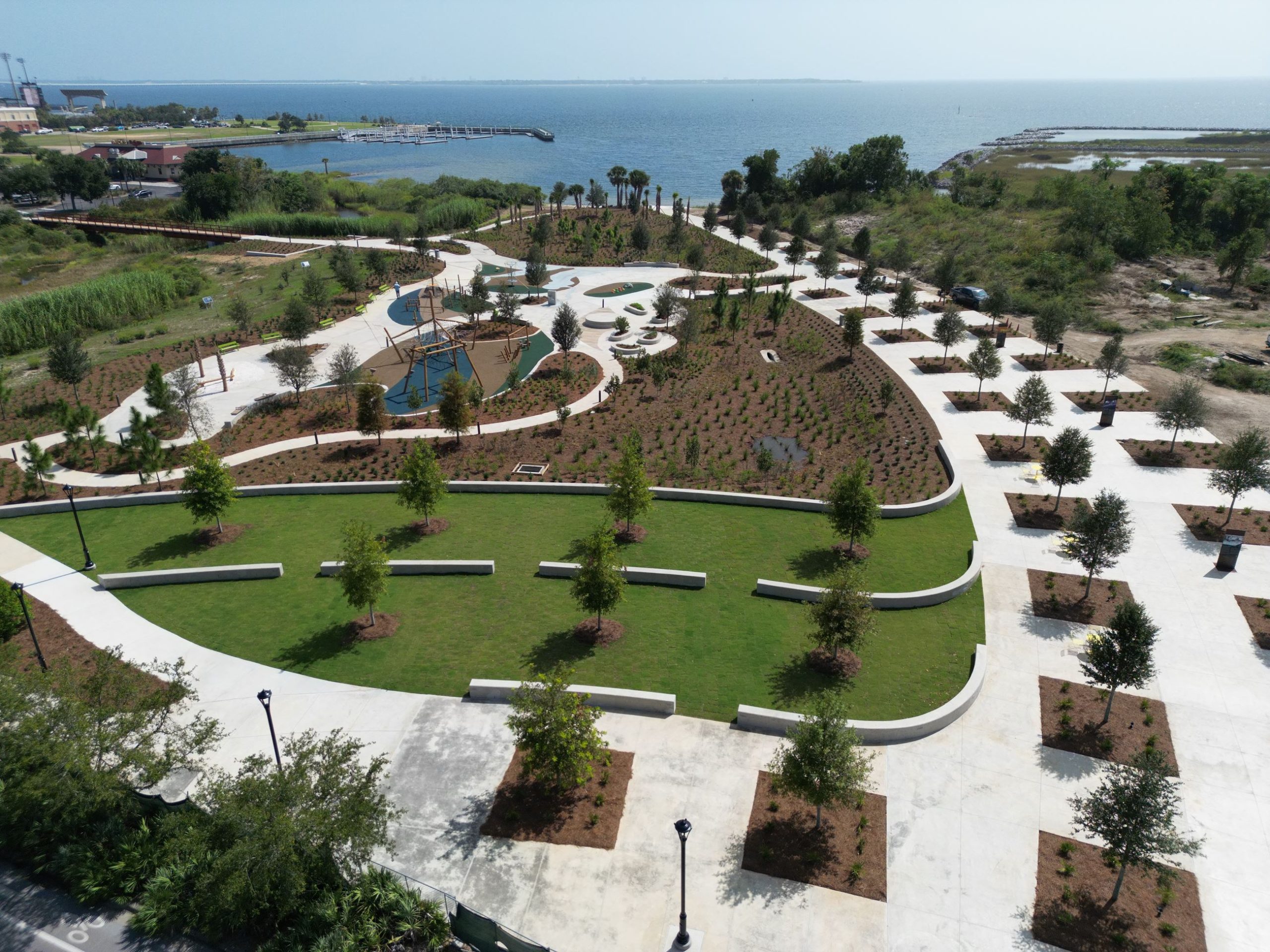
For a very long time, direct access to Pensacola Bay has been difficult for anyone not living right on the water. With busy Bayfront Parkway/Main Street and the Port blocking foot traffic from Palafox to the Bay Bridge along with industrial and private businesses to the west, Maritime Park and Plaza de Luna (surrounded by substantial seawalls) have been the only accessible spots downtown from which to throw a fishing pole or watch a sunset.
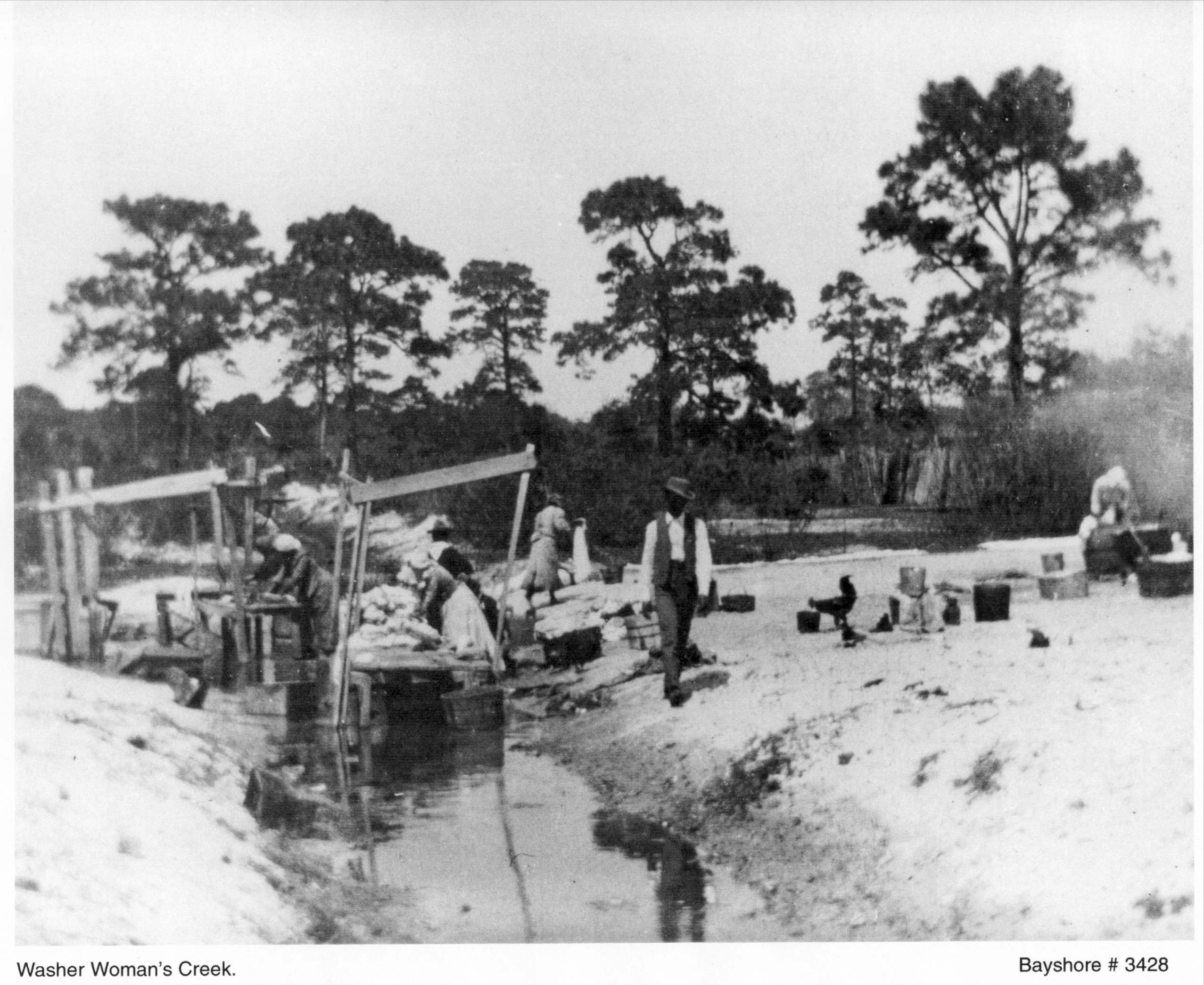
But with the completion of the City of Pensacola’s Bruce Beach Park, historical human and environmental access have been restored. For those unfamiliar with the area’s history, it was once a marsh associated with Washerwoman’s Creek. Over the years as the city developed around it, the creek was channeled, piped, and eventually buried underground. Industrial facilities cropped up around it, along with the primary wastewater treatment facility for the community.
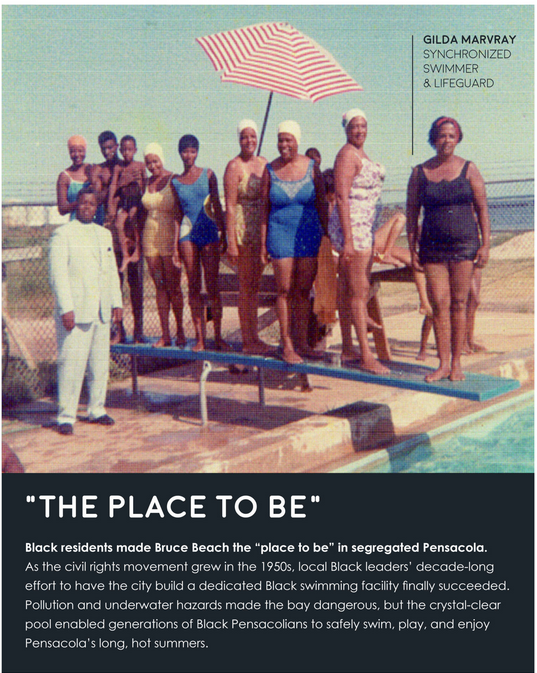
Restricted from access to public swimming pools and Pensacola Beach, black community members rallied and raised money to install a segregated pool there in the 1950’s. It was the center of a thriving community until closure in 1975. In the 90’s, the city and FDEP built an oyster reef and living shoreline (seen in banner photo at top) just offshore at Bruce Beach, which provided wildlife habitat and shoreline protection.
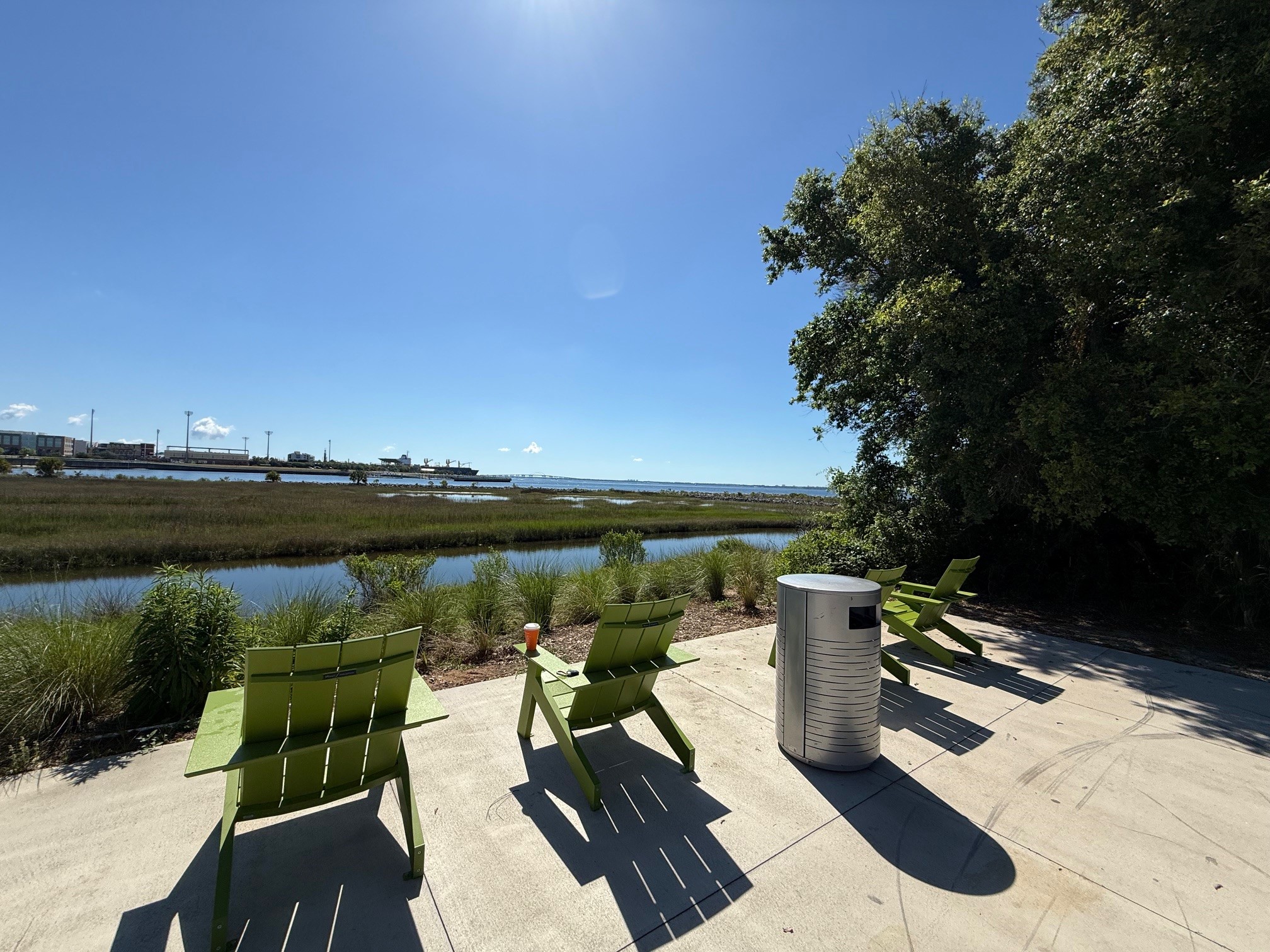
This early prototype for Project Greenshores served as mitigation for a project affecting wetlands elsewhere. Throughout the 2000’s, spurred by impacts wrought post-Hurricane Ivan (2004), the neighboring area changed. The flooded wastewater treatment plant was relocated, the Maritime Park and Wahoos Stadium moved in, the city’s Corrinne Jones stormwater park was built, and new residential development followed. Due to historic industrial uses and urban runoff, water quality has long been an issue in the adjacent bay. Removal of polluted discharge, stormwater, and industrial waste should put the bay water on a healing trajectory.
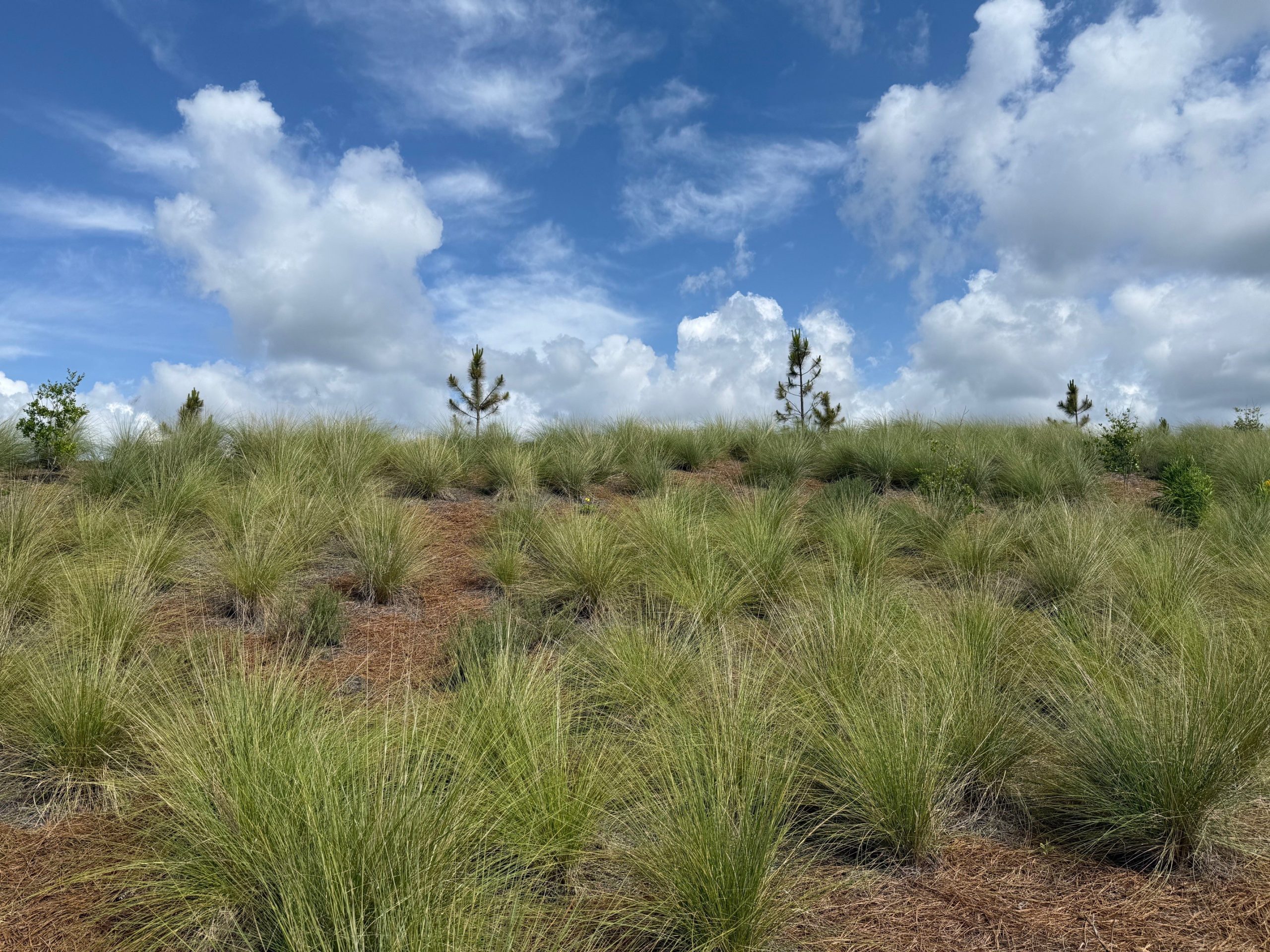
Reclamation of the historic park was part of a larger plan spearheaded by the City to return waterfront access to the people. Now, a 10-acre park with playground equipment, seating areas, historic signage, trails, native landscaping, a kayak launch, and even a bridge over a partially restored Washerwoman’s Creek fill the space. An outline and signage mark the location of the old Bruce Pool, noting the contributions of Pensacola residents who worked hard to provide safe recreational opportunities for all. Their legacy lives on in the families who are now able to access, play, and spend time by our famous bay.
 8
8