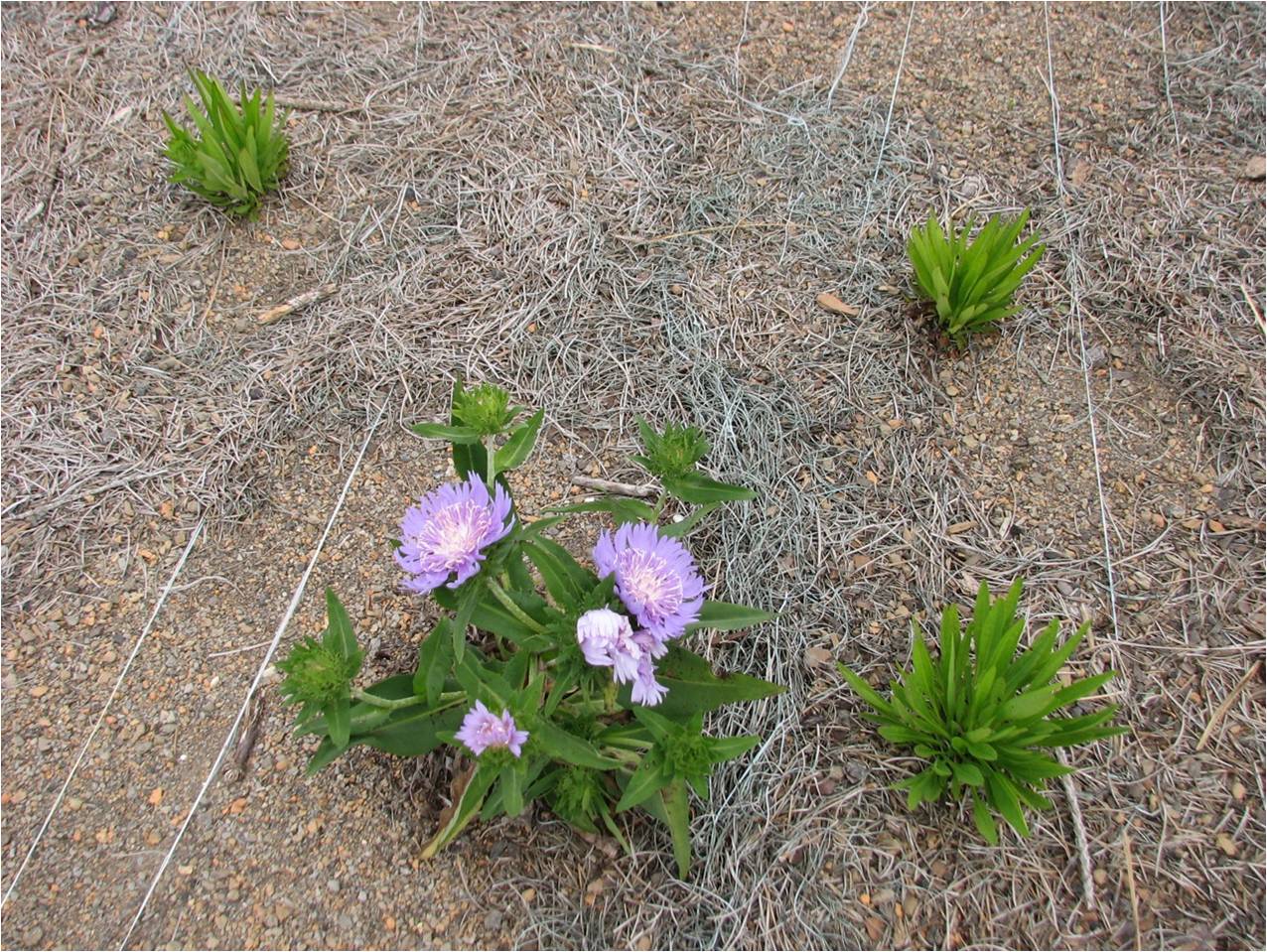
I first became acquainted with the lovely Stokes’ aster (Stokesia laevis) when we were designing a landscape for the county’s green roof. A rather daunting project, the 33,000 square foot roof is the largest of its kind in Florida. Our horticulture agent, Beth Bolles, and I were brought in to determine what groundcovers might grow in 4-6” of dry soil that could withstand full sun, Florida summer heat and hurricane-force winds, and below freezing temperatures in winter. Many green roofs use succulents due to their drought tolerance, but large-scale plantings of sedum rarely work in northwest Florida due to our overabundance of rain.
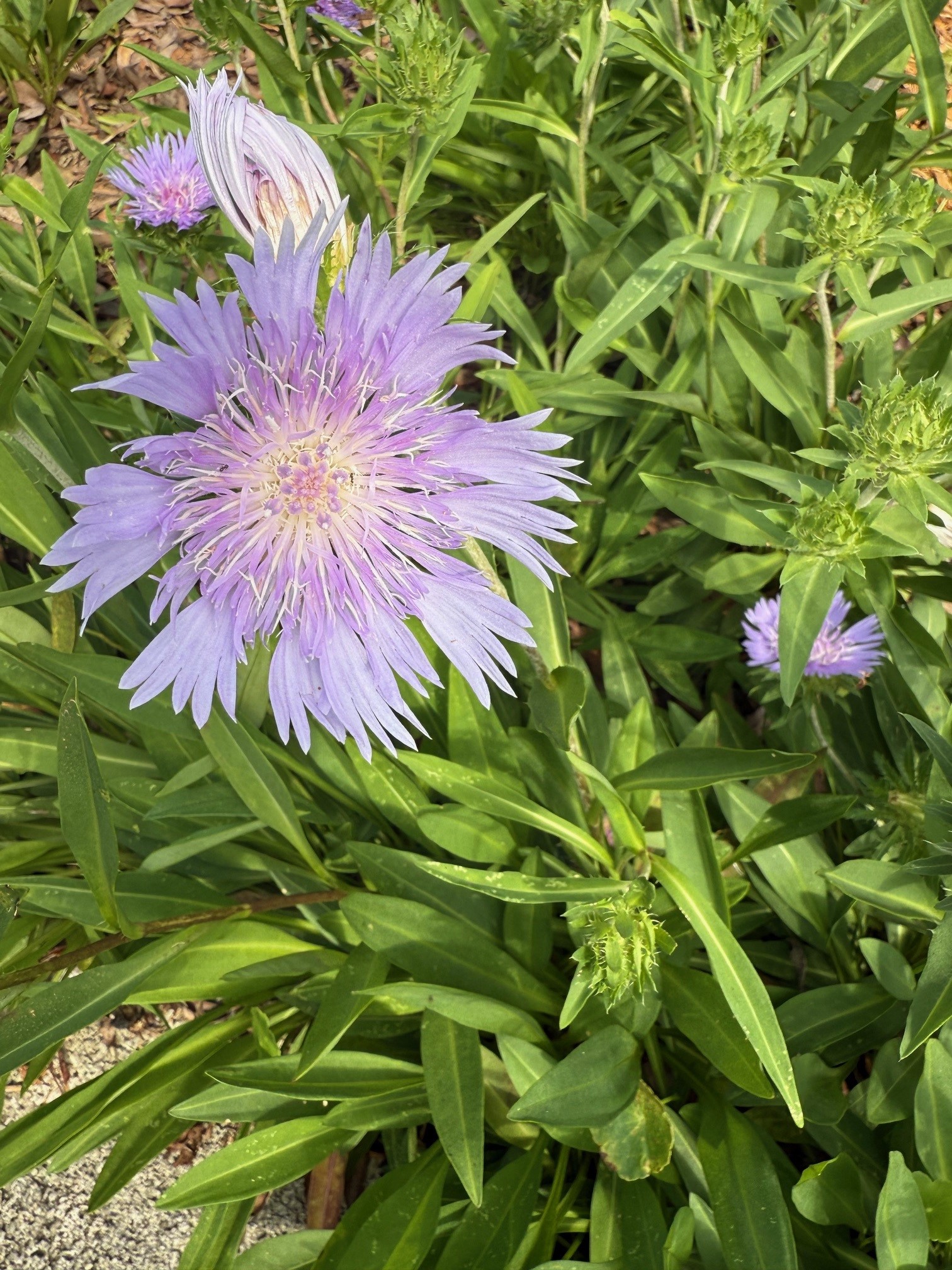
So, we looked to native wildflowers and beach dune plants for inspiration. Despite its preference in the wild for wetland soils, Stokes’ aster is highly drought tolerant and performed nicely on the roof.

It grows even better in the Demonstration Garden at our office, where a mass planting of lavender blooms greets visitors and pollinators alike. Stokes’ aster is a fast grower, and this perennial will produce flowers throughout the summer. Butterflies and bees are particularly drawn to the large blooms.
The plant’s name comes from an English botanist and doctor named Jonathan Stokes, who married his two interests by publishing several books on the medicinal uses of plants. In particular, he contributed to An Account of the Foxglove and its Medical Uses in 1795, which documented the usefulness of Digitalis spp. (foxglove) on heart failure. An extract from the plant is still used in Digoxin, a heart medication prescribed for heart failure and arrhythmias.
 9
9