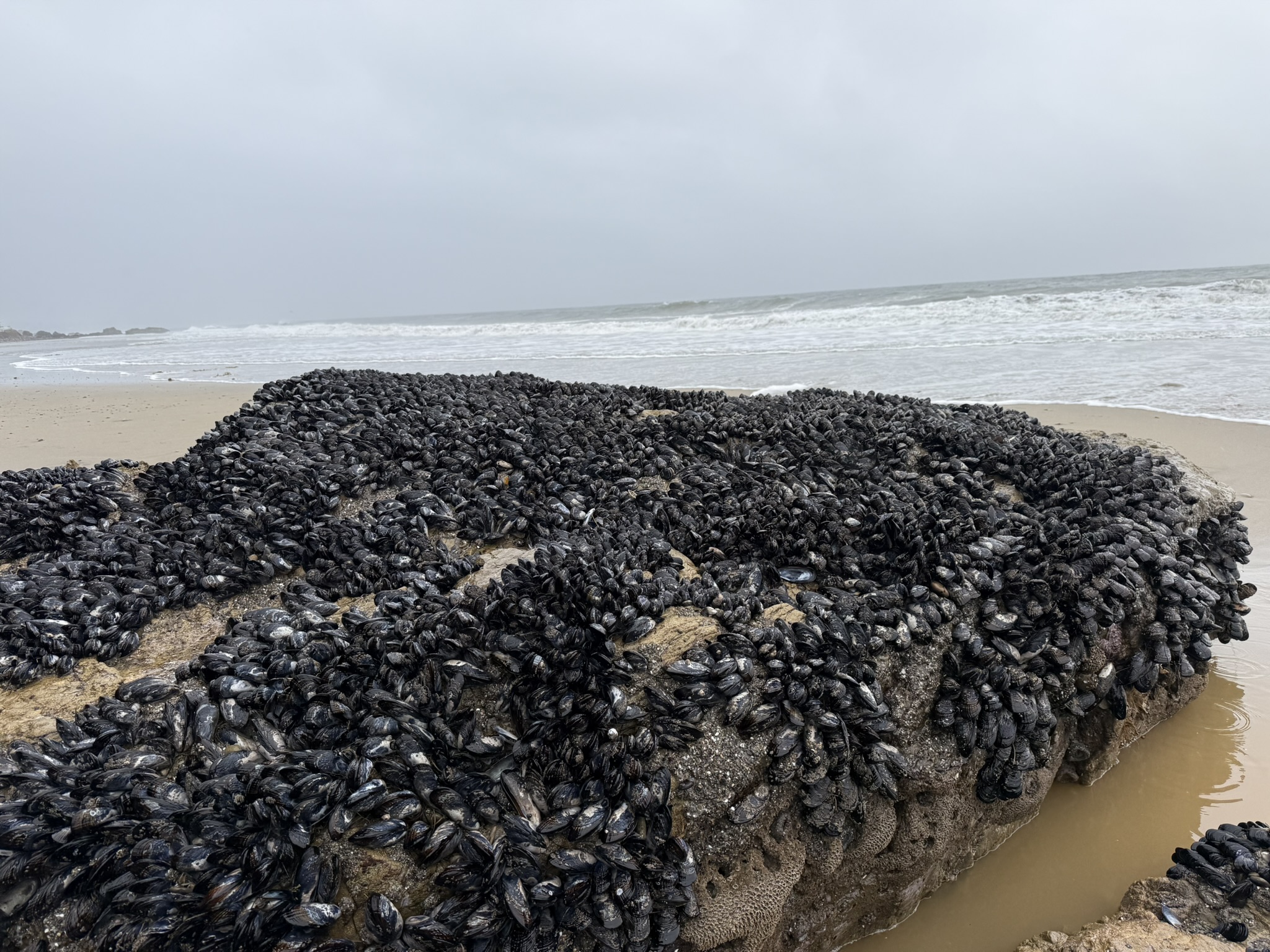
Wrapping up my trio of west coast-based articles today, I’m focusing on California mussels (Mytilus californianus). When we walked down the beach near Malibu, every single rock was covered in these bulky shells. Packed in close together, they were an eye-catching shade of bluish purple, tinged in black. They were large—5-6” long—more like big oysters than the small mussels and clams we grow in Florida. Similar to oysters in our area, these mussels are “ecosystem engineers” that build structures and habitat for other organisms. Their large clusters also protect shorelines from erosion.
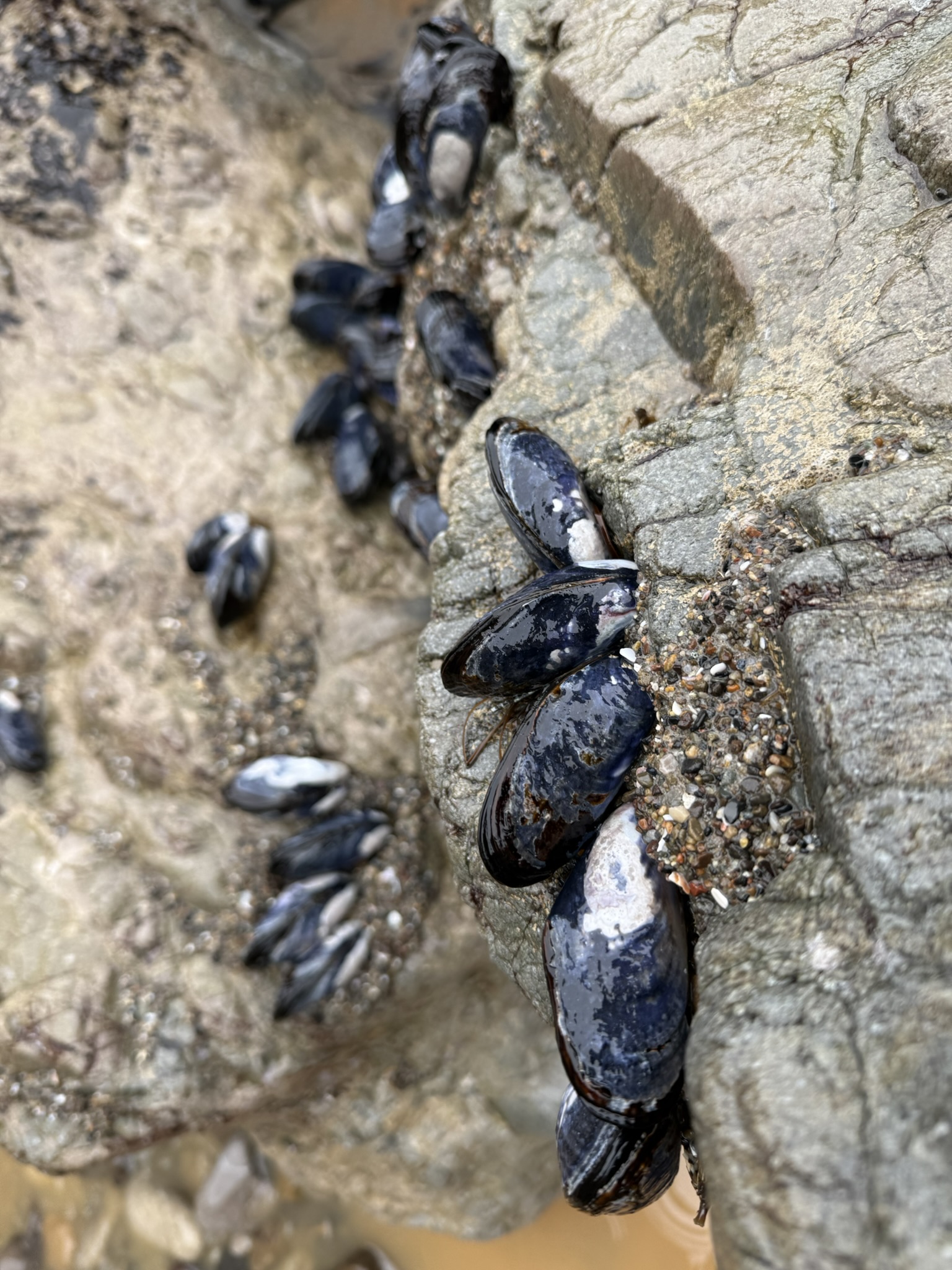
Mussels and some species of oysters attach to rocks through incredibly strong byssal threads. These derive from a mussel’s byssal glands, which secrete a liquid protein. Once these proteins are exposed to seawater, they harden into thick fibers. As climates change and oceans become more acidic, researchers have tested byssal thread strength in California mussels to see if there are impacts. Results have been mixed based on species. Most likely because they’re adapted to living in the warm waters off the coast of Mexico, increased temperatures seemed not to affect California mussels. However, lower pH (more acidic) and salinity (often a result of increased rainfall) affected the tensile strength of the byssus. These impacts could open up opportunities for invasive species competition, as the Mediterranean mussel increased growth under the same conditions.
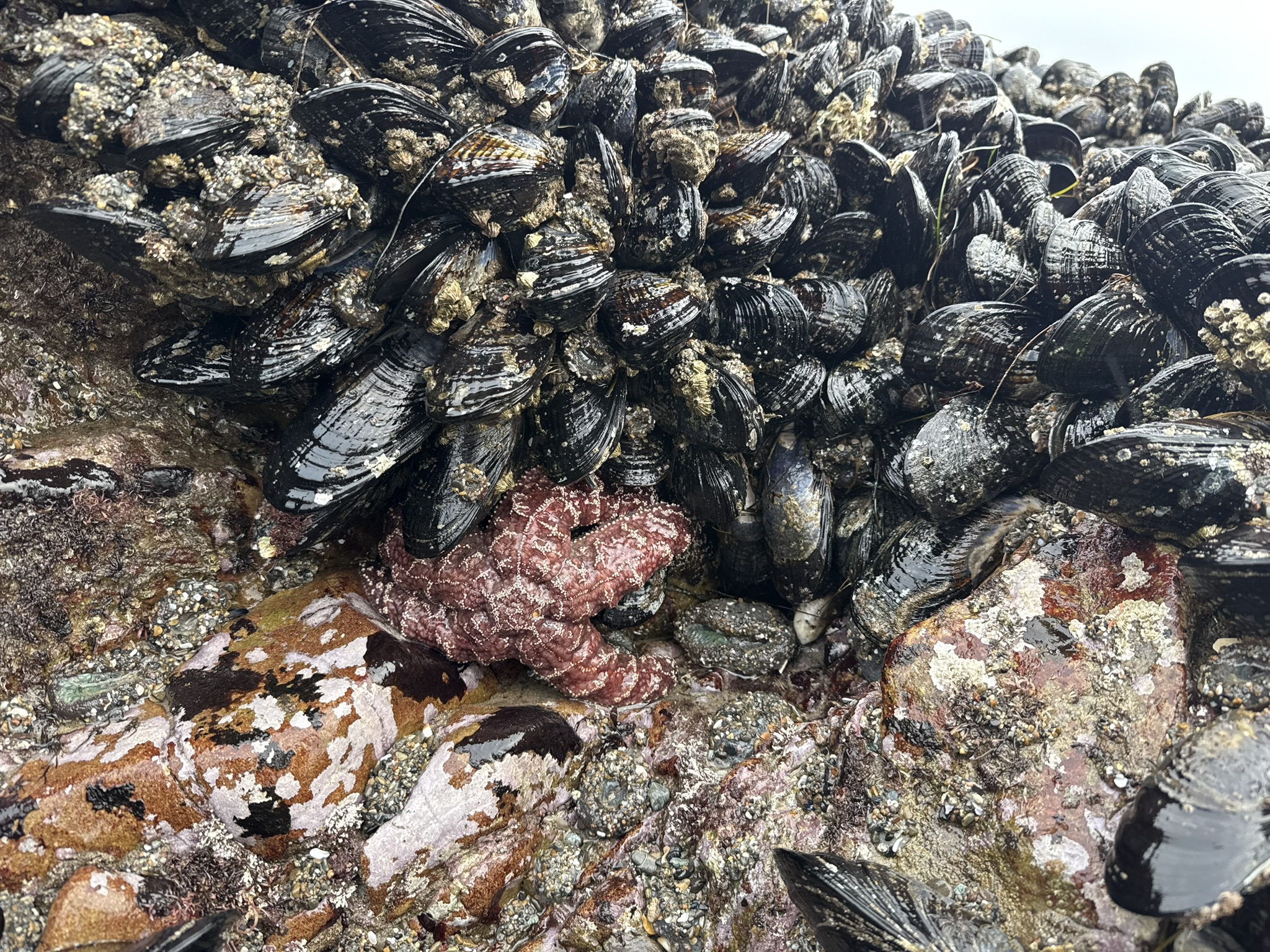
The California mussel is a preferred food for last week’s ochre sea stars, which explains why we saw so many starfish on those mussel-covered boulders. Out of the water, California mussels close up to keep from drying out during low tide. When submerged, they are filter feeders, moving 2-3 quarts of water/hour through their shells and using small hairs (cilia) to pick up nutritious detritus in the water.
California mussels are a popular food source for people, as well, and based on archaeological finds have been so for over 10,000 years. The flesh of the mussel is orange, and they are typically cooked before ingesting. California mussels are primarily harvested in the wild, but are recently being considered for aquaculture operations. Mussels gathered for personal use (and not commercial operations), a practice referred to as “sport-harvested,” have a warm weather restriction due to the presence of potential dinoflagellate toxins. The quarantine on harvesting lasts from May 1-October 31 in California.
 0
0