Over the holidays, my family took a trip out to the west coast. As always when experiencing a new place, I’m curious to see ecosystems that differ greatly from the ones I know well. So, for the next few weeks I’ll kick off the new year with some fresh topics from coastal California.
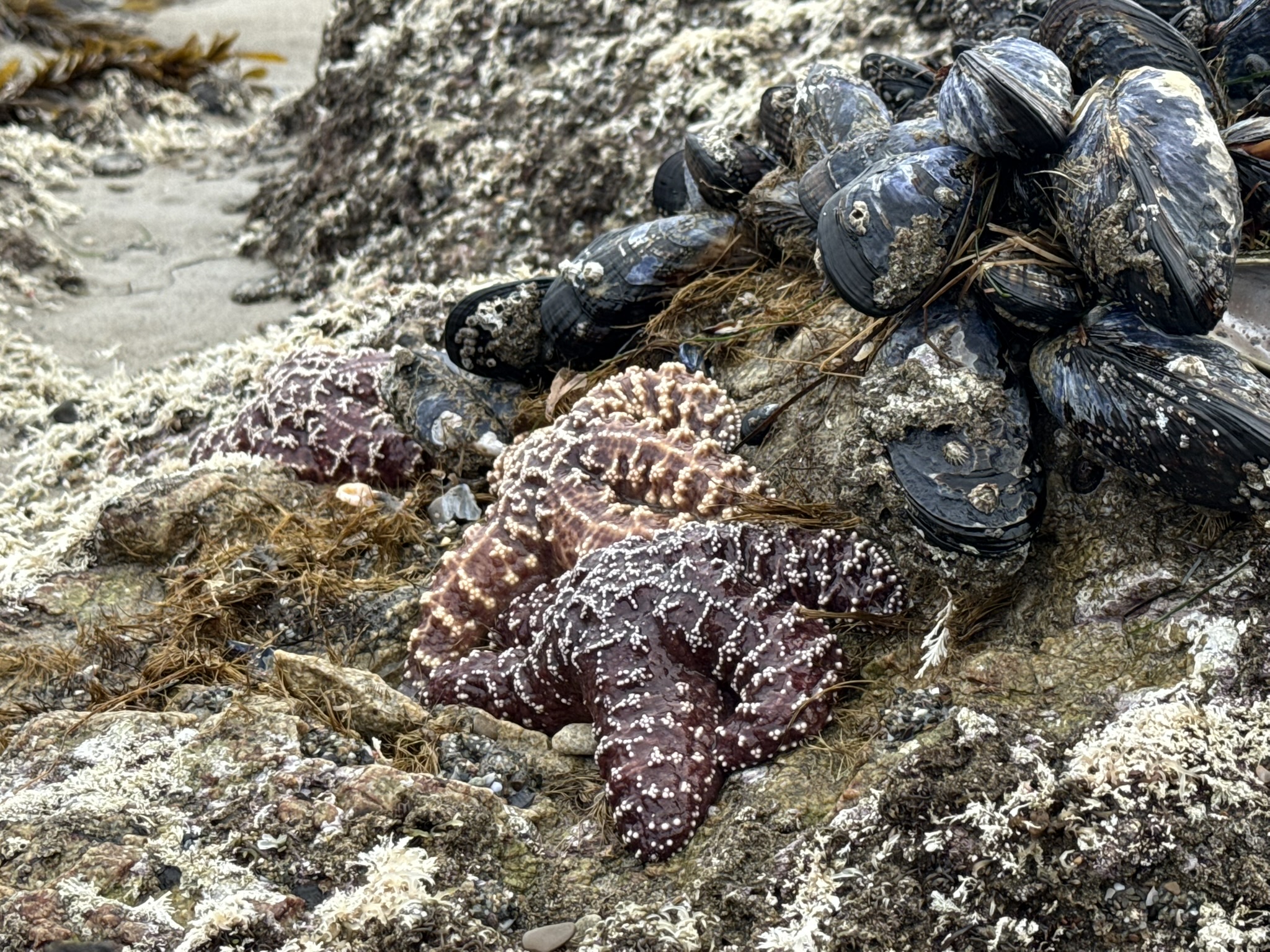
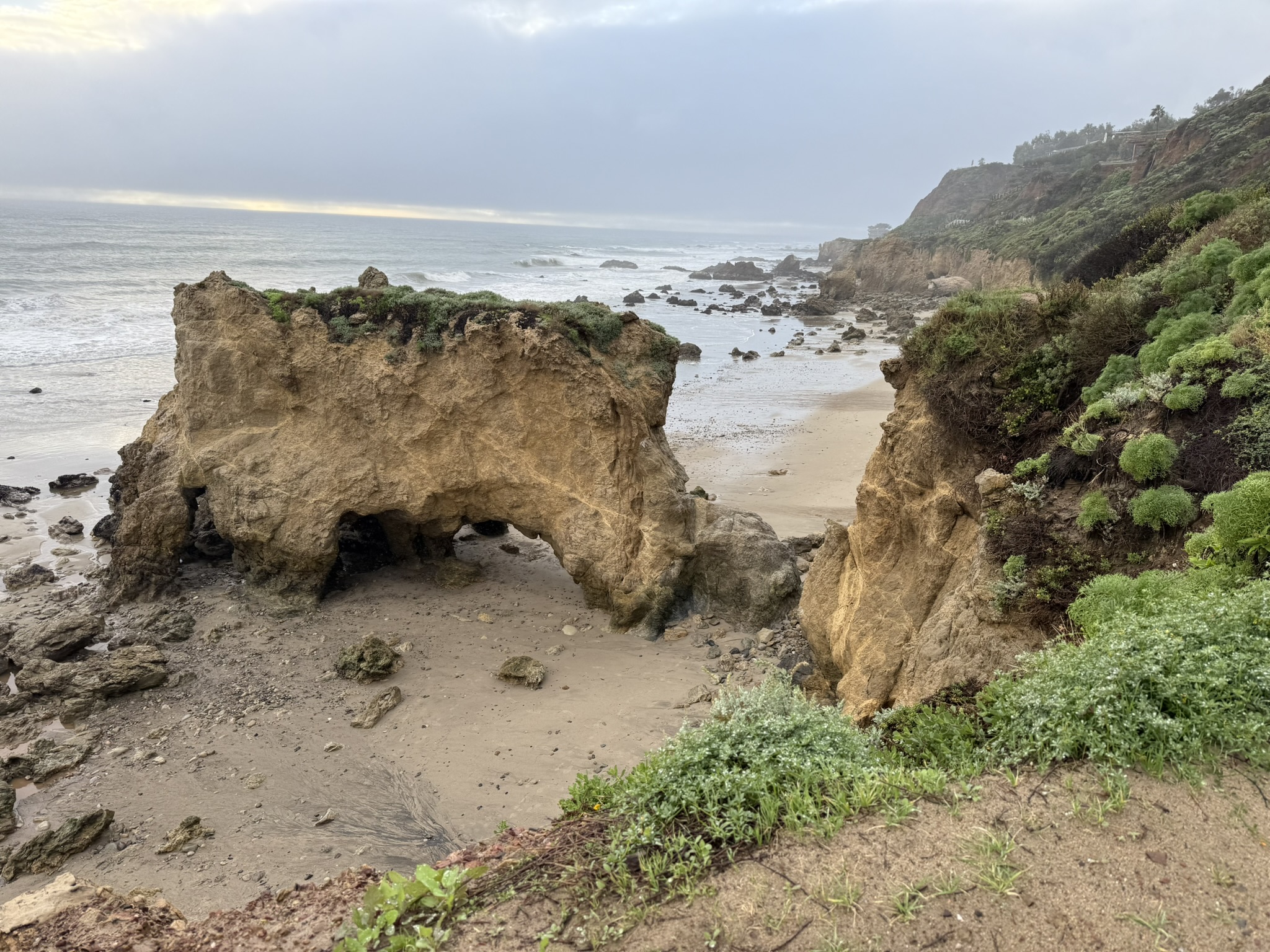
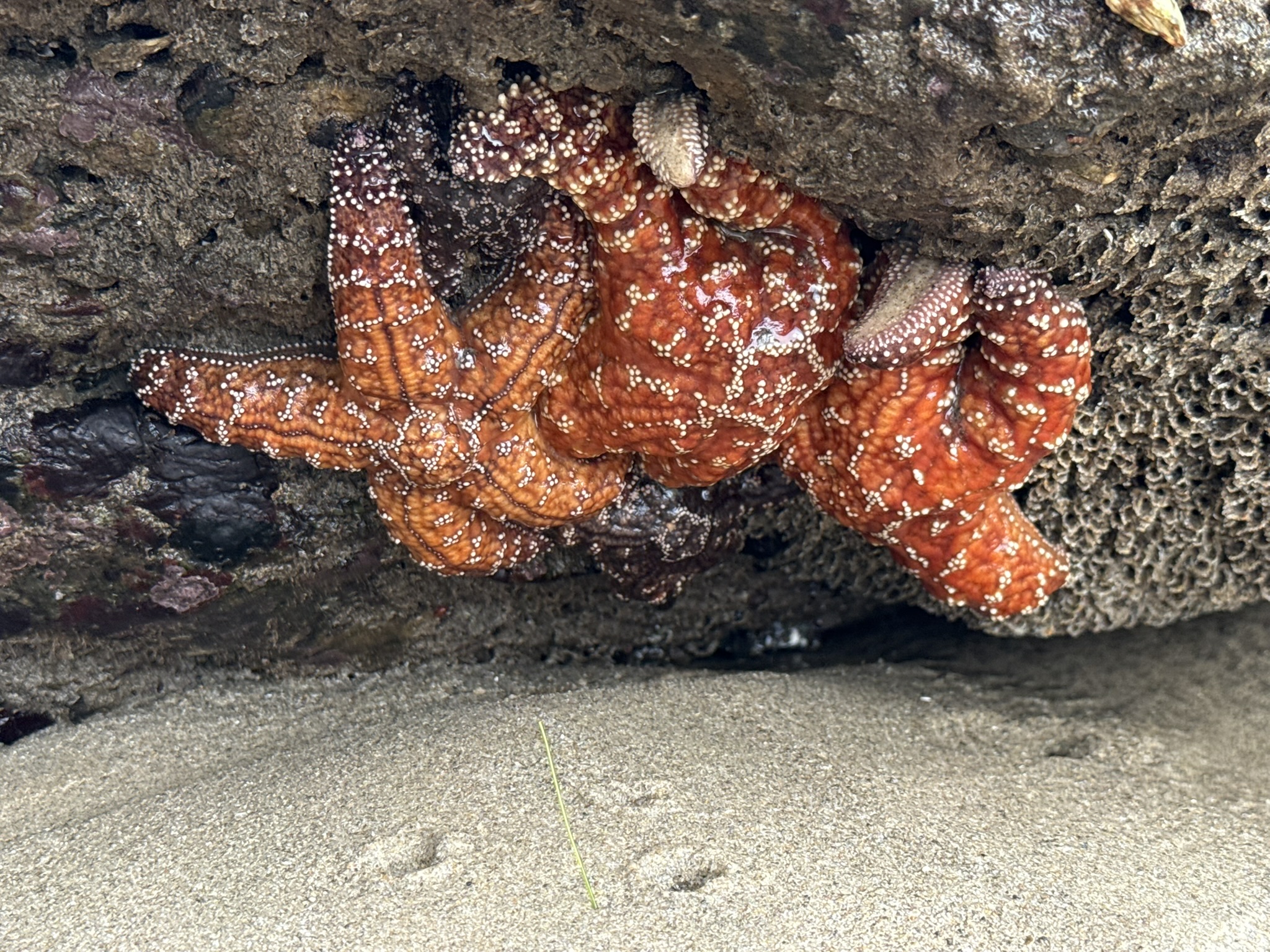
We visited many beautiful places on our trip, but I was most deeply in my element at El Matador State Beach near Malibu. The beach had a 9 foot tidal differential, so we timed our arrival for low tide (which was 2 feet below sea level that day!) to take advantage of the complete tidal zone. The actual beach is on the other side of a cliff, which requires a short hike and some steep, questionably rusty stairs. No matter, we worked our way down and started exploring. The first thing I noted were the stacks—tall mounds of sandstone orphaned on the beach from prior erosion. They were once part of the cliffside, but as wind, rain, and tides work at them they split off until only sections are left standing. The West Coast is well known for these, perhaps the most famous among Gen-Xers like me being Haystack Rock, along the Oregon coast where The Goonies was filmed. Large boulders littered the beachfront, completely covered up in California mussels (Mytilus californianus). As we marveled at the rugged beach, my daughter noticed a large starfish. After seeing the first one, the search was on. As we looked intently for more, we were rewarded with dozens—deep purple, dark orange, maroon in color—almost all curled between the sand and the underside of the rocks.
These ochre sea stars (Pisaster ochraceus) were no delicate starfish that could fit in your palm. They were bulky creatures at least a foot wide. While I’ve occasionally come across a small sea star on our Gulf Coast beaches, the sheer numbers on that beach dwarfed the typical ones we see here. Seeing these healthy populations of sea stars was excellent news, as 10 years ago the beaches around Malibu were struck hard by “sea star wasting disease.”
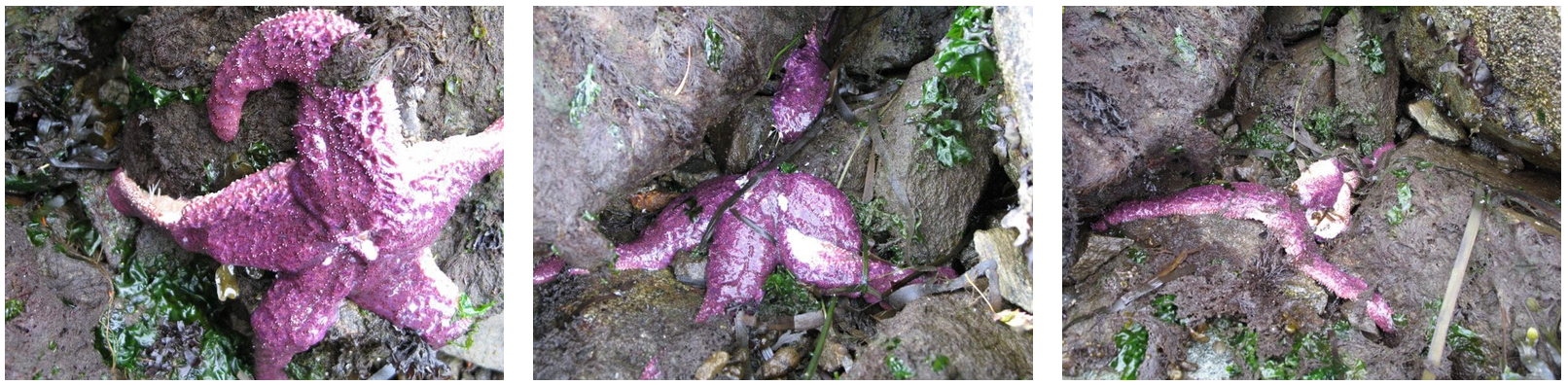
Spread easily between organisms by their tendency to clump together, the results of the disease were devastating. The echinoderms would suffer lesions on their arms, which eventually fell off, and disease would enter the center of their bodies until the entire organism dissolved into a pile of goo. During the disease spike in 2014, sea star populations from Alaska down to Mexico were almost completely wiped out—with 99% mortality on many beaches. Research on the cause of the disease started immediately, although the discovery of the bacteria responsible for the outbreak, Vibrio pectenicida, was just announced in summer of 2025. Thankfully, a natural recovery has restored much of the ochre sea star population, possibly through a subset of organisms with natural immunity. Researchers are looking at ways to cultivate and release disease-resistant sea stars into the wild to supplement the recovering populations.
If you’ve ever taken our Master Naturalist courses or studied ecology, you’re familiar with the term “keystone species.” A local example is the gopher tortoise, whose burrow provides homes for hundreds of other species. If keystone species disappear or decline, the whole ecosystem around them can collapse. Sea star wasting disease was particularly concerning, because ochre sea stars were the origin of the entire concept of keystone species. In the 1960’s, Dr. Robert Paine of the University of Washington was curious about the role of sea stars on beach ecology. He conducted an experiment in which he removed sea stars from mussel-covered boulders to see what would happen. He observed that the mussels, typically eaten by the sea stars, completely took over and outcompeted every other invertebrate species. Sea stars also eat sea urchins, and without control of the urchin population, kelp (eaten by urchins) forests decline significantly. The concept is so fundamental to the understanding of ecology that it has been observed in natural systems and in experiments replicated worldwide.
Ochre sea stars use their tube feet to move around and attach to the wave-ravaged rocks of Pacific coastal shores. They can adapt the shape of their arms based on conditions around them, thinning their arms to grasp rocks better or fattening them up in low tide when there’s less wave pressure. They have a rough exterior and small spines for protection from predators like crabs and shorebirds. If they can avoid predation, they may live 20 years. Ochre sea stars feed on the mussels we saw covering those rocks, using their tube feed to open up the tight shells. To digest the meat, they extrude their stomachs and break down tissue with digestive enzymes. After eating, sea stars emit chemicals that indicate to nearby cohorts that they have successfully foraged—attracting other sea stars looking for food. This is how they form the clusters, or “galaxy,” of sea stars we marveled over along the beach.
 4
4