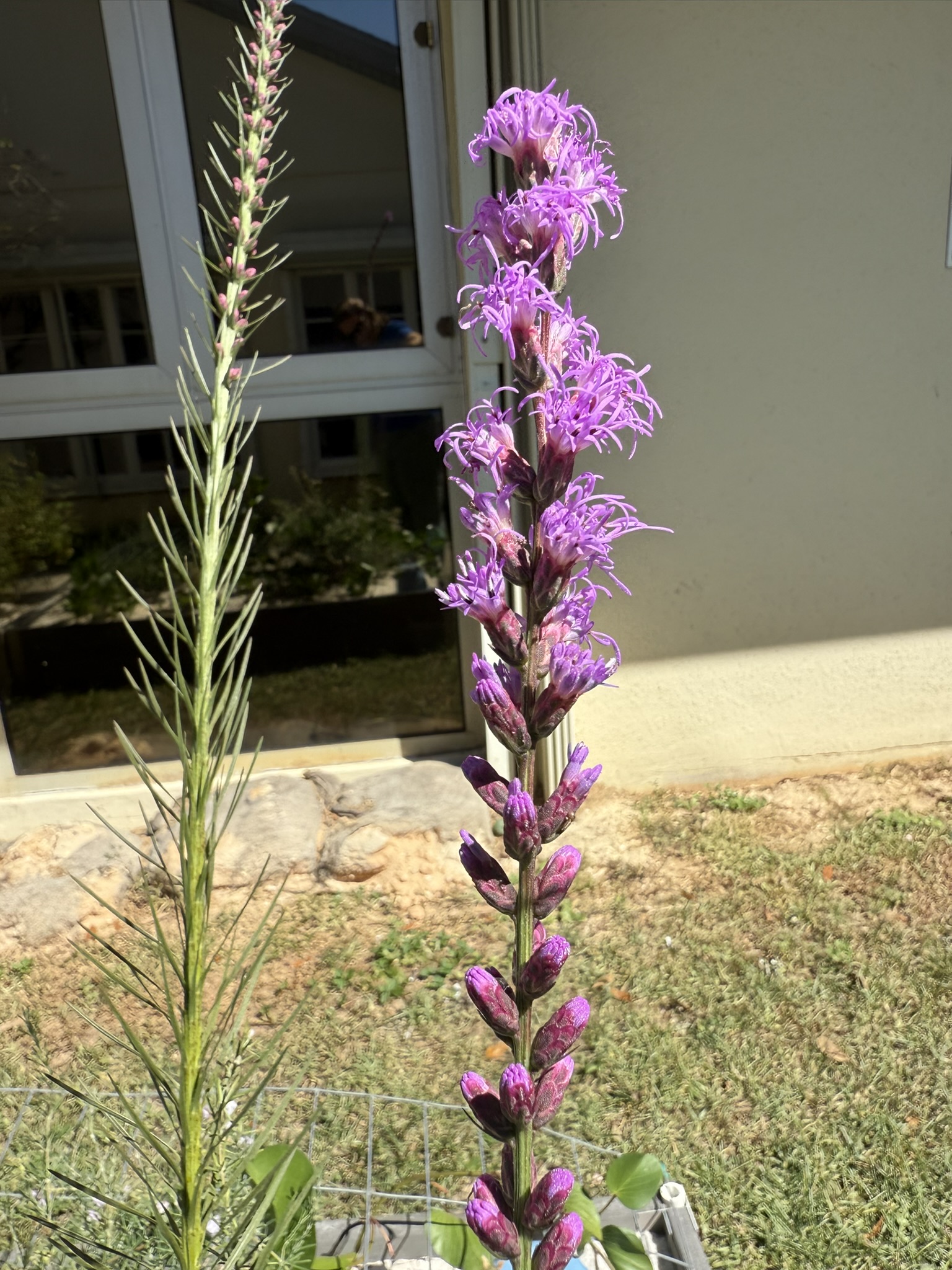
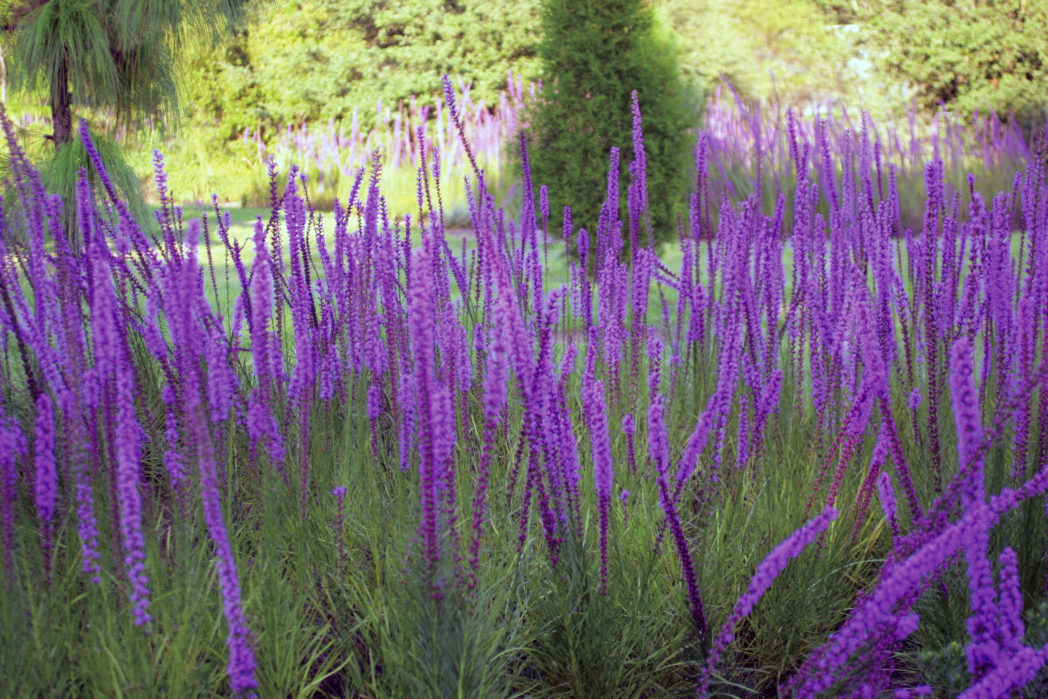
Walking through a northwest Florida wildflower prairie in mid-October, the star of the show is Liatris. Known as dense gayfeather or blazing star, this tall (up to 7’!) stunner of a plant is covered up with clusters of small purple flowers. The flowers are are composed of tiny, frilly five-petaled florets. Each cluster may have groups of up to 18 flowers at a time, crowding the stalk with color.
Before blooming, the spiky grasslike structure grows upright and produces a series of dozens of green leaflets, similar in form to rosemary.
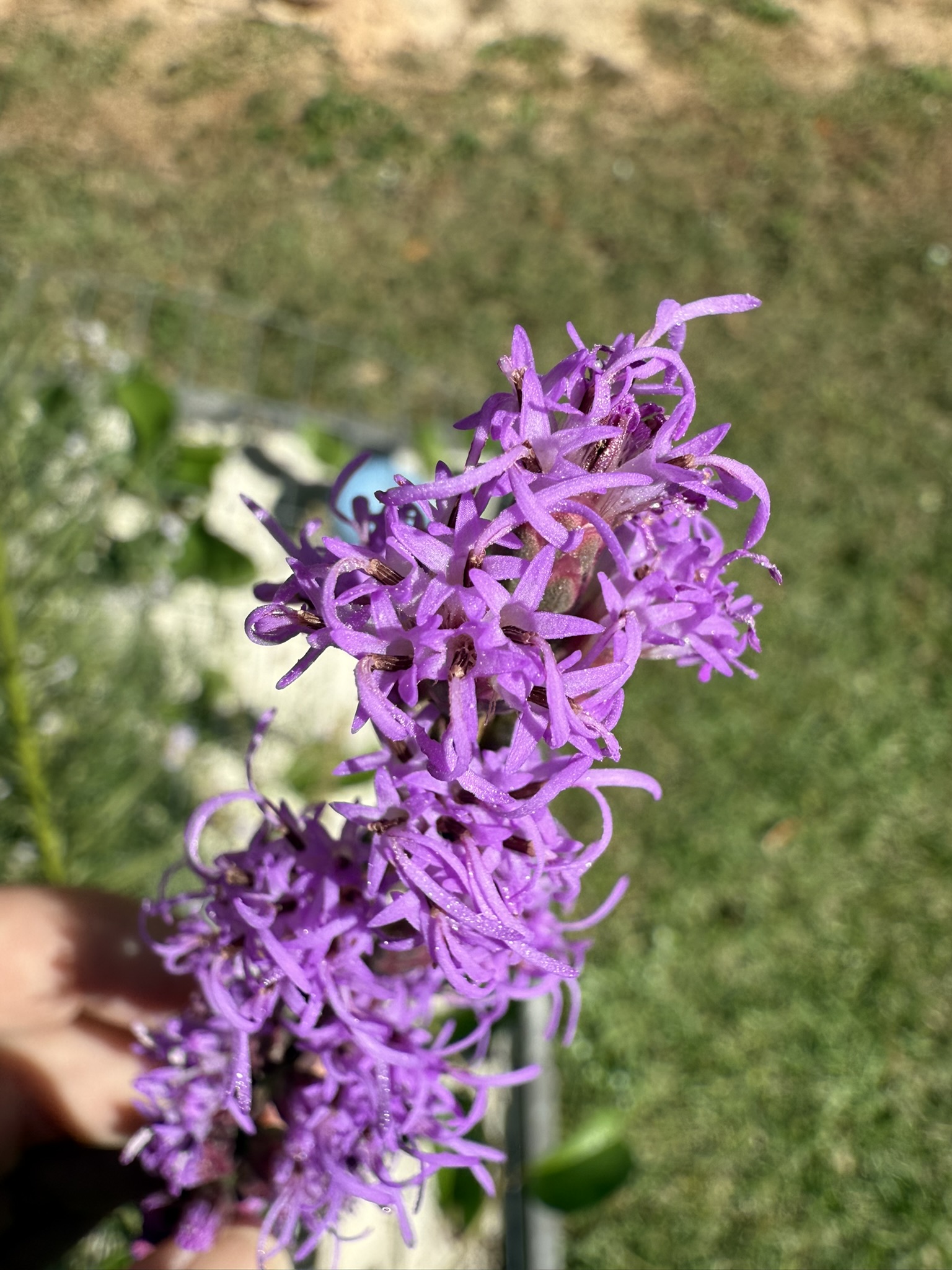
While delicate in appearance, the blazing star is a hardy plant adapted to a wide range of habitats. Some varieties can grow in the pure sand of beach dunes and scrub, while Liatris spicata thrives in the soggy wet soils of bogs and pine flatwoods. The species is known for attracting bees, butterflies, and hummingbirds, so it makes a great addition to a pollinator garden. The flowers perform best in full sun.
Blazing star is particularly impressive in a large group, so you can plant dozens together (by seed or container) for a beautiful effect. After blooming deep purple this time of year, they’ll turn a goldish bronze that adds to the interesting fall color of a garden. Liatris will also re-seed every year after dying back in the winter.
There are many plants native to the United States known commonly as colic root, including blazing star. This nickname arose from its traditional medicinal use treating stomach cramps. Additional uses of a tea made from the plant were used for everything from sore throats and kidney issues, while an incense made from dried roots was burned for sinus relief.
 6
6