Gulf toadfish (Opsanus beta) are among those species that only a mother could love. Squat and bumpy, big-headed, scaleless, slow, and unwieldy, they truly resemble land-based amphibians more than the sleek, fast fish to which we are accustomed. To me, they are fascinating, and are perfect examples of the vast diversity of wildlife and their capability to fill very specific ecological niches. Like reef fish, toadfish have boxy bodies and move slowly because their feeding strategy is different. Their lifestyles involve hiding, not chasing, so they are adapted strategically to their environment.
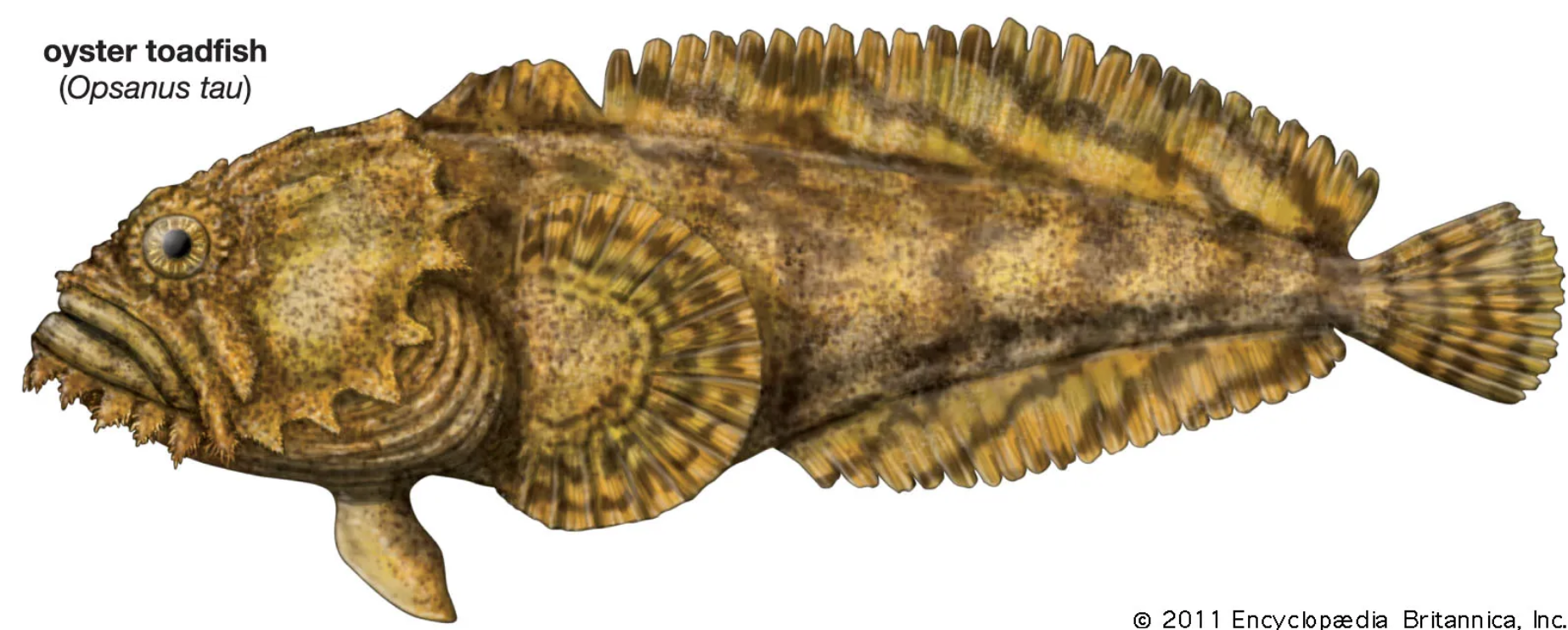
The most noticeable are their unusual fins. Toadfish have two wide pectoral fins that bear more resemblance to a bird’s wings than fish fins. Another set of pelvic fins function like crawling “legs,” used to move along the seafloor of the western Atlantic and Gulf. Members of the larger taxonomic family (Batrachoididae) populated by frogfishes, their common name comes from their ability to use their air bladder and large mouths to make a toad-like grunting noise. They are adapted to low oxygen and can spend a longer amount of time than most fish in poor water quality or even out of the water entirely. This ability to crawl around out of the water likely contributed to the nicknames “dogfish” and “oysterdog.”
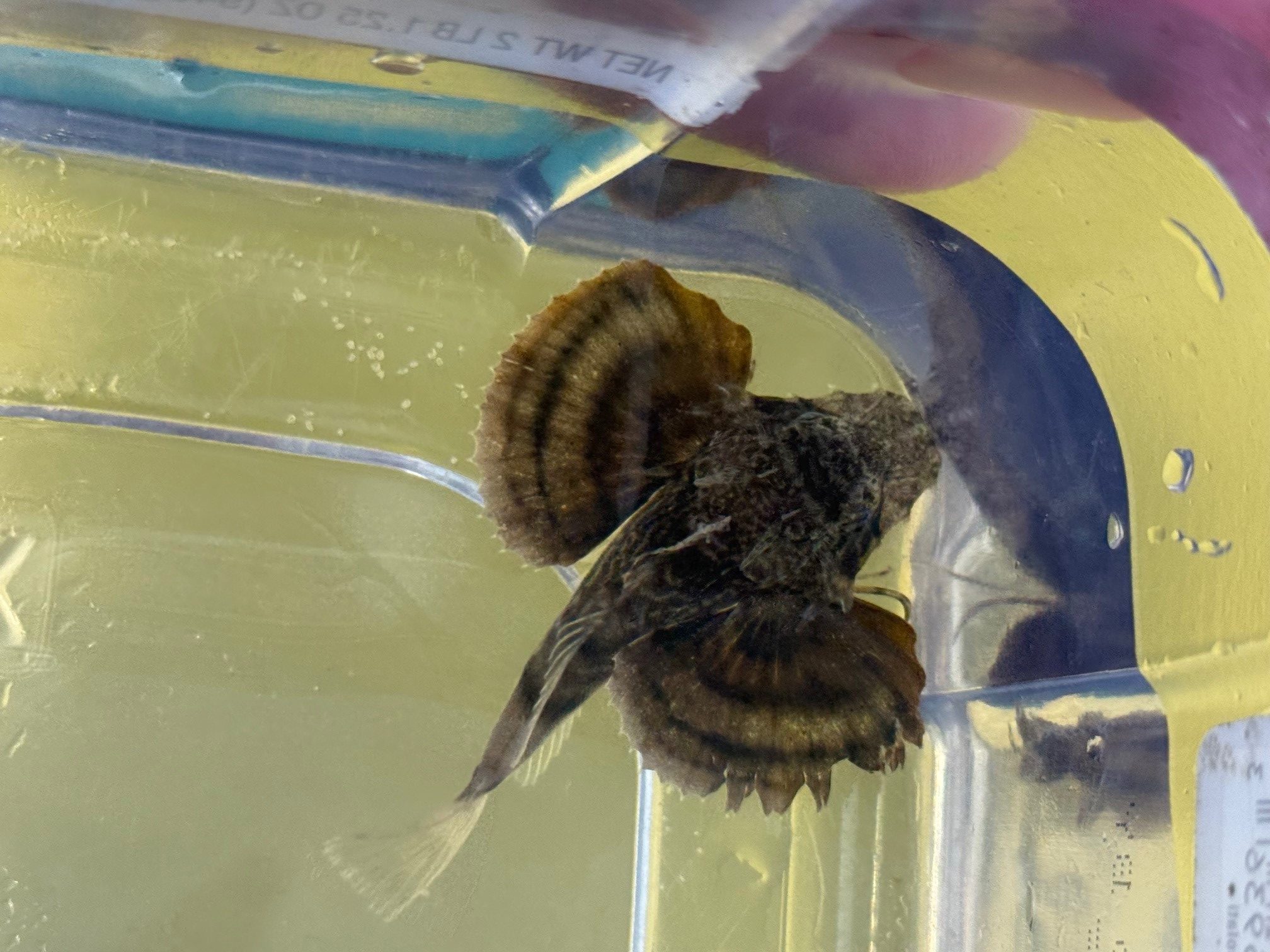
Toadfish spend their time on the bottom, hiding among rocks, oysters, seagrass, or even trash like bottles and cans. Like other benthic fish, toadfish have barbels on their mouths that help as sensing organisms in the muddy deep. These “ambush” hunters eat crabs, shrimp, and mollusks, using their patchy brown and gray camouflage to hide and wait for unsuspecting prey.
Just after Father’s Day, it’s also worth mentioning that toadfish dads are known for being caretakers of their young. After the female lays eggs, she will leave. Male toadfish will protect the eggs as they develop over the next month, even hanging around for a few weeks after hatching to guard the young!
 8
8