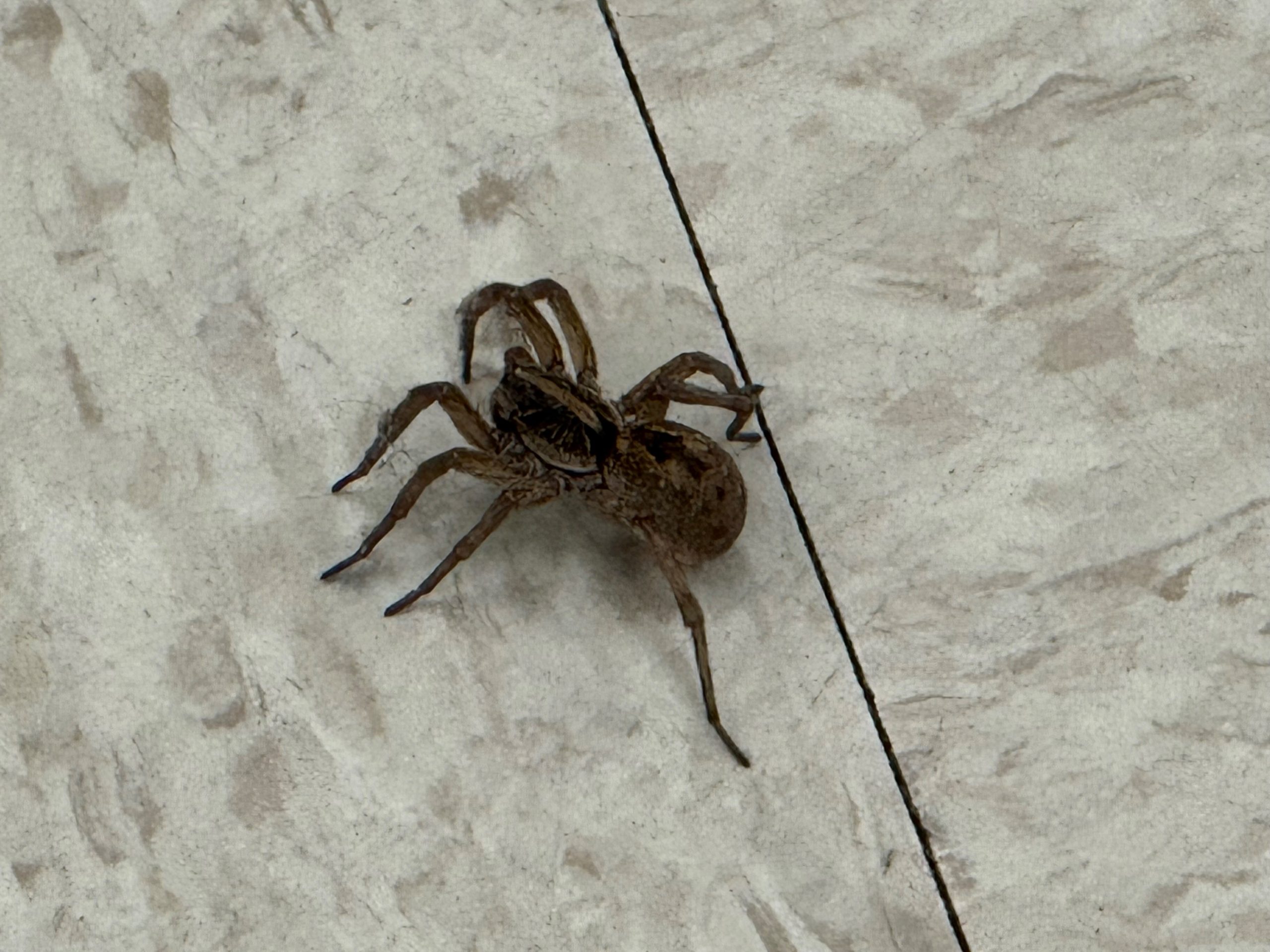
Some weeks, I plan well ahead for a blog topic, and others are chosen completely by chance. Like today’s subject—I walked out of my office the other day and into the building lobby, when I noticed an unusual visitor. An inch-long wolf spider was nervously making its way across the tile floor, obviously lost and quite out of place. It froze at my approach, likely hoping to go unnoticed by a potential predator like me. Despite a vivid childhood dream of waking up to hordes of spiders crawling up the foot of my bed (thanks, Indiana Jones!), I absolutely appreciate spiders’ role in the larger ecosystem and do my best never to hurt them. This guy wouldn’t budge, so I went to the janitor’s closet, grabbed a broom and dustpan, and easily relocated it outside.
That being said, I know large, furry spiders that crawl—or jump—can really freak people out. So, a tribute follows to the wolf spider, in hopes a reader will adopt a “live and let live” attitude the next time one crosses your path.
Wolf spiders are unique among their kin, in that they are not web-builders. They are runners. The Missouri Department of Conservation calls them “athletic” with “superb running abilities.” This is only problematic if you’re one of their prey insects…based on my experience, this little spider will not be running after a human. Like any spider, they can bite if threatened, but they are not dangerous or venomous.
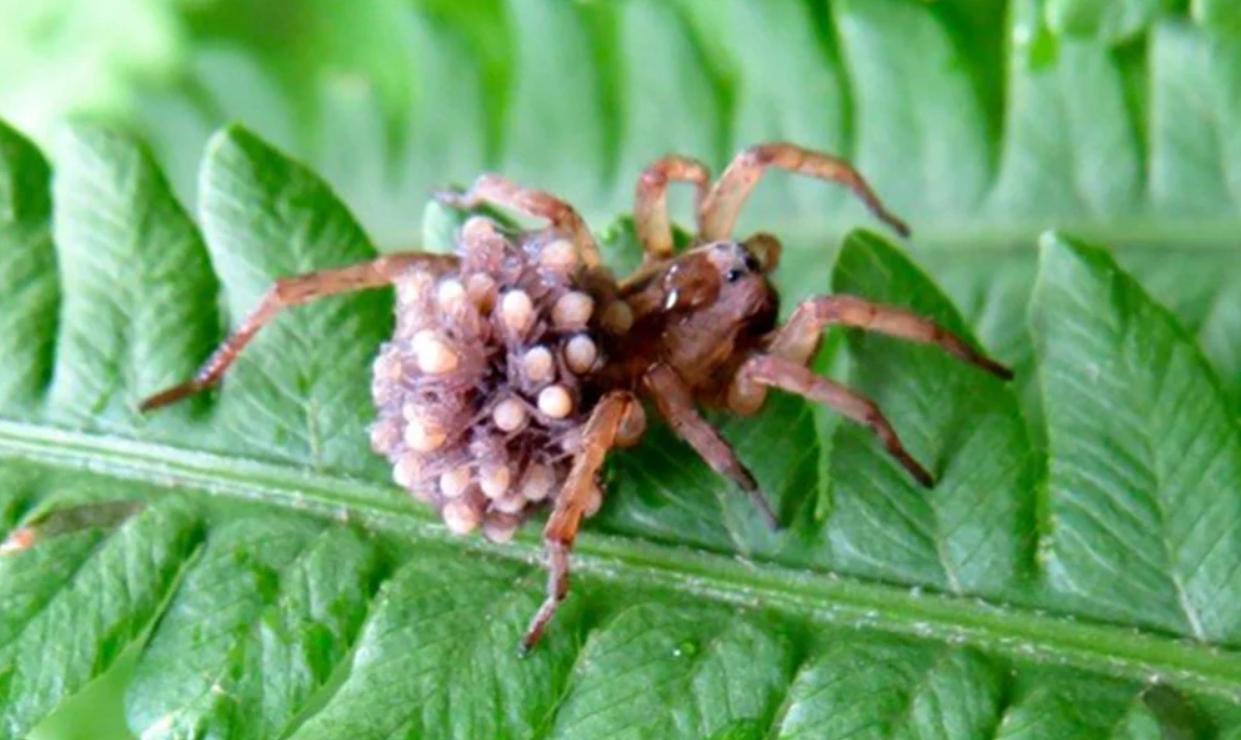
Among spiders, Mama wolf spiders are known to be particularly doting. Unlike other species, expectant females will carry eggs (often 100 or more) around near their spinnerets. Once emerged, the hatchlings perch on mom’s back for several weeks. Wolf spider hairs aren’t just present to provide a “creepy” factor; they are functional for several reasons. Spiderlings cling to the hairs while hitching a ride on mom’s back, and the sensitive hairs provide extra perception for detecting prey. Females of the species tend to live twice as long (2 years) as males. Factors in this may be the males’ smaller (and more vulnerable to predators) size, exposure to the elements while searching for mates, or post-copulation cannibalism by females.
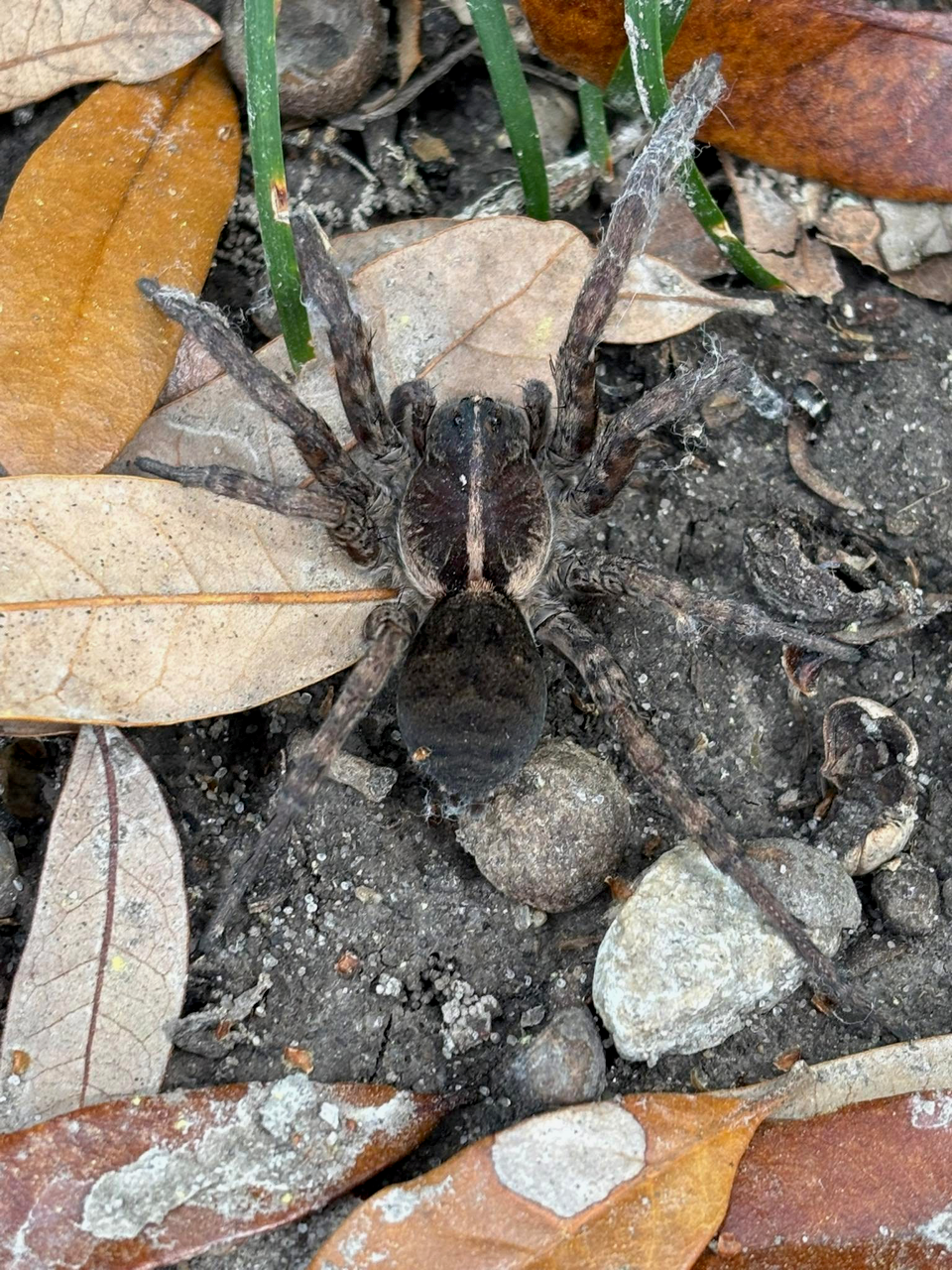
Over 250 species of wolf spiders live in the United States and Canada. Habitats vary widely, including leaf litter, stream edges, open sandy areas, and small burrows. Unlike their mammalian namesakes, wolf spiders do not work in packs. They use their excellent night vision to hunt alone. Wolf spider coloration is typically black or brown with tan, yellow, red, and or markings, varying by the best means of camouflage in their surroundings.
They typically eat crickets, beetles, roaches, ants, and bed bugs. So, they next time you are surprised by a big hairy spider, leave it be and thank it for being out there providing free pest control!
 9
9