As the weather reaches summertime temps and humidity levels, you may start seeing more pests in the yard. One question we get a lot at the Extension Office is “What are these squiggly lines all over my leaves?” The answer is: leafminers! The next question is usually “How do I get rid of them?” The answer may surprise you. Read on to find out more about this pesky plant pest.
What are leafminers?
There are many species of leafminers. Some adult leafminers are small yellow and black flies about 1/8 inch in length. Others are tiny moths. Adults will live for about a month and during warm months will reproduce continuously. These flying insects pierce the leaves with their ovopositor and insert their eggs between the layers of the plant.
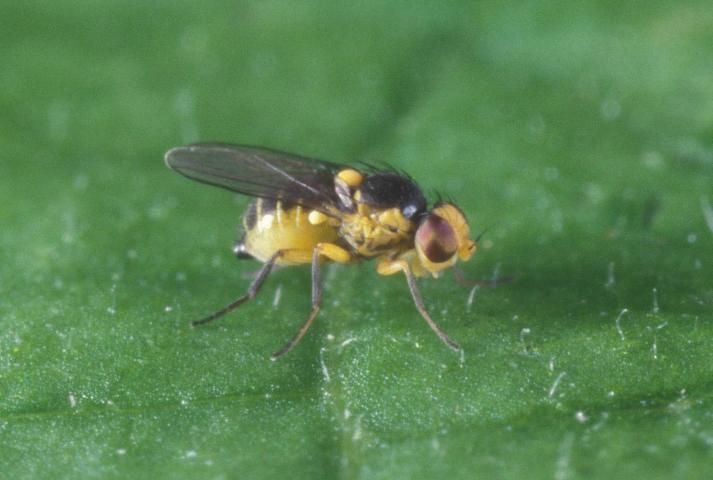
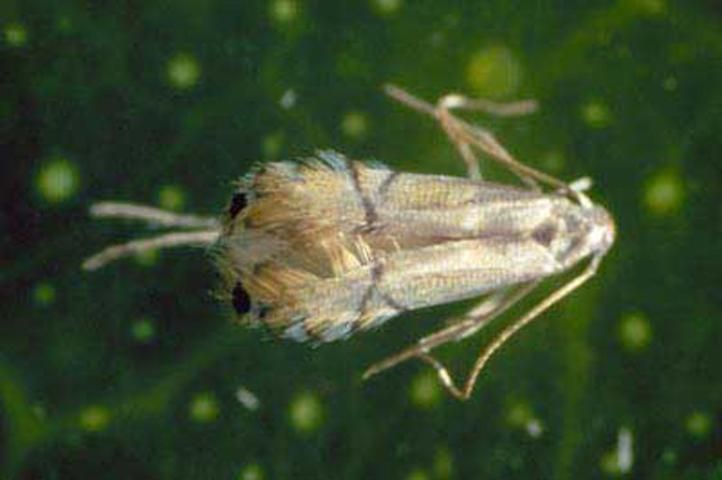
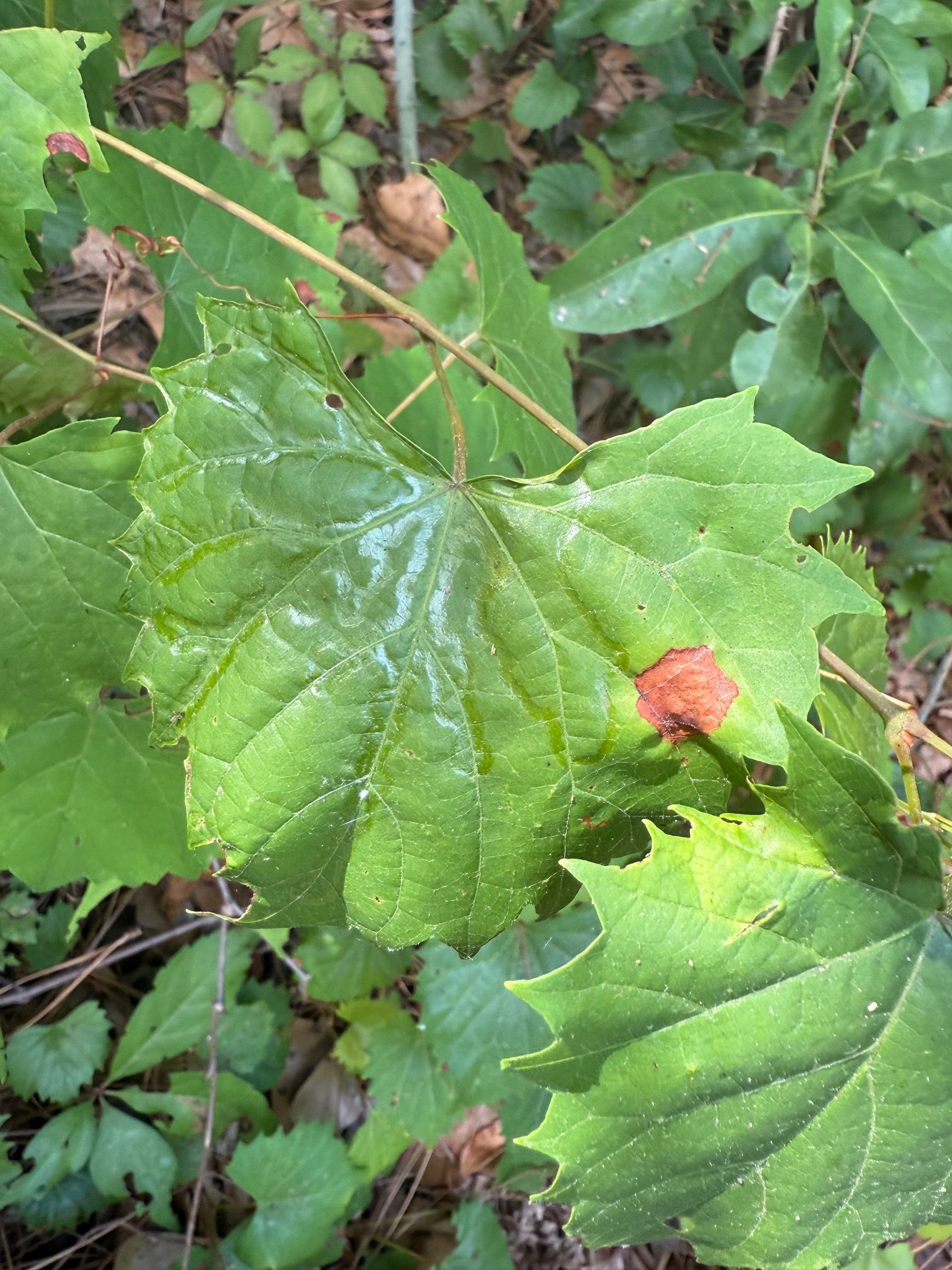
The tiny larvae hatch and mine their way through the leaves eating the flesh as they grow, causing the squiggly lines we are all too familiar with. When scouting for leafminers in your crop, usually the first sign of infestation will be leafmine damage. Mature larvae will cut an exit hole in the leaf to exit the leafmine, drop, and burrow into the soil. After 9 days, the adult will emerge from the soil and begin mating and the process begins again.

What plants do leafminers attack?
Different species attack different plants which range from trees to vines to vegetables and herbs. For example, Vegetable leafminer, Liriomyza sativae Blanchard, activity can be found in vegetables such as tomatoes, celery, squash, eggplant, beans, and peppers. Citrus leafminers, Phyllocnistis citrella Stainton attack citrus tree leaves. Both of those are “serpentine” leafminers that leave squiggly lines. Blotch leafminers leave irregular blotches instead of lines. Blotch leafminer activity is especially prevalent in basil in Florida.
What should I do if I find their trails in my leaves?
Although leafminer injuries can be unattractive, it is rare for them to significantly affect plant health. Areas mined die and dry out. Damage is mostly cosmetic, though the holes in the leaves left by the ovopositor and the larval mining activity can serve as entry points for bacterial and fungal diseases. A heavy infestation where excessive leaf damage is observed can reduce photosynthesis, and/or cause premature leaf drop. Leafmines on crops such as spinach or basil, where we would be consuming the unsightly leaves, poses another challenge.
The Florida-Friendly approach to managing leafminers (or any yard pest for that matter) is to utilize Integrated Pest Management.
What is Integrated Pest Management (IPM)?
Integrated pest management, or IPM, is a comprehensive approach to managing pests. IPM uses many different methods to cause the least harm to people, property, and the environment. Firstly, it is key to manage expectations. A completely pest free landscape is unattainable. When control is necessary, it is always recommended to use the least toxic method of control first. Read on to learn some of the control methods you can implement to battle these pests in your landscape.

Cultural Control:
Things you can easily do in your landscape to help alleviate some leaf miner activity include:
- Carefully inspect plants and use only clean transplants, free of eggs or larvae
- Monitor and control adults with yellow sticky traps. Traps should be placed at the middle to lower portions of the plants and should be checked a few times a week
- Pull and destroy weeds, as they can be host plants to leafminers
- Clean up garden beds and planters after harvest and destroy remnants containing leafminers
- Solarize vegetable garden plots between crops
Physical Control:
If you find larvae in or on a leaf you can squeeze it gently to kill the insect without harming the leaf any further.
Biological Control:
In Florida, at least 14 species of parasitic wasps have been documented preying on leafminer larvae. Without the interference of pesticides, the rate of larval parasitism can reach almost 100%!
Chemical Control:
A last resort. Given that the target pest is shielded within the leaf layers, the efficacy of chemical controls such as horticultural oils is limited. Many insecticides are no longer effective. Furthermore, insecticides can interfere with naturally the occurring biological control agents mentioned.
By now, you should realize that the leafminer is a relatively harmless pest in your garden. With a few adjustments to your gardening techniques and the awareness that parasitic wasps are around to assist, we encourage you to remain calm if you notice these insect doodles in your yard!
 6
6