Florida’s citrus industry has faced serious and compounding challenges in recent years. Diseases like citrus greening (HLB), hurricanes, flooding, freezes, and competition from overseas markets have resulted in citrus trees and the citrus industry struggling.
In response, UF/IFAS Extension Collier County launched the “JAMAS!” program, an alternatives-to-citrus tropical fruit education series, designed to help people explore other types of fruit trees that thrive in the subtropical environment of Collier County.
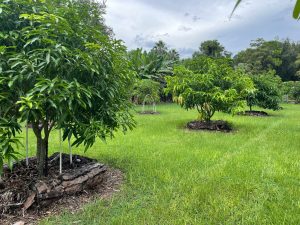
The good news? Tropical fruit grows very well in Collier County! We have abundant sunshine and a subtropical climate. For some fruit, Florida is the only place in the continental U.S. that grows commercially. There are nearly 9.3 million people in South Florida alone and our region continues to be an emerging market for local and national tropical fruit production and distribution.
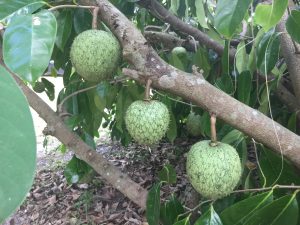
JAMAS” stands for Jackfruit, Avocado, Mamey Sapote, Annona, Starfruit – and beyond. In addition to showcasing these lesser-known or underutilized fruit varieties we also teach cultural practices, pest/disease management, harvesting, and even ways to preserve the fruit including tasting jams, pickling, freeze‐drying, dehydration, and various baked, dessert and salad recipes.
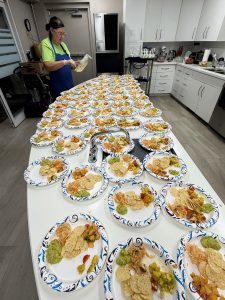
In the 2025 JAMAS! Class, Agriculture & Sustainable Food Systems Agent, Jessica Ryals gave an overview of the challenges facing the Florida citrus industry; Trisha Aldridge, Family & Consumer Sciences Agent shared information on the Florida Cottage Food Law and led the Collier County Master Gardener Volunteers in preparing for our taste test; and Louise King, longan farmer and horticulturist at the Fruit & Spice Park provided on overview of the JAMAS fruits and other fruit that can be successfully grown in South Florida.
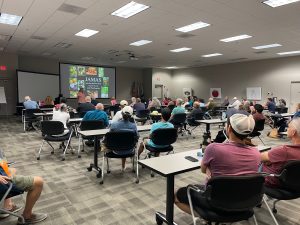
This year’s 63 participants sampled over 20 fruits!
- Avocado- Simmons & Russell (fresh)
- Mango- Keitt (fresh)
- Sapodilla- Silas wood (fresh)
- Starfruit – Shri Kembangen (fresh)
- Pineapple – Sugarloaf (fresh)
- Red and purple dragon fruit (fresh)
- Papaya (fresh)
- Abiu (fresh)
- Jackfruit (fresh)
- Tamarind (dried)
- Miracle Fruit (freeze dried)
- Kumquat (freeze dried)
- Fingerlimes (fresh)
- Dried mango – Carrie
- Guanabana/soursop smoothie
- Mamey Sapote smoothies
- Twyla’s Green Papaya Salad
- Avocado Salad
- Mango Mousse
- Mango Pineapple cobbler
- Pickled starfruit
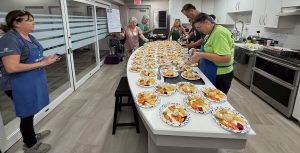
For the 2025 JAMAS a few best practices emerged:
Knowledge gain: 95% of attendees this year said they learned at least one recommended practice related to growing tropical fruit including fertilizer requirements, tree spacing, pruning practices, new varieties of trees to plant, and protection from pests and disease.
Hands-on learning: Grove tours, taste tests make a difference in engagement with the information and knowledge retention. 86% of program participants said they increased their skills in the areas of pruning, fertilizing, grafting, proper use of fungicides, ways to keep trees at a manageable size, and where to plant in the landscape.
Tasting Variety: Offering a spectrum of fruit types (beyond just “popular” ones like mango and avocado) helps people explore new trees to plant in their yard or test the market as a commercial crop. Attendees reported they were willing to plant new varieties as a result of the class.
Economics matter: For many participants, there’s interest not only in growing for food but for small-scale income generation. While the class consists mostly of homeowners, every year there are a few attendees that are commercial growers or aspiring commercial tropical fruit growers. Sharing info about markets, propagation, and post-harvest handling is information people can use. This year’s class consisted of 10% commercial growers. In addition, the Florida Cottage Food Law gives homeowners and farmers alike, an avenue for income generation.
Community & networks: Involving local growers, volunteers, and experts strengthens people’s trust in UF/IFAS Extension and helps spread knowledge. By teaching people what to grow, how to grow it, and how to enjoy the fruits (quite literally!), UF/IFAS Extension is helping shape the tropical fruit future for Florida and the resources available to support the tropical fruit industry.
To learn more history on the JAMAS class, check out this blog post.
To find tropical fruit producers all over SWFL, visit www.swflfresh.com
If you’re curious to learn more about what fruits might work in your yard, or how to turn your backyard or small farm into something productive year-round, reach out to your local extension agent.
 4
4