Imagine a nice patch of yellow, red, and orange flowers which bloom practically every day – this is the reality of the blanket flower – Gaillardia. Perfect for hot, sunny areas, blanket flowers are wonderful short-lived perennials (sometimes grown as an annual) that do great in Southwest Florida.
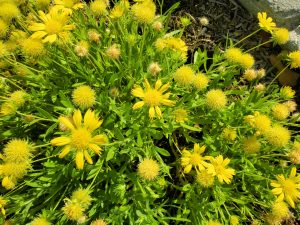
Sometime in the past year or two I walked around the various landscaped parks in Punta Gorda to take a few plant photos for future articles. I was not disappointed with the view as pure yellow blanket flowers caught my eye gleaming in the bright sunshine of mid-afternoon. Some research indicates that, while blanket flowers are native to North America, they may not be native to Florida. This has not stopped this wildflower from doing extremely well here in its adopted home. Blanket flowers make excellent bedding plants due to their easy-to-grow nature and beautiful daisy-like blooms of yellow, orange, red, and even bi-colors petals. Butterflies and other pollinators also love these flowers and are frequent visitors. Often planted in mass as a groundcover, in containers, borders and beds, when you think of wildflowers, the blanket flower is what comes to mind. Suitable for sunny natural areas and meadow-like gardens, blanket flowers are also subjects for bouquets with cut flowers lasting up to a week in an arrangement. Blanket flowers are also moderately salt-tolerant and have been successfully planted along beaches in the vicinity of sand dunes. Full sun is essential for best flowering, and as they are drought-tolerant, do not over-water as root-rots can develop.
Horticulturalists have worked to develop blanket flowers into the spectacular selections we have today bringing this plant into the mainstream market. Garden centers now provide many Gaillardia species, hybrids, and cultivars to choose from fulfilling your color preference and plant palette objectives. Propagation is easy and may not even take any effort on your part once blanket flowers are established. These flowers often re-seed themselves and volunteer plants will pop up in the area. If you start your own plants from seed, be prepared to wait two to three months until they bloom. Some types of blanket flowers can be divided and replanted in September once clumps become too large. For best results, plant individual blanket flowers about two feet apart. These flowering plants look especially nice in front of a shrub border or with other perennials.
Blanket flowers are readily available locally as seed and from started, ready-to-go plants from local garden centers and native plant nurseries. On-line sources will expand availability with a wider selection of newer cultivars and colors.
The blanket flower is another Florida-Friendly Landscaping™ approved plant that will fit into every landscape. It is truly the best of the best of wildflowers! For more information on other types of perennials suitable for our area, or to ask a question, or to ask a question, please visit https://www.facebook.com/CharlotteCountyExtension. You can also call the Master Gardener Volunteer Helpdesk on Mondays, Wednesdays, and Fridays from 1 to 4 pm at 764-4340 for gardening help and insight into their role as an Extension volunteer. Ralph E. Mitchell is the Director/Horticulture Agent for UF/IFAS Extension Charlotte County. He can be reached at 941-764-4344 or ralph.mitchell@charlottecountyfl.gov. Connect with us on social media. Like us on Facebook @CharlotteCountyExtension and follow us on Instagram @ifascharco. Happy New Year!
Resources:
Gilman, E. F. Park-Brown, S., Klein, R. W. & Hansen, G. (2023) Gaillardia pulchella – Blanket Flower. The University of Florida Extension Service, IFAS.
Florida Native Plant Society (2025) Gaillardia pulchella https://www.fnps.org/plant/gaillardia-pulchella
The Florida-Friendly Landscaping Guide to Plant Selection & Landscape Design (2022) The University of Florida Extension Services, IFAS.
Mahr, S. (2026) Blanket flower, Gaillardia spp. The University of Wisconsin – Madison – Division of Extension.
 0
0