It’s a butterfly world!
Sometimes, my garden is literally bursting with butterflies. If you feel this way too, then you may have planted many butterfly host plants. A butterfly host plant is one which they lay their eggs on. You must have these plants if you intent to attract butterflies, and each butterfly is particular about its host plant. There are many guides that will tell you which plants go with which butterflies.
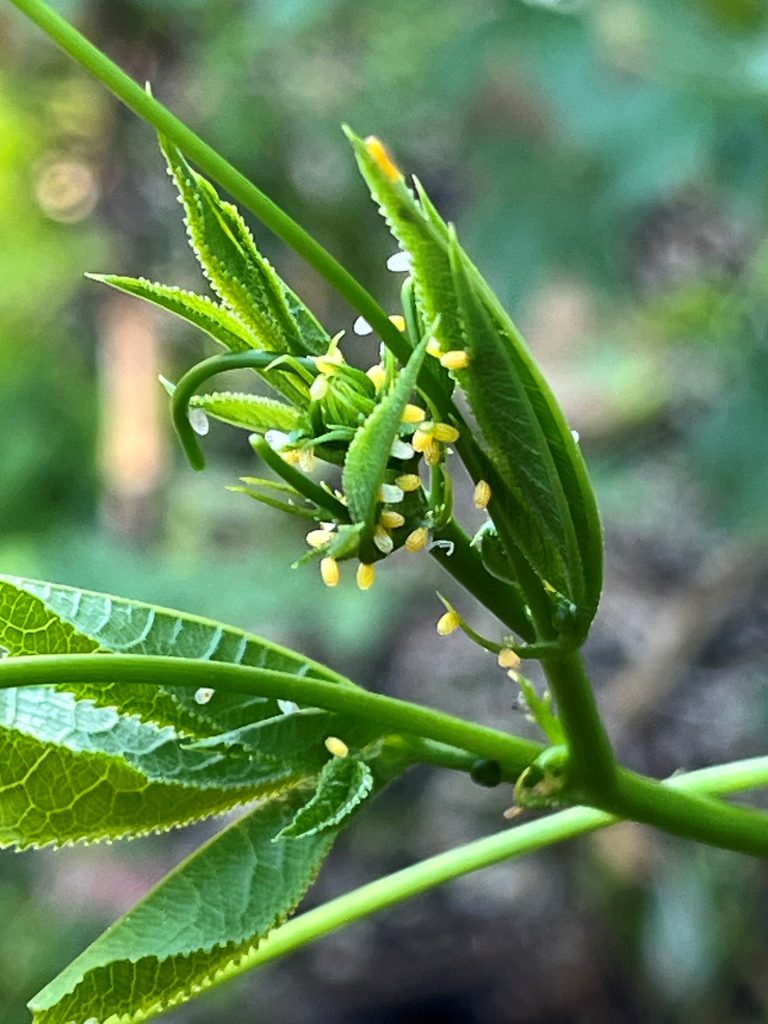
But know this: before you can have a butterfly, you must have caterpillars.
After the eggs are laid, the baby caterpillars will hatch out and begin eating the plant. Finally, after a few weeks, they will form a pupa and then, after the miracle of metamorphosis, they will emerge to become what we know and love, a butterfly. Butterfly host plants will eventually get eaten, but thankfully, they will grow back, so never spray them and allow for the sometimes messy job of reproduction.

Zebra Longwing – our official Florida state butterfly
Our state butterfly is a very special insect. Because it feeds on pollen as well as nectar (most butterflies only eat nectar), it lives much longer than most butterflies, months instead of weeks.
I guess we can look to the zebra butterfly for a lesson in nutrition! Protein laden pollen makes this butterfly most prolific.
Pupal what?
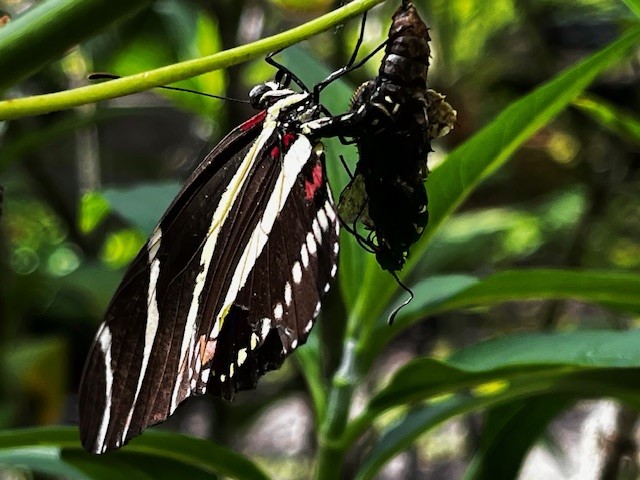
It also has a unique characteristic of some butterfly species called pupal mating. Male butterflies will fight each other for the privilege of being the first to mate with an emerging female. They are so keen to be first, that they will mate with the female while she’s still inside of the pupa.
(Yeah, it’s a bit kinky, but interesting.)
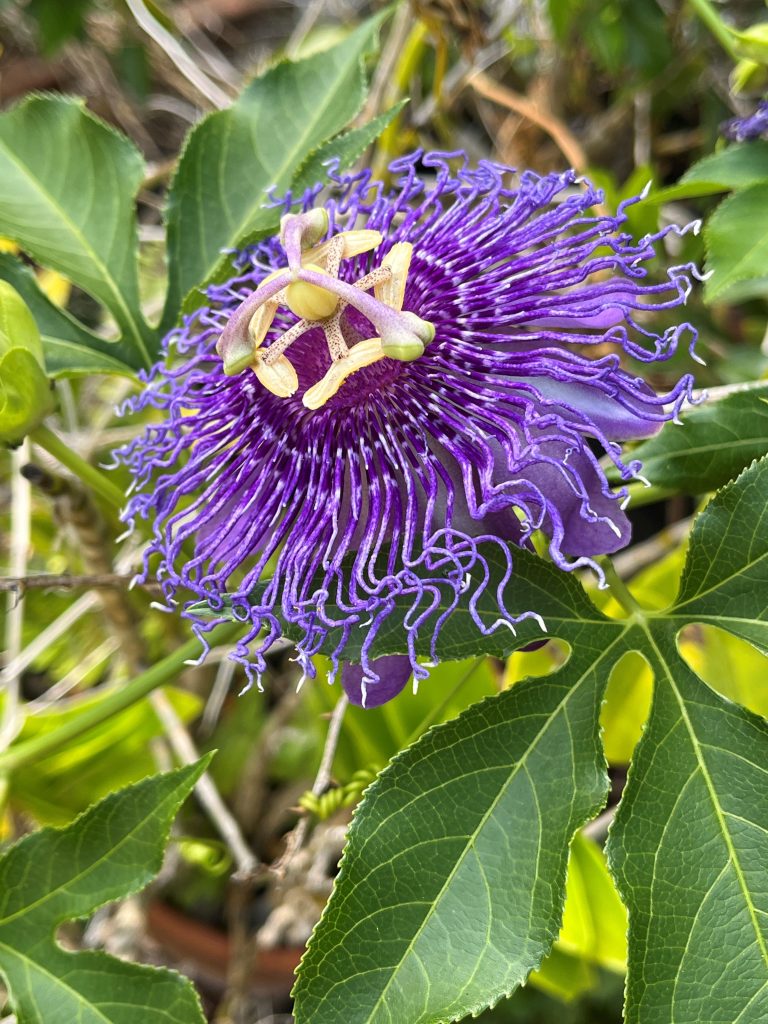
To attract the Zebra Longwing butterfly, you must plant specific species of passion vines. The native Passiflora incarnata, aka “Maypop”, is one of the best, as is the native P. suberosa. There is also a hybrid of the native P. incarnata and a tropical Passiflora called P. cincinnati, called Passiflora ‘Incense”. Both the Maypop and Incense have the characteristic of “popping up” all over the place, a feature that I love and I let them grow almost anywhere they want because they attract so many butterflies! I literally have 20-30 flying all day long.
Roosting – another unique feature of this butterfly
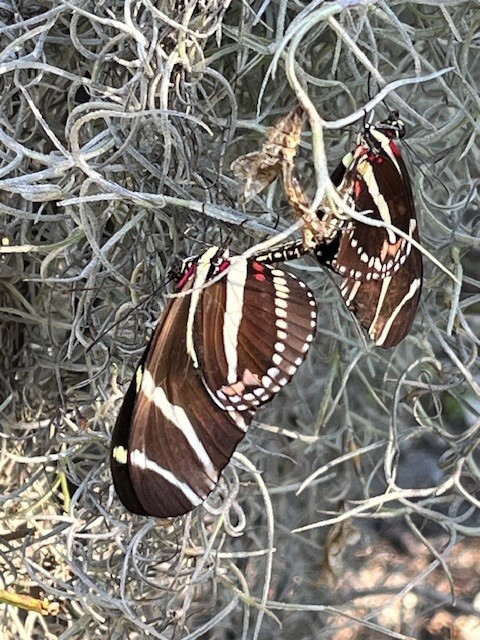
As evening approaches, these butterflies will congregate in a safe place, usually a piece of Spanish moss hanging away from the tree or a dead branch. They form a fascinating cluster. Safety in numbers, appearing larger than they are; a survival mechanism to deter nocturnal predators.
If you plant it, they will come.
Don’t miss out on having a butterfly world at home. If you plant these passion vines, you will be able to witness the miracles these creatures perform for us every day.
 6
6