Mother of millions (Kalanchoe x houghtonii) is a hybrid resulting from the interploid cross between K. daigremontiana and K. delagoensis, both native to Madagascar (Dias et. al 2025).
Situation
Mother of millions, (Kalanchoe x houghtonii) invaded dunes of Nassau County, Florida by reproducing at a much faster rate than surrounding native plants. This altered the species composition in areas where gopher tortoises eat and reproduce.
This was a problem because gopher tortoises depend on fresh supplies of native plants. The plants produced a carpeting effect that displaced native vegetation which the tortoise eats. The desirable plants, or native vegetation, couldn’t grow because it was being choked out by mother of millions!
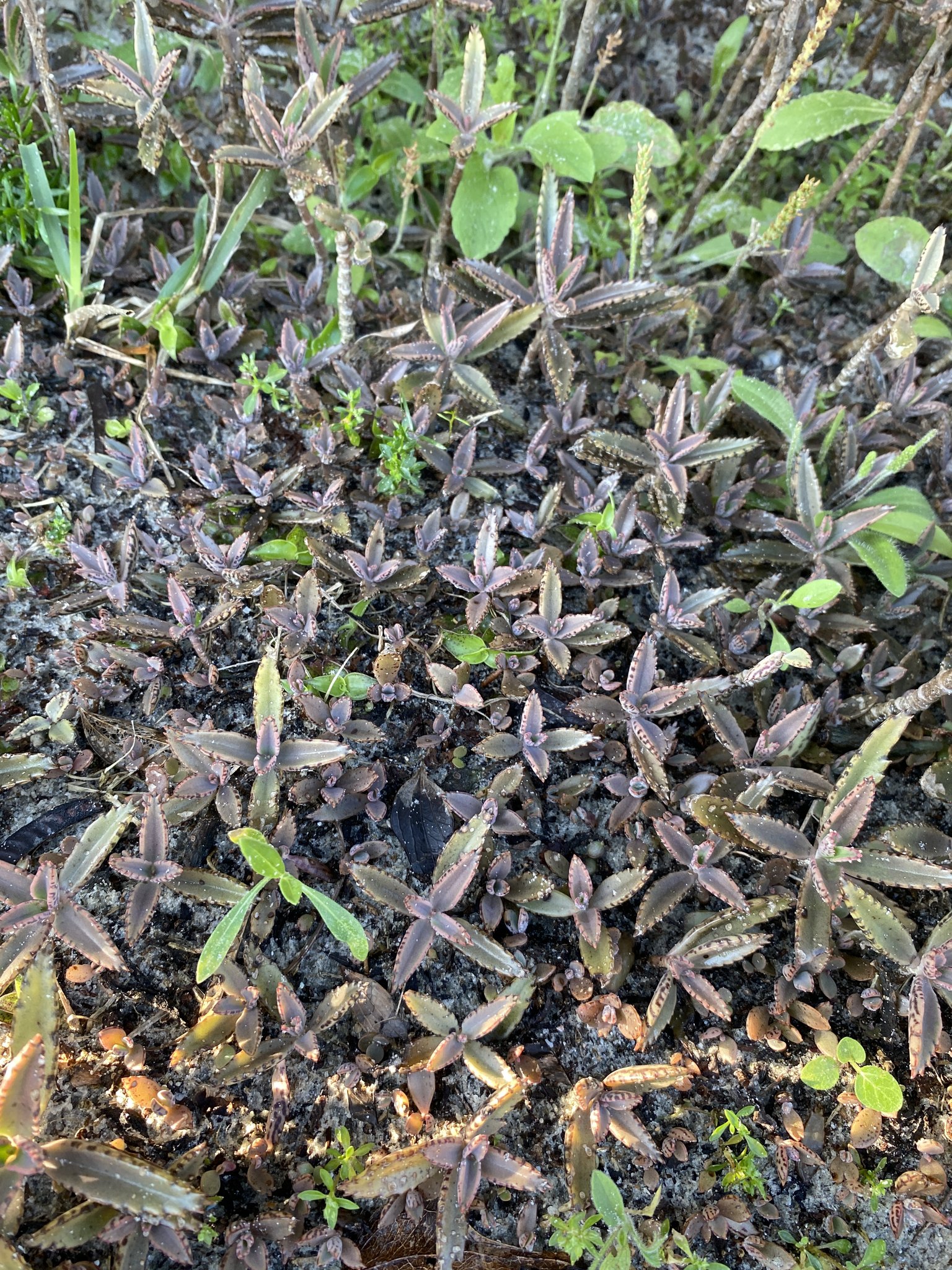
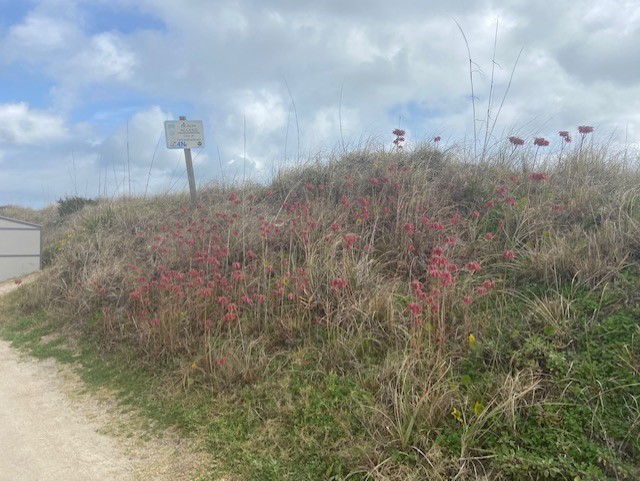
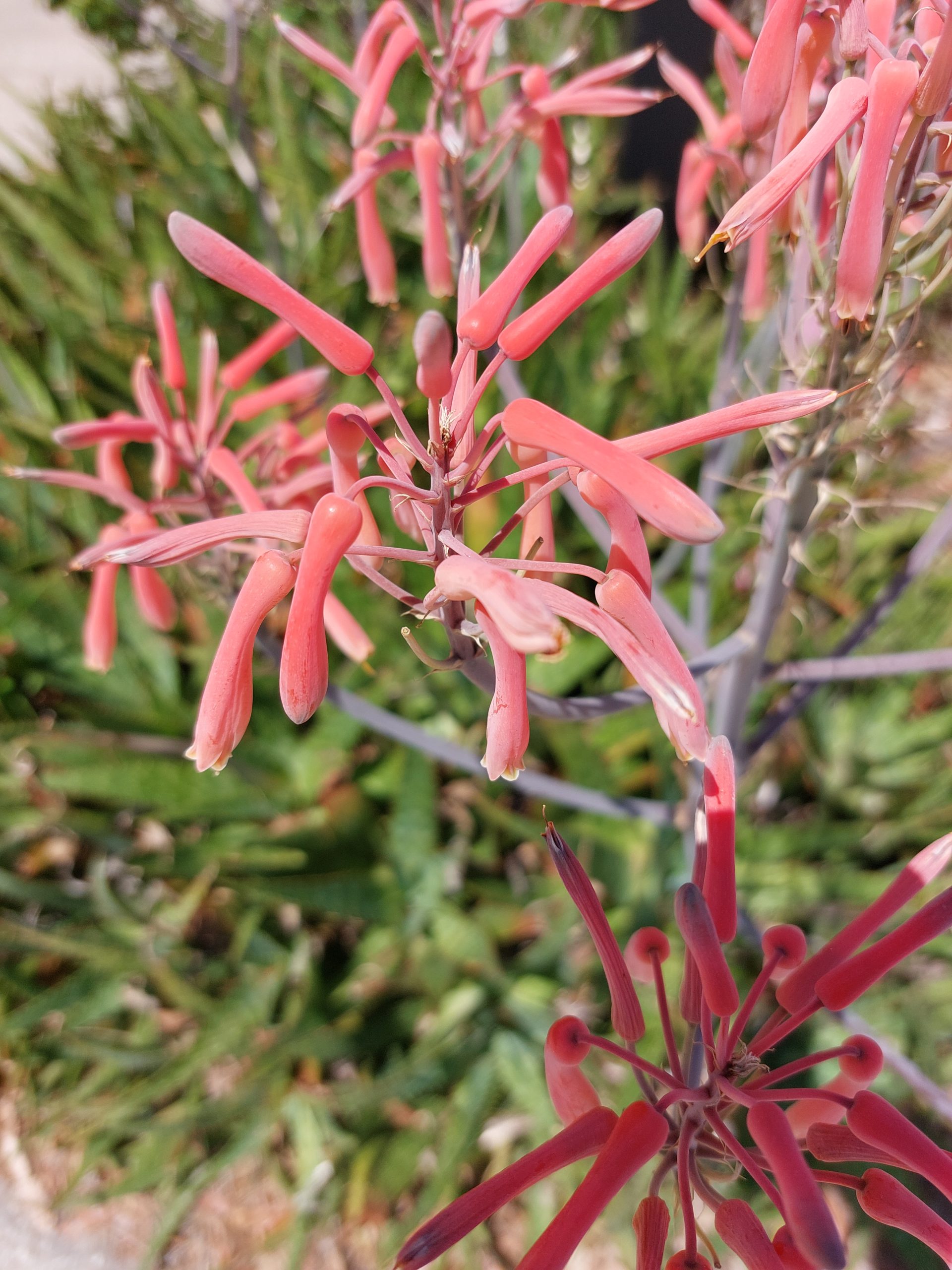
Above: Mother of millions (Kalanchoe x houghtonii) carpeting an area and displacing native plants (left) and its flowering stage (middle and right). Its flowers are pink or light red on a tall stalk. It reproduces by seeds, “pups”, and stems that can re-root.
Problem
Mother of millions grows so rapidly that it can take over an area within weeks, to the detriment of desirable wildlife. Gopher tortoises don’t eat the plant, and it’s not conducive to shelter. Roots tend to be shallow and are not helpful with dune stabilization. Mother of millions (Kalanchoe x houghtonii) fails to show benefits to gopher tortoises, or any other native wildlife for that matter. There is widespread agreement that it negatively affects the dune ecosystem and health in Northeast Florida.
Solution
Removal events help the gopher tortoises thrive because native plants are allowed to grow back and cover the area. This helps reduce future invasions. 


Above: Volunteers remove mother of millions by hand and put into trash bags, taking care not to throw away large clumps of dune soil.
Observations
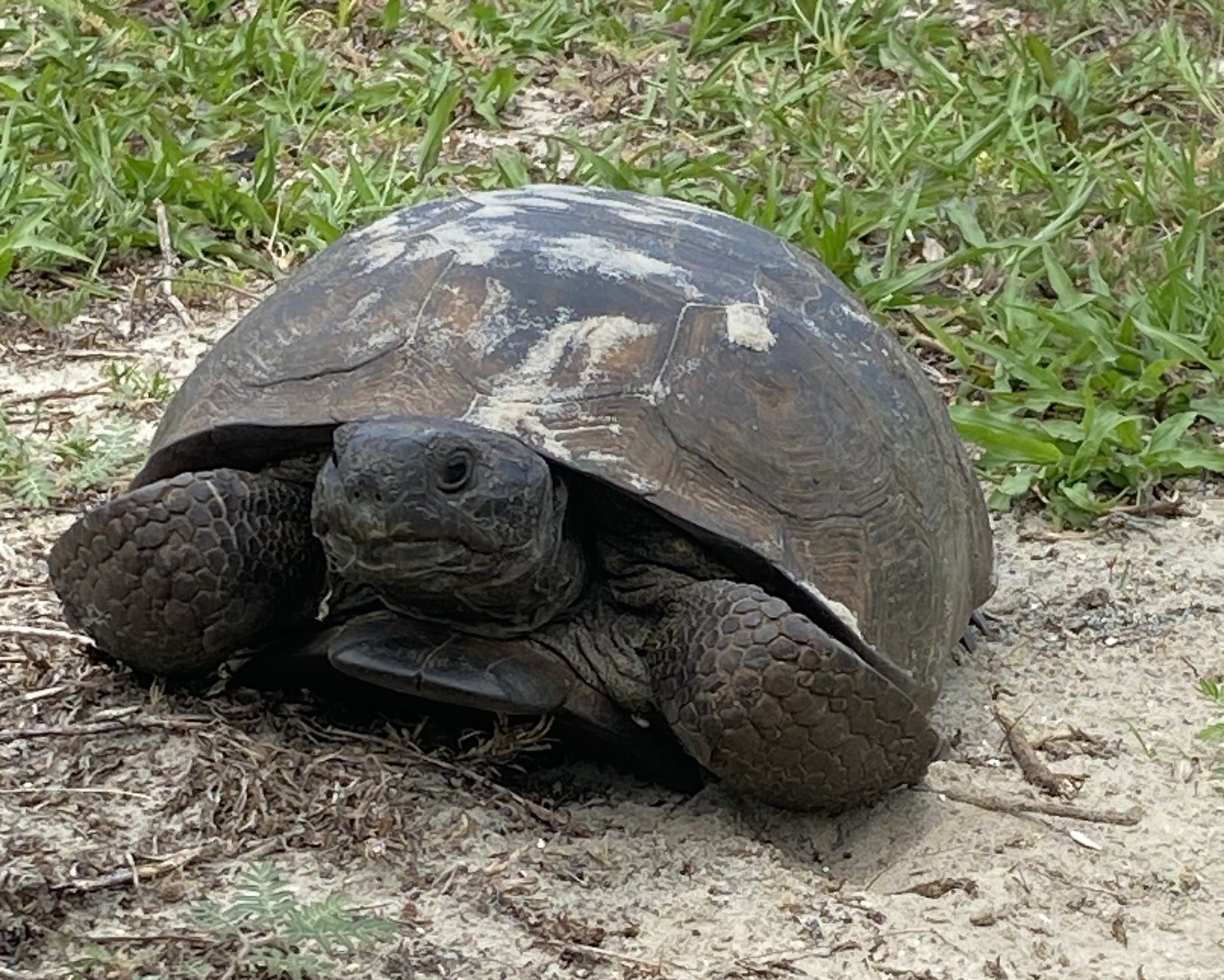
There has been about a major decrease in mother of millions plants in areas where volunteers have worked for about 3 years. Additionally, native plants like cutleaf evening primrose and beach sunflower have been able to recolonize the area. Gopher tortoises, like the one seen below, now utilize the area more effectively. Gopher tortoises are a keystone species and are particularly important to the dune ecosystem (Pictured below). Read more about them here: Gopher Tortoise Program | FWC
Conservation
Find out more about conservation of the gopher tortoise here: Conservation Strategy for the Gopher Tortoise
REFERENCES:
 1
1