Developed by our Ecology and Natural Resources program, the “Wondering About Wildlife?” blog series provides answers to frequently asked questions and concerns about the wildlife around us. This blog focuses on how to identify Florida’s two species of wild cats, the Florida panther and the bobcat. Even if you’re not a cat person, Florida’s two wild cats are sure to excite.
Identification: Bobcats vs. Panthers
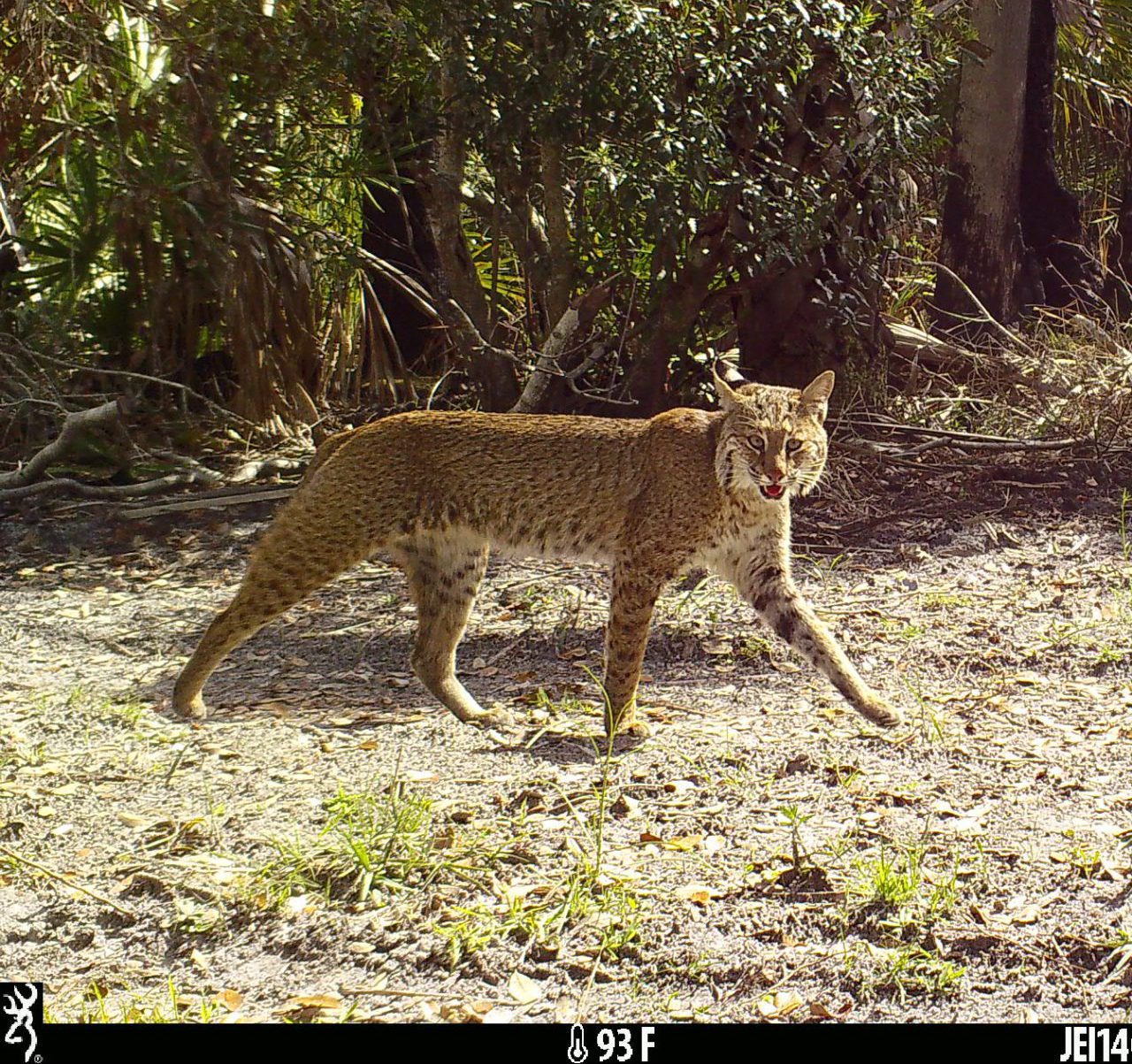
The endangered Florida panther is found mostly in the southern region of Florida with a population estimated at about 200 individuals. Females rarely pass north of the Caloosahatchee River, but males can be found further north. Here in Sarasota County, it would be rare to see a panther as there is not enough contiguous land to support them, although a panther could travel through our County (more likely in the eastern portion). Although it would be rare (and lucky!) to see a panther, and much more likely to see a bobcat in your backyard or neighborhood, it’s still fun to learn how to tell them apart.
The main differences and identifying points are:
Size
Weighing in at up to 160lbs and 5-7 feet in length, Florida panthers are Florida’s largest cat and are between 3 – 5 times bigger than bobcats. Bobcats weigh 12-28 pounds and may be twice the size of an average house cat. Panthers stand about thigh to waist-high on adult humans (2 1/2 feet tall), while a large bobcat would just reach to your knees (1 1/2 feet tall). Size is a great identifying feature, although often we see these animals at dusk or after dark and at a distance, so understandably many people get excited that they have seen a panther, but often what they saw was a bobcat.
Tails
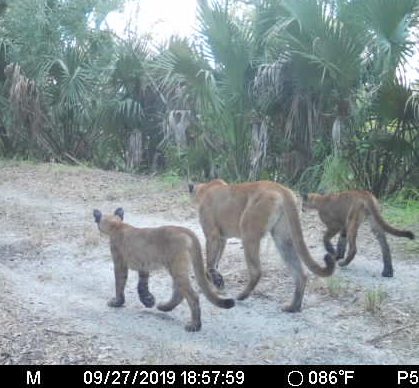
Another giveaway for differentiating between bobcats and panthers is tail length and color. A panther’s tail is nearly as long as its body and extends down almost to the ground (~3 feet long). Panther tails are tan with black fur on the tip. By contrast, bobcats have stubby, “bobbed”, tails that can be spotted and often turn upwards exposing a white underside. The length of bobcat tails vary, but on average their tail will be about a third of the length of their bodies (~6 inches), and will never be as long as the length of its body.
Ears
If you’re lucky enough to have gotten a close look, or even at some distance, panther and bobcat ears are quite different. The backs of panther ears are black while bobcats are also black, but have distinct white patches on the back of their ears.
Color and Pattern

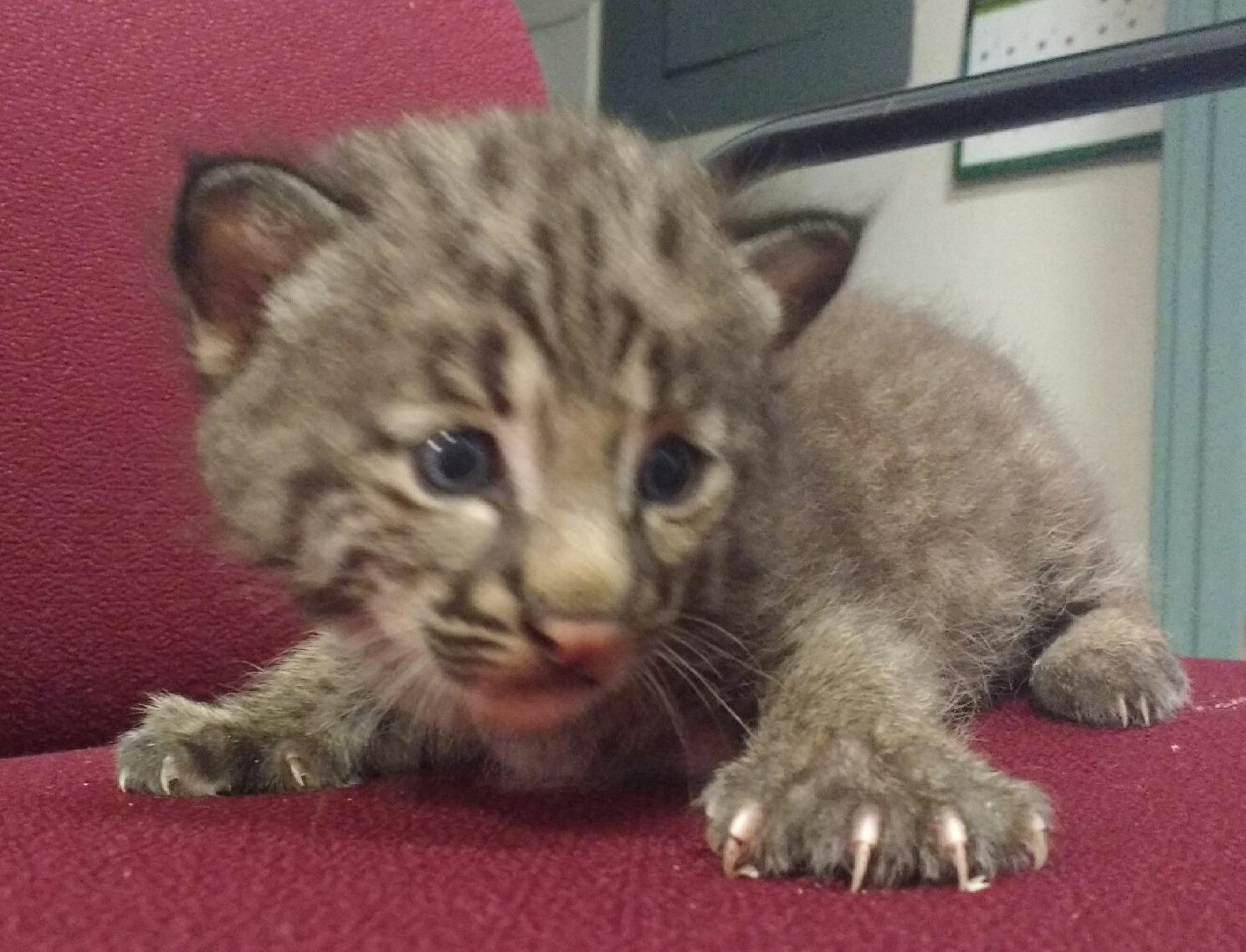
Both bobcat and panther kittens are born with spots. But panthers lose their spots entirely as adults, exhibiting an all over tawny coloration. Adult bobcats, on the other hand, have spotted, reddish-brown coats with undersides from youth to adulthood. Also, bobcats will have black bars on the insides of their legs. Adult bobcats may also be distinguished by their prominent white “beard”.
Could it be a Coyote?

With the many brownish-tan four-legged friends that make Florida their home, coyotes can also be misidentified as either one of Florida’s wild cats. In contrast with our feline friends, coyotes take on a much scrawnier appearance with longer legs and are midway between the height of a panther and a bobcat. Coyote ears are a solid tannish color. If they happen to leave a track, that can be an easy way to distinguish between canines and felines.
While there is no reason to report a bobcat or panther sighting should the animal look normal, it’s always important to report concerning or unusual behavior. In the event that you see a sick, injured, or dead cat, please notify FWC at 1-888-404-3922.
To Learn More:
Check out all blogs in the “Wondering About Wildlife?” series

Visit the Sarasota Starter Kit: A Guide to Living on the Suncoast 30-minute lunch-and-learn webinar for new, or current residents.
Register for Neighborhood Best Practices an online, self-paced course that provides videos, fact sheets, resource links and more on topics from wildlife interactions to preservation areas, from water quality to sustainable landscapes to foster thriving, informed, and sustainable communities.
Other Series of Interest
“Wild Sarasota” blog series Enjoy blogs about identification, life history, and fun facts about our native wildlife. Accompanying webinars and resources on over 140 species of wildlife can be found at our Florida Wildlife webpage.
 0