National Seafood Month
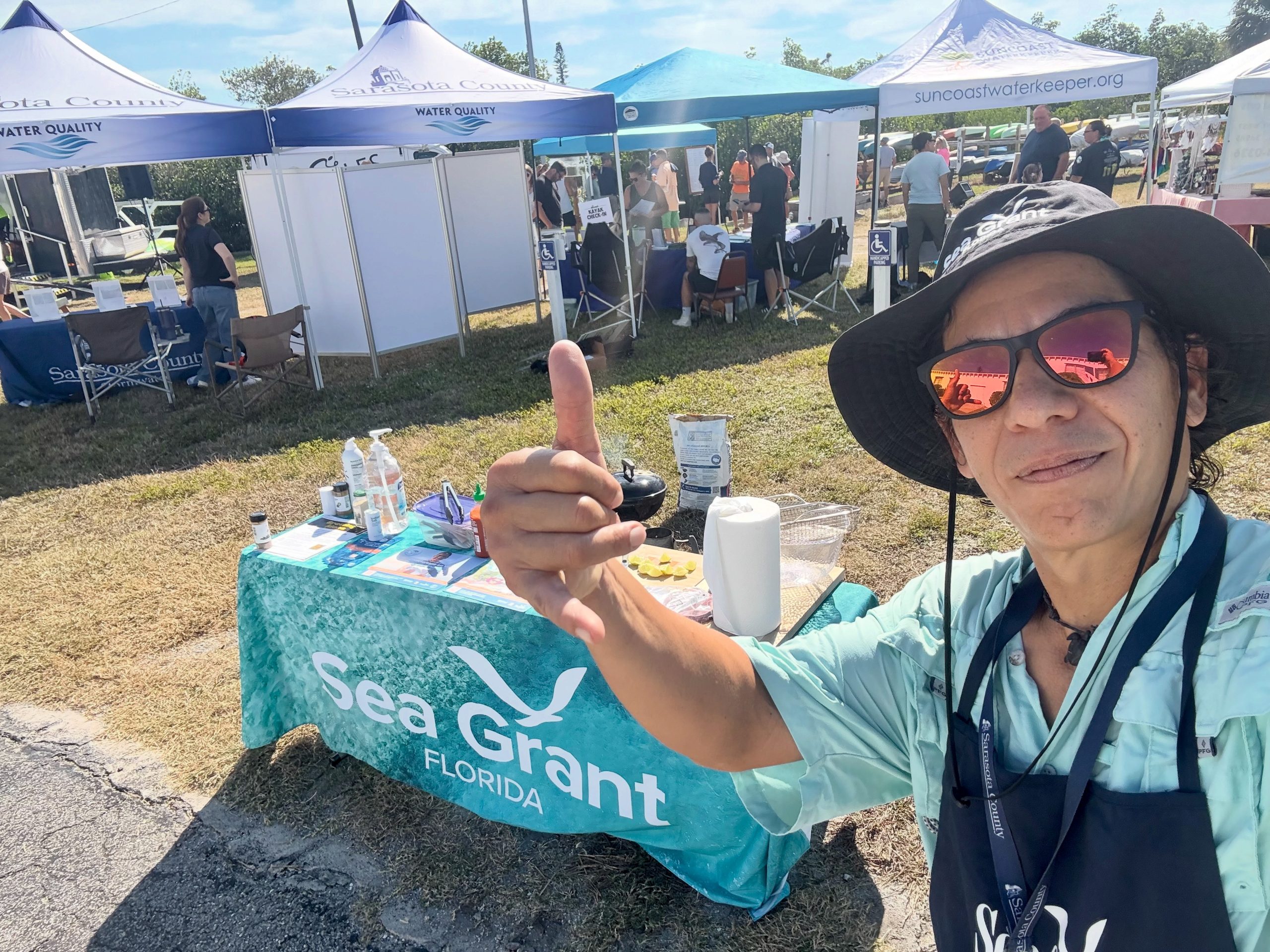
October is National Seafood Month, and here in Sarasota County, we invite you to celebrate with us this Saturday, October 17th, at the 7th Annual Alligator Creek “Creekfest”! This event is free to the community and is such a great way to connect with our beautiful local waterways, learn about sustainable seafood, taste delicious seafood, and learn ways to protect the bay and its wildlife.
Sustainable Seafood:
Florida, also known as the Fishing Capital of the World, has one of the most diverse fisheries. Recreational and commercial fishing contribute significantly to the state’s economy and provide access to healthy protein.
Sustainable seafood refers to wild-caught or farm-raised fish and shellfish that are harvested or produced using practices designed to maintain healthy species populations and preserve ecosystems over the long term. The United States leads the world in sustainable seafood practices.
The National Oceanic and Atmospheric Administration, on its website, provides information about sustainable seafood, where you can find nutrition facts, availability, source, taste, texture, color, health benefits, and recipes for each seafood species harvested commercially or recreationally.
Health Benefits of Seafood Consumption:
Seafood is a delicious source of lean protein, healthy fats, and essential nutrients including omega-3 fatty acids, vitamins B12 and D, and selenium. The American Heart Association recommends eating seafood 2 times per week (3 ounces per serving) as part of a heart-healthy diet to reduce risk of cardiovascular disease. Choosing fish high in omega-3 fatty acids, such as albacore tuna, anchovies, halibut, and salmon, can help lower cholesterol, support brain health, and reduce inflammation in the body.
Seafood safety:
One of the most common seafood safety concerns is regarding mercury, a naturally occurring metal that can accumulate in fish tissue over time. For unborn babies and young children, high levels of mercury may affect the developing nervous system. For this reason, women who are pregnant or breastfeeding, women who may become pregnant, and children under 12 years of age should be especially mindful of choosing lower-mercury seafood options.
Mercury levels in fish vary based on the species’ lifespan, feeding habits, and where the fish are sourced. Larger predatory fish that are higher on the food chain tend to accumulate more mercury than other species. As a result, it is recommended to avoid fish such as shark, king mackerel, swordfish, and tilefish, which are known to have higher mercury concentrations.
For more information on mercury in seafood. fish consumption advisories, food safety guidance, and guidance for sensitive populations such as pregnant or breastfeeding women and young children, visit: https://www.epa.gov/choose-fish-and-shellfish-wisely.
In conclusion, putting seafood on the menu a few times a week can be good for your health, good for the economy, and, when sourced sustainably, good for the environment!
We hope you can join us in celebration of National Seafood Month at the 7th Annual Alligator Creek “Creekfest” on Saturday October 17th, 2026 to enjoy the music, BBQ, environmental expo, kayak tours, e-bike test drives, raffle prizes, and more!
Preview the event details at the Eventbrite link below to register today!
https://www.eventbrite.com/e/alligator-creek-fest-registration-1996812151899
Resources:
Florida Sea Grant Extension and Education Program: https://flseagrant.ifas.ufl.edu/
NOAA Fisheries Sustainable Seafood: Sustainable seafood: https://www.fisheries.noaa.gov/topic/sustainable-seafood
The American Heart Association “Fish and Omega-3 Fatty Acids”: https://www.heart.org/en/healthy-living/healthy-eating/eat-smart/fats/fish-and-omega-3-fatty-acids
For Seafood Consumption Safety and Advisories: https://www.epa.gov/choose-fish-and-shellfish-wisely
 0