Florida is known as the “Winter Strawberry Capital of the World“, and this season you can try growing strawberries at home. In the home garden, strawberries can be grown as an annual, and under the right conditions, you may be able to harvest them this winter.
The Origins
Strawberries (Fragaria spp.) are an ancient fruit that have been cultivated by humans for a long time. Wild species of strawberries, some of which are now extinct, were native to several continents. The modern strawberry we all know and love is a product of centuries of human agriculture.
Typically, strawberries are grown in the warmer months. But in Florida, they grow best in the late fall and early spring when days are shorter and cooler. Luckily, there are a few varieties that are well-adapted to Florida’s climate, like:
- ‘Florida Brilliance’ – best for Central Florida
- Sweet Sensation™ ‘Florida127’ – best for Central Florida
- ‘Camarosa’ – best for North Florida

Credit: Vance M. Whitaker, UF/IFAS
Strawberries in Florida
Strawberries can be grown in a raised bed, pot, planter, or in ground as long as the soil does not become waterlogged. Young transplants can be planted in late September to late October and will require more frequent waterings than established plants (or plants with strong root systems).
- Aim to keep the soil moist but not wet during the establishment period.
To lower the risk of pests and diseases:
- Keep plants spaced out (10-18 inches apart) to encourage airflow
- Use mulch to help maintain soil moisture and weed growth
- Water at the base of the plant, avoiding leaves and stems
- Implement Integrated pest management, or IPM
Always obtain plants from a reputable source and check to make sure plants are pest and disease free before purchasing.

Growing Conditions
What you need to successfully grow strawberries:
- Full sun (8+ hours of direct sunlight a day)
- Well-draining, slightly acidic (pH 5.5-6.5) soil
- Nutrient-dense soil
- Use compost or “two pounds (~ 900 g) of 10-5-10 (or equivalent) of slow-release garden fertilizer with micronutrients (including boron) per 10 feet” of soil (HS1154/HS403: Growing Strawberries in the Florida Home Garden)
- Clean garden tools for pruning and harvesting
- Freeze protection
Strawberries, especially young plants, are frost-sensitive. Be prepared to provide protection if the temperatures hit the low 20s or under. Cover plants with sheets, blankets, or frost cloth.
- Tip: Covering plants the afternoon before predicted freezing nighttime temperatures helps trap some heat in.
Strawberries like nutrient-rich soil, so depending on the type of strawberry and the existing nutrient content of the soil, you may need to fertilize throughout the growing season with the correct fertilizer.
- For best yield and flavor, don’t fertilize the plant late in the growing season.
Tip: If you’re planting strawberries in-ground, contact your local county Extension office about a soil test.
- Read more general information about fertilizers here: Fertilizer Fundamentals.

Credit: Vance M. Whitaker, UF/IFAS
The Key
If you have tried to grow strawberries in the past without success, it might be because growing strawberries in Florida looks a little different than growing them elsewhere.
For the strawberry plant to produce flowers (and then fruit), the plant needs:
- Exposure to temperatures between 50°F and 80°F
- Day lengths of 14 hours or less
- Pollination
In Central Florida, this window is in early fall and spring.

Harvest
The first harvest usually occurs 90 to 110 days after planting, although this timeframe can vary depending on the type of plant.
When three-fourths of the surface of the strawberry is red, you can harvest the fruit. Fully red fruit rots quickly, so it is a good cultural practice to harvest early and often.
- You may want to invest in netting to protect the fruit from birds, bunnies, and others who enjoy fresh strawberries! If you have a surplus of berries, consider freezing them.
Use clean shears to cut the fruit from the plant, or take care not to damage the plant if removing with your hands.
- Prune extra growth, dead leaves, and stems (runners – or long stems with baby plants on the end), so the mother plant can remain healthy and redirect energy to fruit production.
Pests and Diseases
When dealing with garden pests and diseases, UF/IFAS recommends implementing integrated pest management (IPM).
- Visit this resource to learn more about Strawberry IPM.
Good cultural practices like rotating crops, regularly scouting, using clean tools, and irrigating at the base of the plant without wetting the leaves and stem (and not overwatering) can help prevent issues.
- Also, choosing Florida-friendly cultivars and selecting healthy transplants and seeds can increase your chances of success.
Common Pests
Click each listed pest to learn more about ID and treatment.
Read more about UF/IFAS recommended insect management practices.
Common Diseases
Click each listed disease to learn more about ID and treatment. See more common strawberry diseases.
- Botrytis Fruit Rot
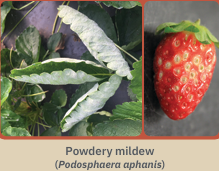
- Powdery mildew

Powdery mildew
(Podosphaera aphanis). Photo Credit: Michelle S. Oliveira and
Natalia A. Peres. https://ask.ifas.ufl.edu/publication/PP354/pdf
Treatment
To treat pests and diseases, UF/IFAS suggests following integrated pest management (IPM) practices. When using chemicals (like pesticides and fungicides), carefully follow label directions, wear protective clothing, and opt for products that are formulated for the intended use.
For more information, contact your local county Extension office.
UF/IFAS Resources
- Growing Strawberries – Solutions for Your Life – University of Florida, Institute of Food and Agricultural Sciences – UF/IFAS
- “Florida Crop/Pest Management Profiles: Strawberry”
- Common Strawberry Diseases in Florida
- PP354/PP354: Common Strawberry Diseases in Florida – University of …
- Pesticides
- Strawberry Pest Management
- Weed Control in Strawberry
- About UF/IFAS Strawberry Breeding–UF/IFAS Plant Breeding Program
- Florida Plant ID: Strawberry
 2