Quick Facts
Organism: Vibrio vulnificus
Type: Gram-negative, curved, rod-shaped bacterium
Habitat: Warm saltwater and brackish coastal water
Common sources: Open wounds exposed to coastal water, raw or undercooked shellfish
Highest risk: People with chronic liver disease, diabetes, cancer or weakened immune systems
Spread person to person: No
“Flesh-eating bacteria” is a phrase that can stop you mid-scroll, and in Florida it is back in the headlines. Health officials are reporting cases and deaths linked to Vibrio vulnificus, a bacterium that lives naturally in warm coastal and brackish waters.
As of September 24, the Florida Department of Health (n.d.) has reported 23 confirmed cases and five deaths from V. vulnificus in 2026, across 14 counties. That total remains below the 33 cases reported in 2025 and the 82 cases reported in 2024.
So what is this bacterium? How does a microbe that lives in coastal water cause such a serious infection? And does “flesh-eating” mean what it sounds like? Let’s look at the microbiology behind the headlines.
What Is Vibrio vulnificus? Meet Florida’s Salty Microbe
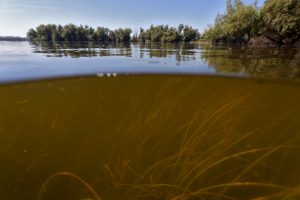 Vibrio vulnificus is not an exotic newcomer that snuck into Florida on a cruise ship. It’s a naturally occurring member of the marine microbial community and belongs to the genus Vibrio, a group of more than 20 species that can cause illness in humans. Other medically important relatives include Vibrio parahaemolyticus and Vibrio cholerae.
Unlike bacteria tied to soil, freshwater or the human body, V. vulnificus is adapted to warm, salty environments such as estuaries and coastal waters. Florida offers a long coastline, plenty of warm water and countless chances for people to meet seawater and shellfish, which makes it a natural place to study this microbe.
Does Flesh-Eating Bacteria Actually Eat Flesh? Understanding Necrotizing Fasciitis
Not literally. Here is where the headlines get a little dramatic.
V. vulnificus can cause necrotizing fasciitis, a severe soft-tissue infection in which tissue can die rapidly. That is the origin of the “flesh-eating” label. But the bacteria do not chew anything. The damage comes from the infection and the body’s response to it.
Several types of bacteria can cause necrotizing fasciitis. According to the Centers for Disease Control and Prevention (CDC, n.d.), group A Streptococcus is the most common cause in the United States. “Flesh-eating bacteria” is dramatic shorthand for a devastating type of infection, not the scientific name of a bacterial group.
How Do You Get Vibrio vulnificus? Cuts, Coastlines and Raw Oysters


There are two main routes of infection.
Through an Open Wound
A cut, scrape, new tattoo, surgical incision or other break in the skin can give V. vulnificus an entry point. Exposure to contaminated saltwater, brackish water, raw seafood or seafood juices can lead to a wound infection. A small scrape that seems harmless on land can become a serious concern after exposure to contaminated coastal water.
By Eating Contaminated Shellfish
Oysters and other shellfish are filter feeders. As they strain large volumes of water, bacteria in the surrounding environment can concentrate in their tissues. Eating raw or undercooked shellfish can therefore expose people to Vibrio.
You cannot spot contaminated shellfish by looking, smelling or tasting. Proper cooking is what kills the bacteria.
Flesh-Eating Bacteria Symptoms: What Happens Inside the Body
For most people, exposure does not lead to severe illness. In some cases, though, the bacterium invades tissue and enters the bloodstream.
Severe wound infections can cause:
- Rapidly spreading redness
- Pain and swelling
- Warmth and discoloration
- Fluid-filled or blistering lesions
Bloodstream infections can cause fever, chills, dangerously low blood pressure and other signs of severe illness. Once bacteria reach the bloodstream, infection can progress quickly. The CDC (n.d.) estimates that about one in five people with V. vulnificus infection die, sometimes within a day or two of becoming ill. That’s why early recognition matters, and why anyone with these symptoms after coastal water or raw seafood exposure should seek medical care promptly.
Who Is Most at Risk for Vibrio vulnificus Infection?
Anyone can become infected, but some people are far more likely to develop severe illness. Risk rises with:
- Chronic liver disease
- Diabetes
- Cancer
- Weakened immune systems
- Other chronic conditions
Chronic liver disease is especially linked to severe V. vulnificus infections. For these individuals, a minor exposure can carry major consequences.
Vibrio vulnificus in Florida: 2024, 2025 and 2026 Case Numbers
Florida is the kind of place this bacterium thrives: warm, coastal and brackish. Vibrio levels tend to be higher from May through October, according to the CDC (n.d.), and Florida’s surveillance data shows cases year after year.
2024: 82 confirmed cases and 19 deaths
2025: 33 confirmed cases and five deaths
2026 (through September 25): 23 confirmed cases and five deaths
Numbers rise and fall from year to year, but the bacterium itself isn’t new. It’s part of Florida’s coastal microbial environment. Storms and flooding can also bring people into contact with coastal water in unexpected ways, so it’s worth knowing the risk even away from the beach.
How Do Microbiologists Track Down a Flesh-Eating Bacterium?
Understanding V. vulnificus means understanding how microorganisms, their environments and their hosts interact. Microbiologists study where bacteria live, how they survive, how they cause disease and how to detect and control them.
When a patient develops a serious infection, laboratory testing helps identify the culprit. Vibrio can be detected in clinical specimens such as blood, wound material or stool, and specialized methods help isolate and identify V. vulnificus when it’s suspected.
That work reaches well beyond one patient. It supports:
- Disease surveillance
- Food safety
- Environmental monitoring
- Public health decision-making
- Clinical diagnostics
Curious how other microbes challenge scientists? Read about the parasite researchers still can’t grow in the lab or how sargassum is affecting Florida’s coastline.

How to Prevent Vibrio vulnificus: Beach Day and Oyster Night Rules
The good news is that the risk is manageable.
If you have an open wound:
- Avoid swimming or wading in saltwater or brackish water
- Cover wounds with a waterproof bandage if exposure is possible
- Wash cuts thoroughly with soap and clean water after contact with coastal water or raw seafood
When eating seafood:
- Skip raw or undercooked oysters and shellfish
- Cook shellfish thoroughly
- Keep raw seafood and its juices away from cooked food and other surfaces
- Wash your hands after handling raw shellfish
If signs of a serious wound or bloodstream infection appear after exposure, get medical attention right away.
Why Vibrio vulnificus Matters: Microbiology in Action
“Flesh-eating bacteria” makes Vibrio vulnificus sound like a horror movie villain. The real story is more interesting: a naturally occurring microorganism with a specific ecological niche and a disease process microbiologists have studied for decades. In a state surrounded by warm coastal waters, understanding those microbial relationships is part of understanding where we live, work and play. That is microbiology in action.
Careers in Microbiology: Who Investigates Outbreaks Like Vibrio
Behind every Vibrio headline is a team of professionals who make the response possible. Microbiology training leads to careers such as:
- Clinical laboratory microbiologist
- Public health microbiologist
- Food safety scientist
- Environmental monitoring specialist
- Research scientist
Employers span hospitals, health departments, seafood safety programs, biotechnology companies and government agencies. Explore careers in microbiology or read whether a master’s degree in microbiology is worth it.
Love the Science Behind the Headlines? Study Medical Microbiology at UF
 Want to be the one who explains the next Vibrio headline? The Department of Microbiology and Cell Science at the University of Florida offers a fully online, asynchronous Master of Science in Microbiology and Cell Science, so you can build those skills around your job and your life. If infectious disease and diagnostics are your thing, the Medical Microbiology and Biochemistry concentration explores the science behind stories like this one.
Request information about UF’s graduate programs in microbiology and cell science →
FAQ
What is flesh-eating bacteria?
“Flesh-eating bacteria” is a common term for bacteria that can cause necrotizing fasciitis, a severe infection in which tissue can die rapidly. Vibrio vulnificus is one type of bacterium that can cause this infection, but it’s not the only one. The bacteria don’t literally eat flesh.
Is flesh-eating bacteria found in Florida?
Yes. Vibrio vulnificus, one type of bacterium associated with severe soft-tissue infections, occurs naturally in Florida’s warm saltwater and brackish coastal waters. Its presence doesn’t necessarily indicate sewage or another pollution source. It’s part of the natural marine environment.
How do you get flesh-eating bacteria from Florida water?
Vibrio vulnificus can enter the body when an open wound comes into contact with contaminated saltwater, brackish water or raw seafood. People can also become infected by eating raw or undercooked shellfish, particularly oysters.
Can you catch flesh-eating bacteria from another person?
Vibrio vulnificus does’t spread from person to person. Infections typically occur through exposure to contaminated coastal water, raw seafood or undercooked shellfish.
Who is most at risk from flesh-eating bacteria?
People with chronic liver disease, diabetes, cancer or weakened immune systems are at increased risk of severe illness from Vibrio vulnificus infection.
How can I protect myself from flesh-eating bacteria?
Avoid exposing open wounds to saltwater or brackish water, cover wounds with a waterproof bandage when exposure is possible, wash cuts promptly after exposure and avoid eating raw or undercooked shellfish.
What are the symptoms of flesh-eating bacteria?
Symptoms of a serious Vibrio vulnificus wound infection can include rapidly spreading redness, pain, swelling, warmth, discoloration and blistering. Fever, chills and other signs of a bloodstream infection can also occur. Anyone experiencing concerning symptoms after exposure to coastal water or raw seafood should seek medical attention promptly.
How many people have died from flesh-eating bacteria in Florida in 2026?
As of September 24, Florida has reported 23 confirmed Vibrio vulnificus cases and five deaths in 2026 (Florida Department of Health, n.d.).
References
Centers for Disease Control and Prevention. (n.d.). Vibrio infection (vibriosis). https://www.cdc.gov/vibrio/
Florida Department of Health. (n.d.). Vibrio vulnificus. Retrieved September 29, 2026, from https://www.floridahealth.gov/diseases-and-conditions/vibrio-vulnificus/
 3

