Think a microbiology degree only leads to a hospital or a research bench? Pour yourself something cold and think again.
With students heading back to campus this month, a few things are predictable. New notebooks. New roommates. New routines. And at some point, once classes settle in, some students (of legal drinking age) are going to crack open a cold beer.
That beer has a backstory almost nobody thinks about.
Before it ever reached a glass, an entire population of microorganisms was hard at work. Yeast converted sugar into alcohol and carbon dioxide. Somewhere behind the scenes, a scientist was watching fermentation conditions, checking on yeast health and keeping an eye out for the unwanted microbes that can turn a good batch into a bad one.
The drink looks simple. The biology behind it is not. And that gap is exactly where a microbiology degree becomes a surprisingly practical career move.
Quick Facts
The organism doing the work: Saccharomyces cerevisiae, a species of yeast with a long history in brewing, baking and winemaking.
The science behind it: Fermentation, a biological process in which microorganisms convert sugars into alcohol, carbon dioxide and flavor-shaping compounds.
Industries that rely on it: Brewing, distilling, winemaking, food and beverage biotechnology, industrial biotechnology and bioprocessing.
Job titles to search for: Fermentation scientist, brewing microbiologist, bioprocess scientist, quality scientist, quality systems manager, validation specialist.
What Does a Microbiologist Have to Do With Beer?
 More than most people assume. Beer is a fermentation product, and fermentation is a biological process in which microorganisms transform nutrients into other compounds. In brewing, yeast converts fermentable sugars into ethanol and carbon dioxide while also producing the aromatic compounds that give a beer its personality.
Brewing strains of Saccharomyces cerevisiae are chosen for traits that make them useful on the job, including strong fermentative capacity, tolerance for a stressful environment and the ability to generate flavor and aroma compounds. Ale and lager fermentations even rely on different yeast lineages and temperature ranges to get there.
So when someone in a brewery talks about yeast, they are not describing an ingredient sitting quietly on a shelf. They are describing a living biological system that needs to be understood, managed and occasionally troubleshot.
That raises a lot of scientific questions. Which strain should be used? Is the culture healthy? Are the cells viable and metabolically active? What happens if the temperature shifts? Are unwanted microorganisms present? How do you make the same product, batch after batch, at a much bigger scale? Those are microbiology questions, every one of them.
One Unhappy Yeast Culture Can Sink an Entire Batch
 Here is the idea that changes how people think about brewing: yeast is alive, and that has consequences.
A brewer cannot add a fixed amount of yeast and assume identical results every time. Yeast physiology shifts with its environment, and its health, viability and vitality all affect how well it can carry out fermentation.
Brewing microbiology research consistently points to yeast management as one of the biggest factors in product consistency. Poor handling between fermentations can throw off performance, flavor and quality. That is why scientists track cell concentration, viability, vitality, culture purity and fermentation byproducts, essentially running a full checkup on a population of single-celled organisms before they ever touch a fermentation tank.
Someone has to understand what those cells are doing. Someone has to notice when something looks off. And someone has to figure out why.
That someone might carry the title of brewer. Or fermentation scientist. Or microbiologist, quality scientist or bioprocess specialist. The job title changes. The science underneath it does not.
Meet the Fermentation Scientist
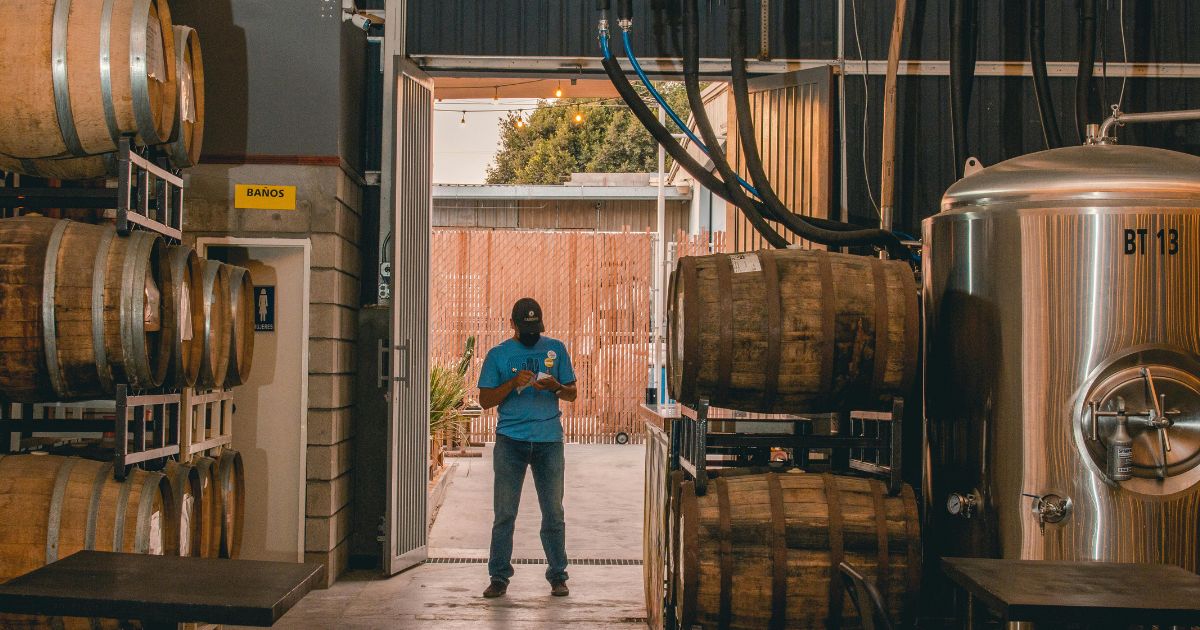
Picture a brewery getting inconsistent results. One batch tastes different from the last. Fermentation is dragging on longer than usual. A quality issue has shown up, and brewing another batch and hoping for the best is not a real plan.
This is where a fermentation scientist steps in, examining the microbial culture, analyzing fermentation data, checking process conditions and evaluating yeast performance to pin down what changed.
The toolkit for that work draws on microbiological techniques, cell biology, molecular biology, biochemistry, analytical methods and process control, and the job itself moves between spaces. Some days it is laboratory-based. Other days it happens right on the production floor.
That flexibility matters for anyone weighing a microbiology degree, because it means the career does not require spending every working hour behind a microscope. A fermentation scientist might just as easily be helping a company scale a process, protect product quality or solve a problem that only shows up once production ramps up to full size.
From Beer to Bourbon: The Science Follows the Fermentation
 The same underlying biology shows up far beyond brewing. Yeast and other microorganisms drive the production of wine, spirits, fermented foods, industrial enzymes and biofuels.
Distilling leans on the same principles. Distilling yeasts have to convert fermentable substrates into alcohol while holding onto the traits that shape the final product, and factors like nutrient uptake, temperature, viability and pitching practices all come into play.
Fermentation creates the alcohol, but the science does not stop when the yeast finishes its work. In spirits production, researchers and production teams also study how fermentation conditions influence the compounds that carry through distillation and ultimately shape the character of the finished spirit.
A microbiology student drawn to fermentation science could realistically land in brewing, distilling, wine production, food and beverage biotechnology, industrial biotechnology, bioprocessing, quality assurance, quality control, research and development, product development or regulatory science. The fermentation industry has also outgrown traditional alcoholic beverages entirely, with scientists now using microorganisms and engineered biological systems to build entirely new products and processes.
What Is a Bioprocess Scientist, Anyway?
Here is a career title that rarely shows up when students first picture microbiology.
A bioprocess scientist develops and improves processes that use biological systems to make a desired product, whether that means working with microorganisms to produce a therapeutic compound, fine-tuning fermentation conditions, or figuring out how to take a small laboratory-scale process and move it to full production without losing quality along the way.
The underlying question sounds simple: how do you get biology to perform reliably at scale? Answering it takes more than memorizing the names of microorganisms. It takes understanding how cells behave, how their environment affects them and how a biological process can be measured, controlled and improved.
Bioprocess scientist, quality systems manager, validation specialist and regulatory affairs specialist are just a few of the career paths that can build on this kind of scientific training.
The Unsung Heroes Keeping the Product Consistent
 There is a whole side of fermentation that rarely gets credit: quality.
Anything made with living organisms comes with biological variability built in, which means companies need people who can monitor microbial systems and catch problems before they turn into expensive production failures.
A quality scientist might evaluate microbial cultures, investigate contamination or help set procedures that keep a product within its specifications. A quality systems manager works at a broader level, making sure processes, documentation and testing meet industry and regulatory standards. A validation specialist helps prove that a process delivers the same result every time.
None of those titles necessarily contains the word “microbiologist.” All of them rest on a microbiology foundation, which is exactly why the career map for this degree is so much bigger than most students expect walking in.
When Microbiology Meets Data (and Yes, AI)
Fermentation science is becoming increasingly data-driven. Scientists can now measure enormous amounts of information about microbial growth, fermentation conditions, metabolites and genetics, and genomic tools are revealing traits in organisms that used to be nearly impossible to study.
That opens another path: the microbiologist who works with data. A researcher studying brewing yeast might dig into how genetic differences between strains shape fermentation behavior or flavor compounds, using genomic approaches to figure out which traits actually matter for production.
Artificial intelligence fits into this picture as a tool, not a replacement. An AI system can spot patterns in a dataset, but it cannot supply the biological context needed to decide whether those patterns mean anything. A scientist still has to know what question to ask, how to design the experiment, which variables matter and whether a result makes biological sense. The future of this field is not biology or technology. It is fluency in both. How scientists use AI to extend what they can do, rather than replace the science itself, is critical to the career field.
Where Else Can a Microbiology Degree Take You?
Fermentation is just one branch of the field. Microbiology can lead into research and innovation, biotechnology and industry, public health, environmental science, data and technology, science communication and regulatory affairs and policy. UF’s Careers in Microbiology resource highlights paths in bioinformatics, wildlife and conservation science, brewing and fermentation, science policy and scientific communication.
That list even includes scientific and technical writing, for microbiology graduates who end up being the ones who explain the science rather than run the experiment.
What can you do with a Master’s degree in Microbiology? For students asking what they can do with a master’s in microbiology, the answer is not limited to one job title. Graduate-level microbiology training can support careers in biotechnology, fermentation, quality systems, clinical science, environmental research, regulatory affairs, data-driven biology and research.
The better question for an incoming student might not be “what job will this get me.” It might be “what kind of problem do I want to spend my career solving.” Want to understand disease? Clinical microbiology and public health are waiting. Want to build something? Biotechnology, fermentation and bioprocessing put microbial systems to work. Want data and technology? Genomics, bioinformatics and computational biology are some of the fastest-growing corners of the field.
If you’re still picturing microbiology as a traditional laboratory career, our previous look at microbiology careers explores even more ways the field can translate into the workplace.
Building the Science for What Comes Next
 At the University of Florida, that breadth is built into the Department of Microbiology and Cell Science. The non-thesis Master of Science in Microbiology and Cell Science is fully online and asynchronous and can be completed in as few as 12 months, depending on pace. The program provides advanced training that can translate across research, healthcare, biotechnology and industry, fermentation science included.
You might study microbes because you want to understand disease. You might study them to protect an ecosystem. Or you might discover that the career you actually want involves a fermentation tank, a production floor, a data set or, yes, a glass of beer.
The organism is microscopic. The career possibilities are not.
Frequently Asked Questions
What does a fermentation scientist do?
A fermentation scientist monitors and manages the microorganisms responsible for turning raw ingredients into products like beer, wine, spirits and other fermented goods, tracking yeast health, fermentation conditions and product quality to keep results consistent from batch to batch.
Can you work in brewing or distilling with a microbiology degree?
Yes. Breweries, distilleries and wineries hire microbiologists, fermentation scientists and quality scientists to manage yeast health, monitor fermentation and troubleshoot production issues, and a microbiology degree provides the core science behind all of it.
What is a bioprocess scientist?
A bioprocess scientist develops and scales up processes that use living organisms to manufacture products such as therapeutics, enzymes, biofuels or fermented beverages, focusing on how to move a process from small-scale lab work to reliable, large-scale production.
Do you need a specialized degree to work in fermentation science?
Many fermentation and bioprocessing roles value a foundation in microbiology, biology, biotechnology, food science or a related life science. Specialized coursework, research experience or graduate training can strengthen preparation and better position you for more advanced roles.
What other careers can a microbiology degree lead to besides lab research?
A microbiology degree can lead to careers in quality assurance, regulatory affairs, science communication, bioinformatics, environmental science, biotechnology sales and public health, in addition to traditional clinical and research laboratory roles.
Curious where a microbiology degree could take you? Explore the range of career paths connected to microbiology, then see how UF’s online M.S. can help you build the scientific foundation for what’s next.
Explore the Online M.S. →
Compare Tuition & Costs →
Ready to take the next step? Apply Now →
Not ready to apply? Request Information →
 2